
Muslim Candidates Reshape Political Battle in Italian Local Elections
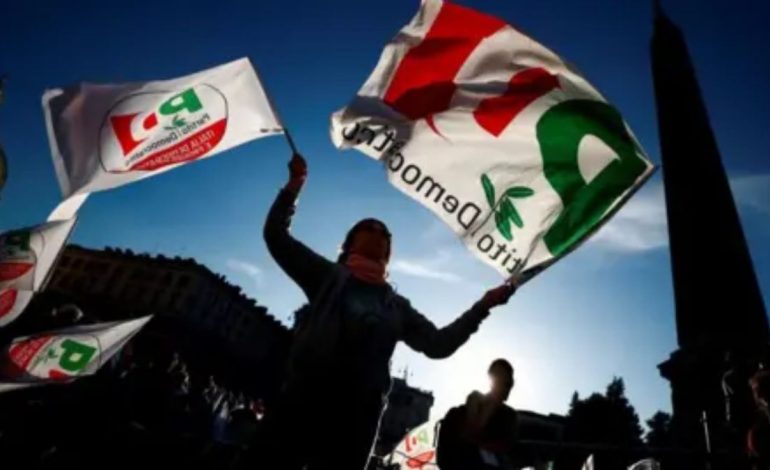

A local election in Vigevano, an industrial city of 62,000 in northern Italy, has exposed sharp divisions within the country’s ruling coalition over immigration and integration—with two Muslim candidates running on the League’s ticket forcing uncomfortable conversations about identity and belonging in an increasingly diverse Italy.
Vigevano, surrounded by factories and rice paddies, has transformed into a genuinely multicultural city where 15 percent of the population is foreign-born, with many arriving from Egypt and Romania. Many more are naturalized Italians and second-generation immigrants. This demographic reality is reshaping local politics in ways that reveal deeper tensions within Italy’s political landscape.
Breaking Convention in an Unexpected Place
The League, a far-right junior partner in the ruling coalition, controlled Vigevano’s mayoralty through Riccardo Ghia, a jeweller running for reelection. In a surprising move, Ghia placed two Muslim candidates on his electoral list: Hagar Haggag, a 20-year-old Italian-Egyptian studying diplomacy who wears an Islamic headscarf, and Ibrahim Hussein, a spokesman for the local mosque.
The decision was politically calculated to attract votes from immigrant communities. Yet it immediately provoked backlash that revealed the gap between League rhetoric and local reality. Haggag reported receiving insults and threats after her candidacy was announced, which she attributed primarily to her religious headscarf. Despite this hostile reaction, she emphasized that she had “never felt racism” within the League’s local organization, noting that the former League mayor had permitted a Muslim prayer hall to open in 2022.
Conflict Within the Coalition
The candidates’ presence exposed fault lines within Italy’s governing alliance. The national League leadership publicly “distanced” itself from the Muslim candidates, reflecting the party’s far-right national positioning. Yet Prime Minister Giorgia Meloni’s Brothers of Italy party supported them, signaling different approaches within the coalition toward immigration and integration.
The divisions presented an opportunity for Roberto Vannacci, a former general who abandoned the League to establish Futuro Nazionale (National Future), a more radical far-right party. Vannacci visited Vigevano with anti-immigrant rhetoric, and the party’s local candidate, lawyer Furio Suvilla, called for military intervention against groups gathering at the station and demanded closure of the Muslim prayer hall.
The Broader Italian Context
Italy’s experience with immigration is more recent than France or Germany’s, making candidates with foreign origins relatively rare in Italian elections. Sociologist Maurizio Ambrosini from Milan’s Statale university noted that “many naturalized migrants tend toward the right,” explaining why far-right parties are attempting to recruit immigrant candidates.
Haggag framed her candidacy partly as pushing back against stereotypes, saying she wanted to “put an end to the left-wing cliche that Muslim women are ignorant.” Hussein presented his candidacy “in the name of Allah,” describing himself as “a real example of integration.”
Center-Left Alternative
For the center-left, local candidate Sabrine Hamrouni, a 23-year-old health sector worker whose Tunisian father moved to Vigevano in the 1990s, offered a different vision. Born and raised in Vigevano, Hamrouni said she remains perceived as “still a foreigner” despite her lifelong presence in the city. She positioned her campaign around making Vigevano “a beautiful city,” emphasizing commitment to community rather than security-focused rhetoric.
What Vigevano Reveals
The Vigevano election exposes how Italy’s rapidly changing social fabric is forcing political parties to confront immigration more directly than in the past. The presence of Muslim candidates on a far-right party’s ticket demonstrates how even parties defined by opposition to immigration must acknowledge demographic realities and seek votes from immigrant communities.
Yet the national League leadership’s distancing from its own local candidates reveals the contradiction: the party benefits from appealing to immigrant voters locally while maintaining anti-immigration positioning nationally. This tension may grow as Italy approaches national elections next year in an increasingly multi-ethnic society where second-generation immigrants are gaining political influence.
The election outcome in this once-communist industrial city, now home to substantial immigrant populations, will signal whether Italy’s political parties are genuinely adapting to demographic change or merely performing accommodation while maintaining restrictive immigration stances. For candidates like Haggag and Hussein, the election represents a test of whether far-right parties can genuinely include immigrant voices, while for Hamrouni, it offers a center-left vision of integration based on long-term community commitment rather than security concerns.
Also Read:
Operating Revenue Index in Saudi Arabia Climbs 10.2% on Non-Oil Expansion
Iran Warns Conflict Could Spread Beyond Middle East if US Strikes Resume