

Saudi Real Estate Growth Remains Resilient Through Q1 Market Volatility
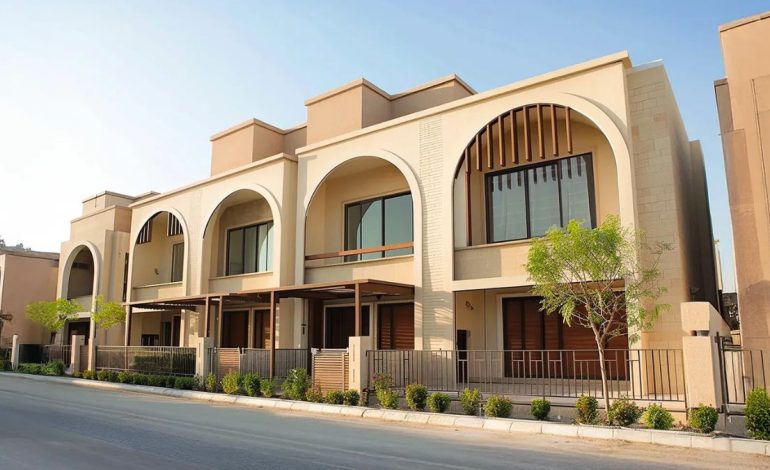

Saudi Arabia’s property sector has maintained solid momentum through the first quarter of 2026, with transaction values reaching SR112 billion ($29.85 billion)—a 6.8 percent increase from the same period a year earlier—despite ongoing regional tensions and market uncertainties.
The resilience reflects structural economic drivers rather than temporary liquidity cycles. Vision 2030 reforms, strong domestic demand, and large-scale development activity tied to major infrastructure projects are creating sustained rather than speculative interest in Saudi property. The Real Estate General Authority projects the sector will reach $101.62 billion by 2029, representing an 8 percent compound annual growth rate from 2024.
A Market Driven by Long-Term Structural Forces
Rather than depending on oil-linked liquidity, Saudi Arabia’s real estate market is increasingly powered by demographic shifts, regulatory reforms, and institutional investment. The Regional Headquarters program has attracted over 780 international firms to establish physical presence in Riyadh, creating recurring salary-backed demand from corporate occupiers.
Experts note that the market’s evolution reflects fundamental changes rather than cyclical factors. A young, urbanizing population is driving demand for housing and commercial space. The Kingdom’s pipeline of giga-projects—Neom, the Red Sea Project, AlUla, and others—is converting long-term development ambitions into immediate construction activity and sustained end-user demand.
Office Markets Remain Exceptionally Tight
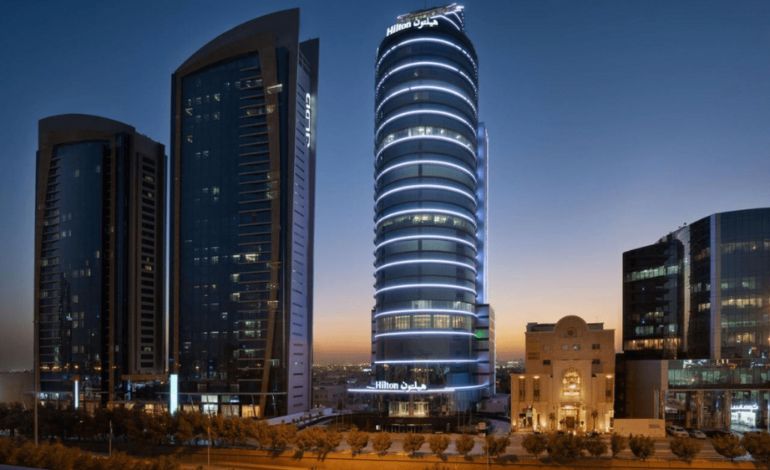
Riyadh’s Grade A office market is operating at near-capacity, with occupancy hovering near 98 percent. Technology firms account for 53 percent of demand, followed by professional and financial services. With approximately 0.56 million square meters of office supply scheduled for completion in 2026 and a further 0.90 million square meters between 2027 and 2028, the market will continue absorbing new inventory while maintaining structural shortages of premium space.
Jeddah’s Grade A office market stands at 94 percent occupancy with stable rents, while Dammam’s premium segment holds steady at 91 percent. Prime rents across major markets have demonstrated measured growth, reflecting controlled supply introduction into exceptionally tight conditions.
Residential Sector Transitions From Volume to Quality
The residential market is undergoing significant recalibration. After regulatory reforms introduced in late 2025, Riyadh rental rates softened 2.1 percent year-on-year in March 2026. Under new Real Estate General Authority rules, existing lease rents remain fixed at September 2025 levels, while new-to-market inventory must align with the Ejar platform’s recorded values.
More significantly, Saudi residential demand is shifting from volume-driven toward experience-driven purchasing decisions. Buyers increasingly prioritize maintenance quality, walkability, privacy, amenities, and long-term community management rather than simply acquiring property as investment vehicles. Communities integrating retail, wellness, and public space into residential environments are attracting particular interest.
The Kingdom’s homeownership rate has already reached 65 percent, with the government’s 2030 target of 70 percent appearing achievable. This trajectory requires absorbing significant household formation—estimates suggest over 300,000 additional homes are needed for Saudi nationals between 2024 and 2034, with Riyadh alone projected to grow its population by nearly 38 percent by 2030.
Hospitality Expansion Faces Demand Calibration
The hospitality sector posted impressive visitor numbers, welcoming a record 37.2 million domestic and inbound tourists and generating SR82.7 billion in spending. Domestic tourism contributed 28.9 million travelers, marking a 16 percent year-on-year increase.
However, the sector faced operational headwinds during the quarter. Riyadh’s hotel occupancy declined 13.5 percent year-to-date, with March occupancy down 15.6 percent compared with the same month last year. This apparent contradiction reflects supply additions outpacing near-term demand growth, though long-term fundamentals remain strong.
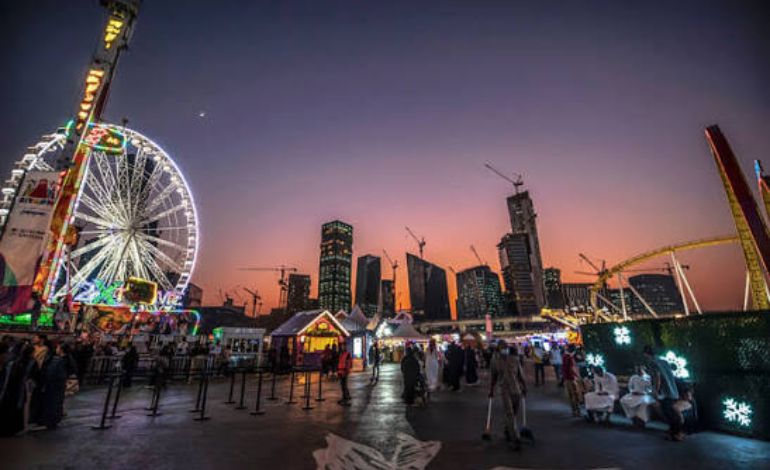
Saudi Arabia is on track to nearly double its hotel inventory, with approximately 94,500 rooms in the near-term pipeline and a target of 362,000 rooms by 2030. Three demand engines are converging: religious tourism expansion through Hajj and Umrah programs, leisure destinations including the Red Sea, AlUla, and Diriyah, and event-driven demand from Expo 2030 and the 2034 FIFA World Cup.
Foreign Ownership Law as Market Catalyst
The Law of Real Estate Ownership by Non-Saudis represents a watershed moment for the sector. The legislation enables foreign capital to flow into designated zones in Riyadh, Jeddah, and selected urban districts while preserving safeguards in religious cities and core residential neighborhoods.
This carefully designed framework separates international capital from local affordability concerns while opening opportunities for branded residences, giga-project zones, and institutional capital through real estate investment vehicles. The approach benefits from regional precedent—learning from similar frameworks in the UAE—while incorporating more mature governance structures from day one.
Market Outlook
Saudi Arabia’s real estate sector is transitioning from project-based cycles toward sustainable growth driven by structural economic forces. Demographic shifts, quality-of-life preferences, institutional investment, and a maturing regulatory environment are creating conditions for a resilient, diversified property market extending well beyond the current quarter.
The sector’s ability to maintain growth despite regional volatility suggests that fundamental drivers have become sufficiently robust to overcome cyclical disruptions. For investors and market participants, this shift toward structural resilience offers more predictable long-term opportunities than traditional real estate cycles have historically provided.
Also Read:
Operating Revenue Index in Saudi Arabia Climbs 10.2% on Non-Oil Expansion
Iran Warns Conflict Could Spread Beyond Middle East if US Strikes Resume