


Tunisian Telecom App Breach Sends Anti-Authority Messages to Users
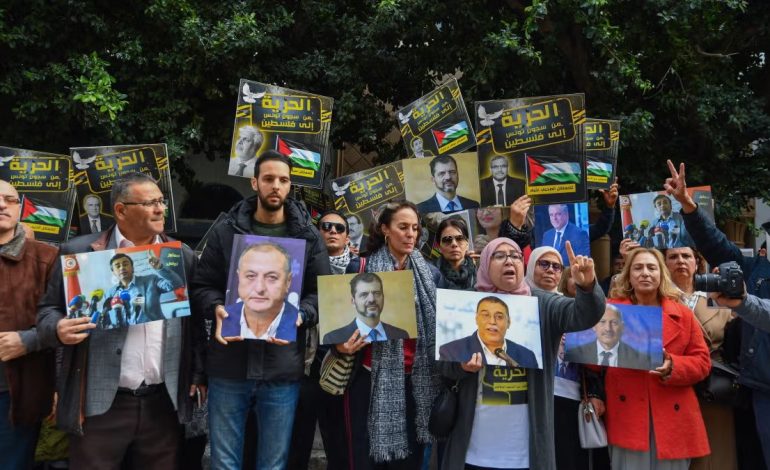

Tunisie Telecom customers received a surprising push notification over the weekend when the telecommunications operator’s mobile app was compromised in a cyberattack. The message, titled “A Cry for Tunisia: Freedom Is Not a Crime,” denounced the country’s political and economic situation, reaching hundreds of thousands of users before the breach was contained.
The notification condemned what it characterized as a “clear rollback of freedoms” and a “suffocating economic crisis,” asking rhetorically “Promises and slogans, but to what end?” Screenshots of the message quickly circulated across social media and news outlets, transforming a technical security breach into a political moment.
The Company’s Response
Tunisie Telecom initially downplayed the incident, issuing a statement that mentioned only routine maintenance work on its MyTT app. However, after the message spread widely on social media, the company released a second statement acknowledging the attack while attempting to distance itself from the message’s content.
“Tunisie Telecom confirms that its MyTT digital application was the target of a cyberattack today, which was immediately detected and successfully neutralized in record time thanks to the protection and monitoring mechanisms in place, without any impact on data security or service continuity,” the operator stated. The company emphasized that the notification was “unrelated to the company’s activities or to the objectives of this purely commercial application.”
Political Context
The message’s content reflects broader concerns raised by Tunisian and international human rights organizations regarding the country’s political trajectory. Since President Kais Saied consolidated power through what many observers characterized as a coup in July 2021, rights groups have documented systematic regression in political freedoms and democratic institutions.
Saied granted himself extensive powers and subsequently moved to reshape Tunisia’s political system, with critics arguing these actions represent a rollback of the democratic gains the country had made following its 2011 revolution. Economic conditions have also deteriorated significantly, with Tunisia facing inflation, unemployment, and fiscal pressures that have strained ordinary citizens.
A Novel Attack Vector
The breach represents an unusual approach to political messaging. Rather than traditional channels for dissent—which are increasingly restricted in Tunisia—unknown attackers used a major telecommunications company’s infrastructure to reach hundreds of thousands of users directly. The method demonstrates both the vulnerability of commercial app infrastructure and how such vulnerabilities can be weaponized for political purposes.
The fact that the message reached users through an ostensibly apolitical commercial app adds another dimension: it forced the telecom company to publicly distance itself from political content, while simultaneously ensuring the message reached a mass audience almost certainly larger than any deliberate distribution effort could achieve.
Questions About Security and Responsibility
The incident raises questions about cybersecurity standards among critical infrastructure providers. A major telecom operator’s app proved vulnerable to compromise, and the attacker’s ability to publish a message that reached significant portions of the customer base suggests either substantial security lapses or the attacker possessed sophisticated capabilities.
For Tunisie Telecom, the breach creates a difficult position. The company has no apparent connection to the message’s content, yet its infrastructure became a vehicle for political expression. How quickly the company detected and neutralized the attack—claims it did so “in record time”—will determine whether customers view the incident as concerning from a security perspective.
Implications for Free Expression
In a country where independent media faces pressure and public dissent is increasingly constrained, the hacking of a major corporate app to broadcast a political message is noteworthy. It suggests that those seeking to challenge official narratives are exploring unconventional channels when traditional avenues for expression face obstacles.
The incident also highlights how cybersecurity vulnerabilities can intersect with political repression. In democracies with functioning institutions and press freedom, such breaches might be treated primarily as technical security matters. In Tunisia’s current context, the breach becomes a political event, one that forced critical infrastructure to become an unexpected channel for expression.
Also Read:
Operating Revenue Index in Saudi Arabia Climbs 10.2% on Non-Oil Expansion
Iran Warns Conflict Could Spread Beyond Middle East if US Strikes Resume