From Surgical Robotics to Physical AI: Abhinav Kochar Builds Intelligent Systems That Connect the Digital and Physical Worlds
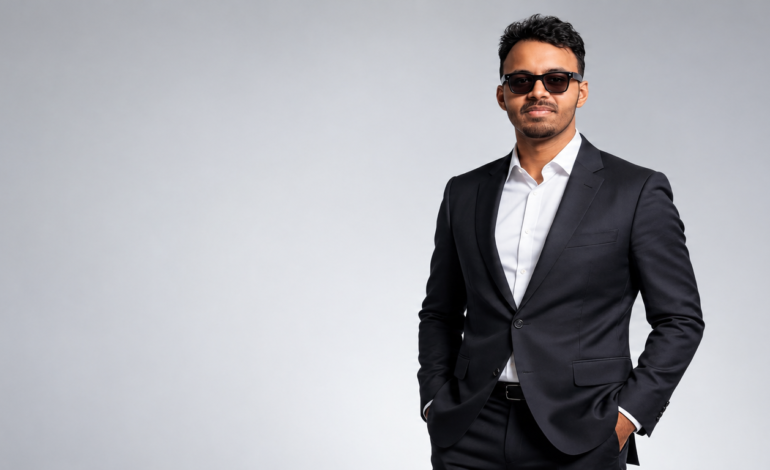

University of Missouri-Kansas City researcher Abhinav Kochar is working across surgical robotics, artificial intelligence, healthcare technology and learning theory, with a central goal: building AI systems that can understand, predict and eventually interact with the physical world.
KANSAS CITY, USA: As artificial intelligence moves beyond text and images towards systems capable of perceiving and reasoning about the physical world, researchers are increasingly confronting a fundamental challenge: how can machines reliably understand what is happening around them before attempting to act?
For Abhinav Kochar, a Computer Science PhD student at the University of Missouri-Kansas City (UMKC), that question sits at the centre of his research.
Working with Dr. Yugyung Lee, Kochar focuses on artificial intelligence, robotics and physical AI — developing systems that connect perception, motion and reasoning with measurable events in the real world.
Kochar arrived in the United States in 2024 to pursue his master’s degree at UMKC and subsequently continued into the university’s PhD programme. Since then, his work has expanded across surgical robotics, AI learning theory, rehabilitation technology, financial world models and AI education.
Turning Surgical Video Into Measurable Motion
At the heart of Kochar’s current research is tool2motion, a project designed to extract measurable surgical-instrument motion directly from video.
The first challenge is fundamentally one of measurement.
Using recordings from the da Vinci robotic surgical platform, Kochar developed a pipeline spanning instrument segmentation, keypoint detection, stereo 3-D pose estimation, jaw-angle measurement and trocar-anchored motion analysis.
Rather than evaluating the system solely through computer-vision metrics, the resulting measurements are validated against the robot’s own kinematic data, providing an independent physical reference.
According to results supplied for the research profile, learned keypoints on held-out experimental setups are positioned within approximately a millimetre of ground truth. The same tracking system has also demonstrated a 0.91 Dice score when segmenting instruments zero-shot in real human laparoscopic surgery.
The significance of the work extends beyond tracking instruments.
Once surgical video can be transformed into reliable motion measurements, those measurements can support higher-level tasks including forecasting instrument movement approximately half a second into the future, recognising surgical gestures from surgeons not seen during training, and evaluating surgical skill through interpretable motion characteristics.
Kochar is also benchmarking emerging AI approaches, including vision-language-action models such as NVIDIA GR00T and world-model forecasting systems, while experimenting with imitation learning in simulation.
Robot autonomy represents a longer-term research direction rather than a claim of current capability.
A workshop paper arising from the research is currently under review, while an ICRA 2027 submission is being prepared with Dr. Lee.
Building AI That Can Be Tested Against Reality
One principle runs consistently through Kochar’s experimental work: AI performance should be connected to measurable evidence.
Before an experiment begins, he defines its success criteria. Results are then compared, wherever possible, against an independent physical signal, while negative outcomes are documented alongside successful ones.
It is an approach particularly relevant to physical AI, where an impressive prediction on a benchmark may not necessarily translate into reliable performance when a system encounters the complexities of the real world.
For surgical applications, that distinction becomes even more important.
A model must not merely appear accurate. Its measurements need to correspond meaningfully with physical movement.
Understanding How AI Changes Its Beliefs
Alongside his applied research, Kochar studies the theoretical foundations of learning with Dr. Lee and Professor Michael Farmer.
Their collaboration examines how models learn and how large language models revise internal beliefs during inference.
The work has resulted in two 2026 preprints: one exploring information-regularised gradient flows through what the researchers describe as the “Fisher Paradox”, and another investigating observable belief revision in large language models through the “α-Law.”
The theoretical work complements Kochar’s robotics research.
One asks how intelligent systems can perceive and predict the physical world; the other investigates the mechanisms through which learning and reasoning themselves evolve.
Taking AI From the Laboratory Into Healthcare
Kochar’s work also extends into entrepreneurship.
He co-founded Geometry Cuneate, where the team is developing a smartphone-based platform intended to support stroke recovery and assessment at home.
The system is designed to allow stroke survivors to perform motor and speech assessments using an iPhone. Biomarkers can be calculated locally from the phone’s sensors, while on-device models assess dysarthric speech.
A guarded AI assistant forms another component of the platform, while clinicians can monitor patient progress through a web-based console designed not to handle identifying information.
The platform is currently live in daily testing ahead of a planned TestFlight release.
The project continues an interest in healthcare technology that began earlier in Kochar’s time at UMKC.
Through NIH-funded research involving breast cancer survivors, he contributed to LymCare and the related PoseCorrect system, which explored real-time computer-vision exercise coaching through a combination of pose tracking, EMG sensors and knowledge-graph retrieval.
World Models Beyond Robotics
Kochar has also been exploring how world-model concepts can be applied outside healthcare and robotics.
Through Spectra, he has been developing JEPA-style world models for financial decision-making.
The work includes an implied-volatility-surface model incorporating no-arbitrage structure and a deep-hedging agent trained through imagined rollouts generated within its modelling environment.
Although finance and surgical robotics appear to be very different fields, the underlying research question is closely related: can an AI system develop a sufficiently useful representation of its environment to anticipate what may happen next and make better decisions?
Bringing Applied AI Into the Classroom
Kochar’s work at UMKC is also moving into education.
This fall, he is serving as graduate assistant for the Bloch School course MIS 5522: AI for Business Operations, helping develop hands-on laboratories intended to take business students from working with AI prompts to deploying functional AI systems.
The role reflects another dimension of the rapidly changing AI landscape: advanced AI is no longer relevant only to computer scientists.
Business professionals increasingly need to understand how AI systems are designed, evaluated and deployed in real operating environments.
From India to the United States
Before moving to the United States, Kochar earned his B.Tech in Computer Science from Bennett University in India and worked as a data analyst at Maruti Suzuki.
His move to UMKC in 2024 marked the beginning of a new academic chapter, first through his master’s studies and subsequently through doctoral research.
Across projects that range from robotic surgery and rehabilitation to language-model theory and financial modelling, a consistent theme has emerged.
Kochar is interested not simply in making models produce answers, but in developing systems that can sense, represent and reason about environments whose outcomes can ultimately be measured against reality.
That distinction may become increasingly important as artificial intelligence enters its next phase.
For Kochar, the long-term direction is clear: understand how intelligent systems learn, give them stronger ways to perceive and predict the physical world, and eventually enable them to translate that understanding into reliable action.
From surgical instruments measured frame by frame to models learning to anticipate what happens next, Kochar’s research sits at the intersection of a larger technological shift — from AI that generates information to AI that understands and interacts with the world around it.
Also Read: Shabir Momin: From Teenage Programmer to Global Tech Entrepreneur
Saima Asghar: Transforming Education Through Leadership & Coaching