
Tensions Mount in Iraq Ahead of Crucial Disarmament Deadline
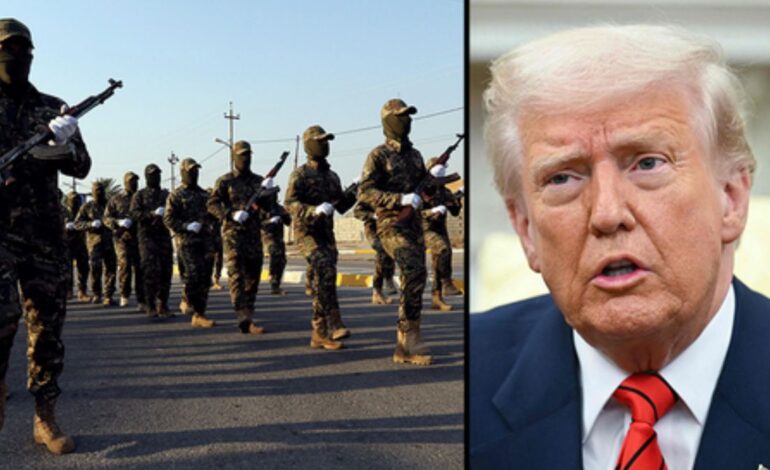

Tensions are rising across Iraq as the end-of-September deadline set by Prime Minister Ali al-Zaidi’s government to bring all weapons under state control draws closer. While some armed factions have hardened their refusal to disarm, others are quietly stepping back from earlier support for the initiative, and a third camp is pushing authorities to ease off the deadline altogether.
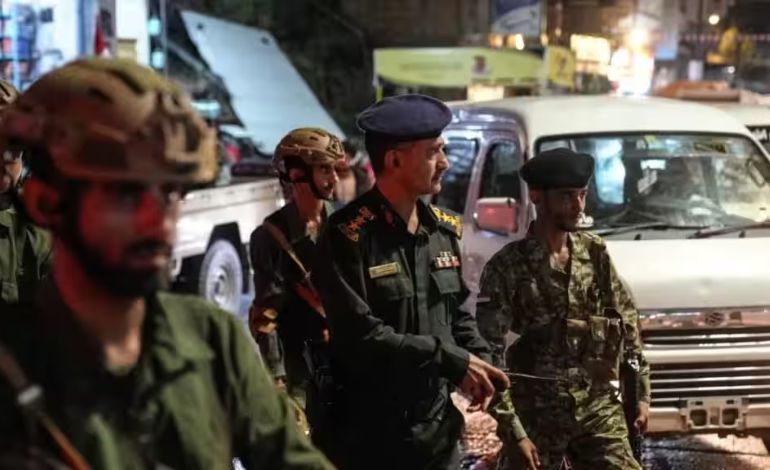
Al-Zaidi appears determined to hold the line regardless. A dramatic advertisement aired on state broadcaster Al Iraqiya called on factions to surrender their weapons while highlighting the strength of state forces, triggering a wave of escalatory statements from both supporters and opponents of the plan. Within days, reports emerged of a plot to assassinate Faiq Zidan, president of Iraq’s Supreme Judicial Council, followed by news that a senior Popular Mobilisation Forces intelligence official had been arrested.
The Coordination Framework, the political coalition backing al-Zaidi’s government, remains deeply divided. Some factions have signaled willingness to give up their weapons in exchange for preserving political influence and ministerial positions. Others, particularly those left out of the government’s portfolio distribution, have flatly refused. Abu Alaa al-Walai, secretary general of Kataib Sayyid al-Shuhada, said bluntly that his group was ready to “buy” the weapons of anyone willing to hand theirs over.
Outside the Coordination Framework, resistance is even firmer. Kataib Hezbollah Iraq and Harakat al-Nujaba have both rejected disarmament outright. A Kataib Hezbollah security official dismissed al-Zaidi’s rhetoric as “empty bravado” in a statement posted on X, while Harakat al-Nujaba’s Sheikh Akram al-Kaabi argued that the group’s weapons serve a broader purpose beyond confronting US forces, framing their continued arms as necessary to resist what he called American efforts to exploit Iraq’s resources. Badr Organisation leader Hadi al-Amiri has since called for calm, urging all sides to avoid inflammatory language and hasty decisions.
Beyond the domestic standoff, these armed factions play a wider strategic role tied to Iran’s regional security calculus, forming part of what analysts describe as Tehran’s “rings of fire” around its adversaries. With Iran’s influence in Syria weakened following the fall of Bashar al-Assad’s government and Hezbollah significantly diminished in Lebanon, Iraq’s factions — alongside Yemen’s Houthis — have become increasingly central to Iran’s regional strategy.
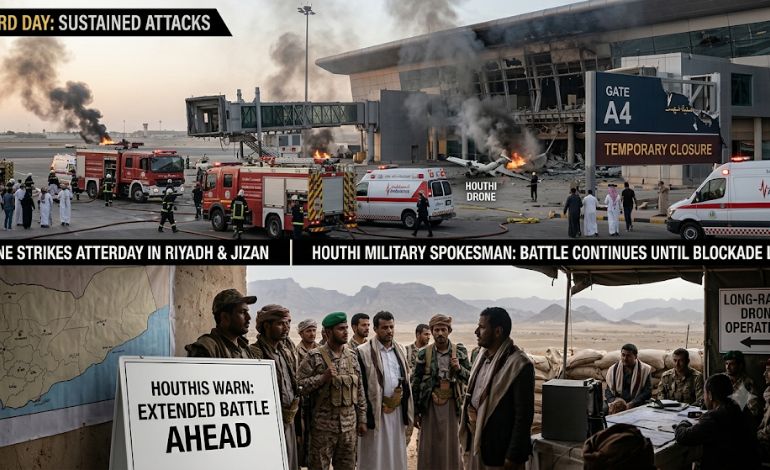
This dynamic has repeatedly embarrassed the Iraqi state, with drone and missile attacks launched from Iraqi territory against neighboring countries prompting formal protests from Gulf states. Investigative committees formed in response rarely identify those responsible. Seven Arab nations — Saudi Arabia, the UAE, Kuwait, Bahrain, Qatar, Jordan, and Syria — have publicly condemned such attacks as acts of aggression, straining Baghdad’s diplomatic relationships even as the government pursues economic and strategic partnerships with the same countries.
This contradiction sits at the core of Iraq’s dilemma: while officials pursue partnership and cooperation abroad, armed factions issue threats and carry out attacks against the same nations, undermining the government’s credibility as Iraq’s sole representative. Political leaders have further muddied the picture by drawing questionable distinctions between the PMF and other armed factions aligned with Iran’s broader regional network.
With the September 30 deadline approaching, al-Zaidi’s government faces a difficult choice — a confrontation that could restore state authority but carry significant costs, or a retreat that could damage Iraq’s standing with the US and its regional neighbors. Whether the country is prepared to bear the cost of resolving this long-standing grey zone between state and non-state power remains an open question.



















5 Comments
[…] Middle East August 20, 2026 […]
[…] Middle East August 20, 2026 […]
[…] Middle East August 20, 2026 […]
[…] Middle East August 20, 2026 […]
[…] Tensions Mount in Iraq Ahead of Crucial Disarmament Deadline […]