

Ghalibaf Speaks on Iranian Strategy to Conceal Weapons in Baghdad
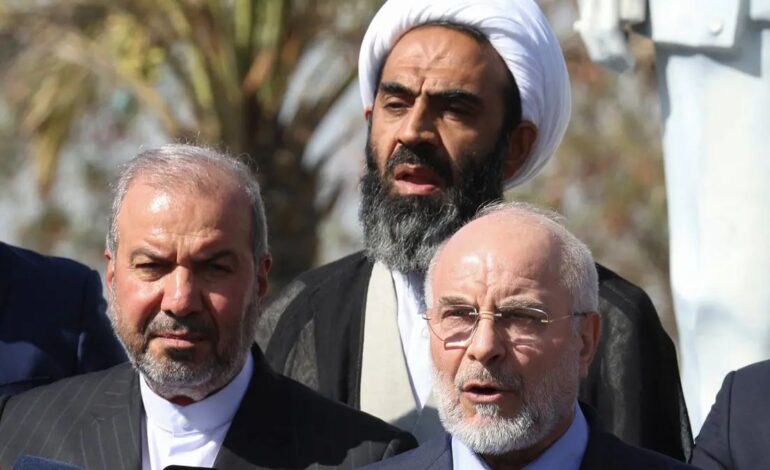

Iran is pushing proposals aimed at averting a confrontation between Iraq’s government and Tehran-aligned armed factions over their weapons, with Parliament Speaker Mohammad Bagher Ghalibaf carrying the effort to Baghdad ahead of a September 30 disarmament deadline.
Iraqi sources say Ghalibaf’s visit extends well beyond its stated parliamentary purpose, with discussions centered on political and security matters — particularly the fate of armed factions’ weapons as Iraq’s deadline to bring all arms under state control draws near. Among the ideas reportedly on the table are freezing or concealing heavy weapons, and potentially transferring a large portion of them temporarily to Iran until a political settlement is reached. These details have not been independently verified or publicly confirmed by either Tehran or Baghdad.
An Iraqi government source said the administration remains determined to meet its deadline, aligning the weapons-control timeline with the completion of the US troop withdrawal from Iraq. Prime Minister Ali al-Zaidi reaffirmed this position following his return from Washington, with backing from the State Administration Coalition. The government has already taken steps including forming a disengagement oversight committee, building a weapons database, and shutting down fictitious offices tied to the Popular Mobilization Forces.
Tensions have escalated alongside the visit, particularly with Kataib Hezbollah, which has rejected surrendering what it calls “resistance weapons.” A government source said authorities would not be drawn into confrontations but would continue enforcing the law, pointing to increasingly hostile rhetoric and videos targeting the prime minister as evidence of mounting pressure. Al-Zaidi’s refusal to respond in kind, combined with his insistence on the timeline, has reportedly placed Shiite factions within the Coordination Framework in a difficult position — caught between regional and international support for the prime minister and corruption cases affecting some of their own figures.
A political source said one option under discussion involves quietly extending the deadline without a formal announcement, allowing the government to claim progress while handling remaining factions through dialogue. Al-Zaidi, however, is said to remain committed to the deadline, believing any retreat would undermine his authority. One version of the proposal reportedly being floated by Ghalibaf would freeze or conceal factions’ heavy weapons and raise the possibility of moving a portion to Iran as a temporary “deposit” — an approach designed to let factions save face while avoiding a full break with the government.
Ghalibaf’s visit carries additional political weight given his standing within Iran’s establishment. He was received at Baghdad airport by Adnan Fayhan, a senior figure in the Asaib Ahl al-Haq movement, rather than Parliament Speaker Haibat al-Halbousi — a detail seen as symbolically significant. In his public remarks, Ghalibaf described Iraq’s “resistance” factions as a core element of the country’s strength and framed Baghdad-Tehran ties as part of building a “new regional order.” His trip followed an earlier, unannounced visit to Baghdad by Esmail Qaani, commander of Iran’s Quds Force, whose meetings also touched on the factions’ weapons and broader regional developments.













1 Comment
[…] Ghalibaf Speaks on Iranian Strategy to Conceal Weapons in Baghdad […]