

World Cup Property Boom 2026: Real Estate Strategies for Long-Term Growth

RIYADH — Host cities for the 2026 World Cup have averaged 44 percent property price growth since the tournament was announced, according to new analysis by London-based brokerage Enness Global. For investors, the lesson is clear: the real estate payoff begins long before the opening whistle.
Guadalajara led the pack with a 111.6 percent surge, followed by Monterrey at 99.7 percent. Among US cities, Miami topped the table at 71.3 percent, with Kansas City at 66.2 percent. Every one of the 16 host cities recorded positive growth over the period.
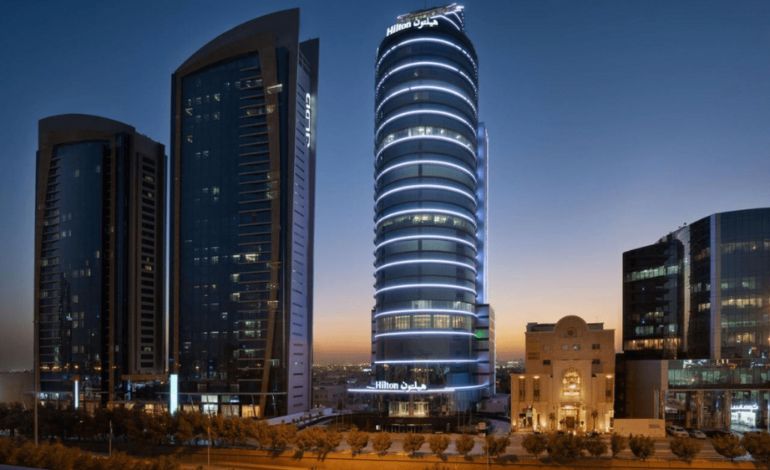
For Saudi Arabia, awarded the 2034 World Cup in December 2024, the data arrives at a pointed moment. If the pattern holds, the most significant appreciation tends to come in the early years after an announcement, not the final months before a tournament. The entry window in Riyadh, Jeddah, Abha, and beyond may already be narrowing.
A Different Kind of Host
Oliver Morgan, partner and real estate leader at Deloitte Middle East, told Arab News the “critical distinction” is that 2026 host cities are largely “passive recipients” of tournament-driven investment. “Saudi Arabia is actively architecting its real estate transformation through Vision 2030,” he said, pointing to residential market projections of $164.85 billion in 2026 and drivers like the Riyadh Metro, Green Riyadh, and Expo 2030.
Manar Mahmassani, co-founder and co-CEO of Stake, sees parallels in secondary cities. “Madinah, Alkhobar and Abha,” he said, when asked which markets investors are currently overlooking. Madinah has over $53 billion in development, Alkhobar offers stable rental demand anchored by Aramco employees, and Abha has PIF-backed mountain tourism at Soudah Peaks.
The regulatory picture has also changed. Saudi Arabia’s foreign ownership law now allows non‑Saudis to buy property, and fractional ownership has been explicitly recognized. “A market that was largely closed to international capital until this year,” Mahmassani said.
Oversupply remains a risk. “Buy the fundamentals, not just the event,” Mahmassani warned. Morgan advised investors to view the World Cup as a “10‑year transformation cycle, not a 2034 event.” For retail investors, the strategy is long‑term: buy yield‑generating property in cities with real demand, collect income through the preparation period, and think of 2034 as an exit window rather than the payoff itself. The underlying logic — that globally significant destinations reward those who arrive before the crowds — holds just as well in Jeddah and Abha as it did in Guadalajara and Kansas City.
Also Read:
Dr. K. J. Purushottam – Recipient of the Arab Royal Excellent Award 2026
US Government Confirms Grok AI Was Used in Operations Against Iran