
Energy Secretary Defends US Policy on Venezuelan Oil
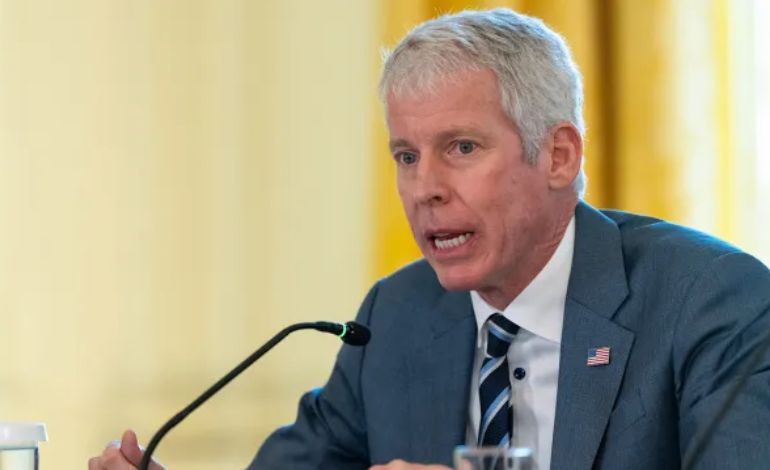

US Energy Secretary Chris Wright dismissed claims Wednesday that Washington was “stealing Venezuelan oil,” after the South American nation granted its northern neighbor access to a significant share of its natural resources.
Wright, who traveled to Venezuela to oversee the signing of a series of energy agreements worth billions of dollars, addressed the criticism in comments to AFP and other outlets at Caracas airport. Under the deal, the United States is set to gain majority control of more than 65 billion barrels of oil in Venezuela — nearly 20 percent of the country’s total reserves, which are the largest proven reserves in the world. Caracas has projected earnings of $209 billion over 25 years from the arrangement.
“I’ve seen those headlines. ‘We’re stealing Venezuelan oil.’ Of course, that’s not true at all,” Wright said, adding that the oil remains owned by the Venezuelan people. “Private companies are bringing the money to produce the oil, but the benefits, the royalties and the taxes all go to the government of Venezuela and the people of Venezuela,” he said. “All we’re doing is taking an idle, underground asset that isn’t doing anything for Venezuelan people and bringing the money, the technology to develop it.”
Wright also emphasized the importance of repairing Venezuela’s electricity sector, noting that much of the country experiences hours-long power outages daily and that the oil sector itself depends on reliable electricity to function. “You need them both,” he said, expressing optimism about Venezuela’s existing electricity infrastructure, which he believes can be revitalized under a proposed five-year plan.
President Donald Trump said Sunday that oil secured through the deal will be used to replenish the Strategic Petroleum Reserve, adding that the “topping out” process would begin shortly. Trump has described the agreement, announced Friday, as the biggest oil deal in world history. However, Wright suggested the process may be more complex than that framing implies. “We’ll swap you a barrel of heavy crude for a barrel of light or medium United States crude,” he said during an interview on CNBC, describing oil markets as fluid.
Refilling the reserve is a key priority for the Trump administration’s broader energy strategy, particularly after Washington recently released millions of barrels from the Strategic Petroleum Reserve as part of a global effort to stabilize markets during the conflict with Iran. That release, totaling up to 172 million barrels, combined with historically low inventory levels, has raised concerns about potential cavern damage and the US’s ability to respond quickly in future supply emergencies.
With the reserve now at a 44-year low and Washington poised to gain access to billions of barrels of Venezuelan crude, one straightforward solution would be to funnel that oil directly into the reserve. However, traders and analysts say significant differences in crude quality between Venezuelan oil and the current specifications required for the Strategic Petroleum Reserve make that approach unlikely. Instead, Wright indicated the US government may swap Venezuela’s dense, high-sulfur crude for lighter American oil better suited to the reserve’s requirements — a workaround that would help address quality concerns while still replenishing the stockpile. The US Strategic Petroleum Reserve, the world’s largest emergency oil stockpile, is stored in underground caverns along the Texas and Louisiana coasts.
On the political front, Trump pushed back Wednesday against calls for elections in Venezuela, despite hopes that Washington-backed talks between the interim government and parts of the opposition could eventually lead to a democratic vote. “I just don’t think they’re ready yet. You know, it’s very new. We took them out of a dictatorship, and we’re getting along great with the government,” he said.
US forces removed Venezuelan President Nicolas Maduro from power in January, and his former vice president, Delcy Rodriguez, has governed the country on an interim basis since then. Rodriguez, who governs under close US oversight, echoed Trump’s stance, saying elections would take place once “Venezuela is ready.” Wright clarified that elections represent an ongoing process, pointing to necessary reforms — including an overhaul of Venezuela’s Supreme Court — that must occur first. “The plan for elections has not changed at all. It’s to continue to get the infrastructure ready and have elections at the appropriate time,” he said, adding that the country’s economy needs to stabilize before a popular vote can take place. “You don’t want to wait, sit on your hands for whatever time it takes to get through elections,” he said.
Also Read:
Saudi Water Industry Gets Major Boost From Seven New Plants
UN Warns of Serious Violations Amid Gaza and West Bank Crisis