Why Gen Z and WhatsApp were Important in Lula’s Historic Return to Power in Brazil
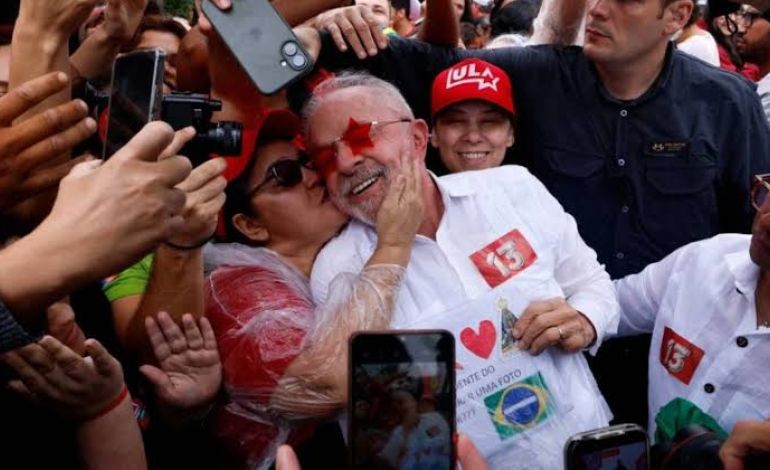

An 80-year-old president who used to be hesitant to use social media won a historic election comeback in Brazil with the help of young voters, street protests, and a WhatsApp network with more than 10 million users.
Luiz Inacio Lula da Silva won a fourth term as president on October 25 by beating Senator Flavio Bolsonaro, who is the oldest son of former President Jair Bolsonaro. Just three weeks earlier, he was behind Bolsonaro in the first round.
The electoral authorities in Brazil say that Lula got 51.79% of valid votes and Bolsonaro got 48.21%. Politics and the economy played a role in the outcome but experts say an unexpected wave of youth activism helped change the course of the campaign.
After Lula lost to Bolsonaro in the first round on October 4 students and young activists began planning protests across Brazil. People who are worried about the future of politics in the country came together at protests in places like Rio de Janeiro and Sao Paulo.
A Brazilian historian named Anaïs Fléchet told the French newspaper Le Monde that the mobilisation happened quickly and surprised even high-level members of Lula’s Workers’ Party.
The protests gave a campaign that had struggled to connect with younger voters a new boost. People did not stay in the streets though. One of the most unusual features of the election was a WhatsApp network known as Lula’s Army. Brazilian lawmaker André Janones created the network, which attracted more than 10 million participants during the campaign.
Also Read:
Interior Ministry Announces ‘Absher Travel for Visitors’ Service at Land Border Points
IFFCO and EKTIFA have Formed a Strategic Alliance to Enhance R&D for food Products