


According to an Official, Indonesia’s Number of Fire Sites has Decreased, but Rainfall Remains insufficient
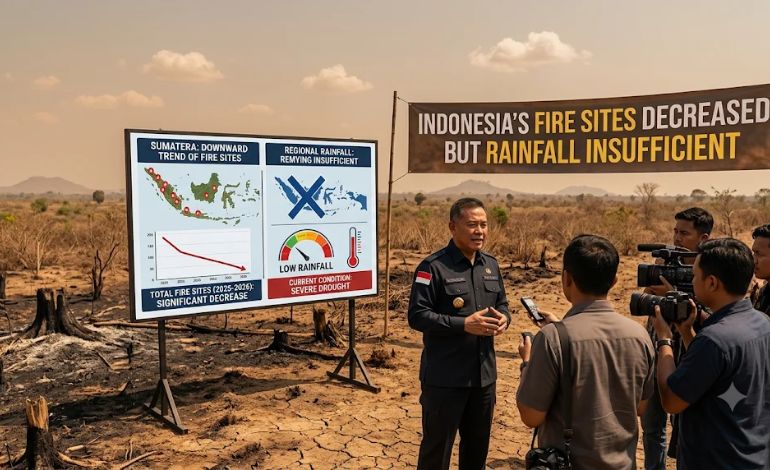

Indonesia remains on high alert for wildfires, despite a decrease in hotspots over the past week. A disaster agency official stated on Thursday that the sporadic rainfall is still insufficient to extinguish them. This announcement was made as students on Borneo island staged protests against the government’s management of the crisis.
Indonesia has been grappling with its worst forest fires in 11 years, as the El Niño weather phenomenon has raised temperatures and made the country’s extensive forests and peatlands more fire-prone.
The persistent fires have caused hundreds of thousands of respiratory illnesses in Indonesia and have significantly affected air quality in neighboring Singapore and Malaysia. The transboundary pollution has garnered significant criticism throughout the region.
Carbon dioxide emissions from Indonesian fires from October 15 to October 21 totaled 14.44 million metric tonnes, down from 22.22 million tonnes in the previous seven days, according to data from the EU’s Copernicus climate monitoring service.
On Thursday, the Indonesian forest ministry’s surveillance platform Sipongi reported that the number of “high-confidence” hotspots had decreased from over 1,200 on October 14 to 565.
Berton Panjaitan, a spokesperson for Indonesia’s disaster mitigation agency, told Reuters that the number of hotspots has decreased in line with the latest developments. Nevertheless, the trend is still volatile and has not yet been consistent across all regions.
Indonesia has deployed over 69,000 firefighting personnel, up from about 44,000 in mid-September, along with about 50 aircraft to conduct weather modification and waterbombing operations. Additionally, authorities are conducting experiments to evaluate novel approaches to fire suppression, such as the utilization of dry ice for cloud seeding and the application of specialized chemicals.
Also Read:
Japan’s Trade Gap Widens as oil Imports Surge Amid Middle East Turmoil
UN Chief Says the World is Dangerously Short on Climate Action