
Strengthening Global Trade with Better Maritime Security Cooperation
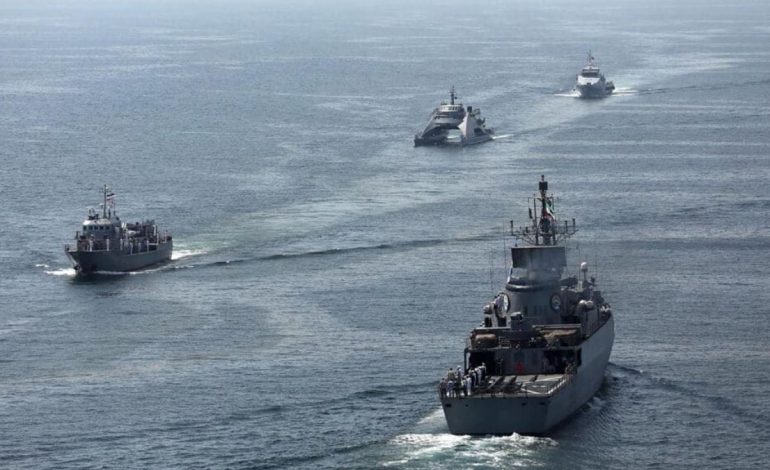

LONDON — Maritime security in the Red Sea, Bab el-Mandab Strait, and the Strait of Hormuz is often treated as a regional concern, but these waterways are global economic arteries. More than 80 percent of world trade moves by sea, and disruption to these routes affects energy security, industrial production, food supplies, and consumer prices worldwide.
The existing response remains fragmented. While capable naval missions, regional information-sharing mechanisms, and international legal frameworks exist, no standing political coalition joins them into a common strategy. Iran benefits from this fragmentation, projecting power through formal state institutions, the Islamic Revolutionary Guard Corps, aligned armed groups, financiers, and commercial intermediaries operating across jurisdictions.
Military operations remain necessary but address only the manifestation of the threat at sea. A warship can intercept a drone or escort a merchant vessel, but it cannot dismantle the financial, commercial, and logistical networks that enable Iran’s attacks to continue. Experts argue that a sustainable strategy must combine military defence with financial intelligence, customs cooperation, export controls, law enforcement, and diplomacy.
The current maritime security architecture has four principal components: naval partnerships such as Combined Maritime Forces and Europe’s ASPIDES, international law and diplomacy, information-sharing mechanisms, and national measures including sanctions. However, these operate largely in isolation rather than as an integrated political, financial, and law enforcement coalition.
Many now believe that the creation of a global coalition for maritime security and network disruption would make a serious statement, forming an international political alliance to safeguard shipping and the global economy. Such a coalition would supply the political and organisational framework needed to address both the attacks at sea and the networks behind them.
Also Read:
GCC Discusses Maritime Safety and Stability in the Hormuz Strait
Saudi FM Meets UK, Qatar, and Kuwait Officials to Discuss Regional Stability