



MBSC Executive Dean Discusses the Role of Humanity in the AI Era

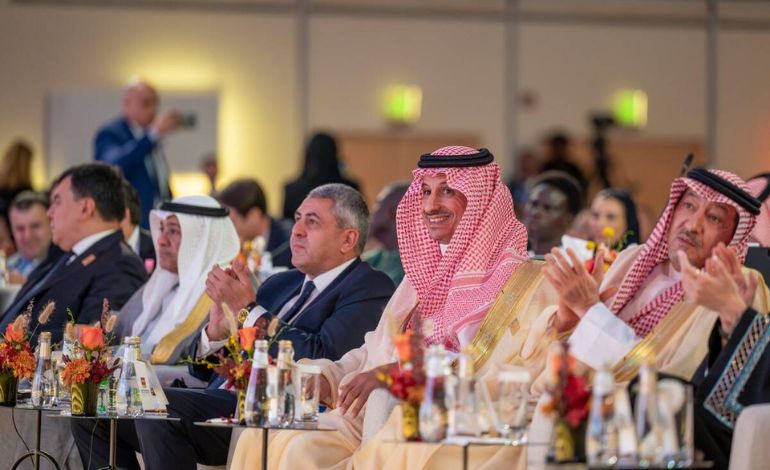
While advanced technology is transforming how businesses operate and leaders make decisions, its effectiveness still depends on human judgment, creativity, and the ability to ask the right questions, according to Prof. Zeger Degraeve, executive dean of Prince Mohammed Bin Salman College of Business and Entrepreneurship.
Speaking to Arab News on the sidelines of LEAP 2026 in Riyadh, Degraeve emphasized that despite rapid technological advancement, these tools remain products of human innovation. “It did not invent itself. It is still a testimony to human ingenuity, human creativity and innovation,” he said, adding that human intelligence continues not only to prevail, but to dominate.
At MBSC, students are taught to approach these tools as part of a broader process rather than simply using them to produce definitive answers. Degraeve explained that the approach is built around three central questions designed to help students engage more effectively with the technology. The first question must define the desired outcome, he said: “We need to really be sure what we really want, and you’ll be surprised — in many situations, people are not quite sure.” Once that objective is clear, the next question becomes: what are the options? The final step involves identifying what information and resources are needed before using these tools to gather and organize them for better decision-making and deeper research.
Degraeve said this framework is especially valuable for the business leaders and executives he often teaches, many of whom have historically pointed to insufficient data as a barrier to informed decision-making. With today’s technology, he said, that justification “has become completely void.” He explained: “If you really need a trend, you then ask for historical information and it will find it for you. It will then make a graph to give an indication: Is the market growing? Is the market contracting? You have a trend.” The same approach can be applied to competitive analysis and other business evaluations, with these tools generating charts and graphs that help leaders understand available information more clearly and accessibly.
Despite the long list of benefits this technology brings to education, Degraeve stressed that these outcomes remain fundamentally the result of human activity. It is the individual who determines what information is needed, decides how it should be presented, and ultimately chooses the course of action it informs.
As many question the future of creativity in this new technological landscape, Degraeve pointed to it as a core pillar at MBSC, one of two central principles woven into its curriculum. “Creativity alone is purely an academic exercise,” he said. “You also need the abilities and the skills to make things happen — to execute effectively.” He described this balance as “technology and human DNA,” a guiding principle behind the institution’s teaching approach as it prepares students to navigate and lead in an increasingly technology-driven business environment.
For companies weighing where to draw boundaries around their use of these tools, Degraeve argued the focus should instead be on how they engage with them. Employees and executives, he said, should remain active and reflective, continually questioning the information these systems provide rather than accepting outputs without critical thought.
Also Read:
Saudi Water Industry Gets Major Boost From Seven New Plants
UN Warns of Serious Violations Amid Gaza and West Bank Crisis