




How Artificial Intelligence Is Transforming Nature Conservation in Saudi Arabia


The next major frontier in environmental conservation is being built inside digital data centers. As advanced data tools and real-time tracking reshape ecological management, technology is enabling scientists to restore entire ecosystems at speeds once thought impossible.
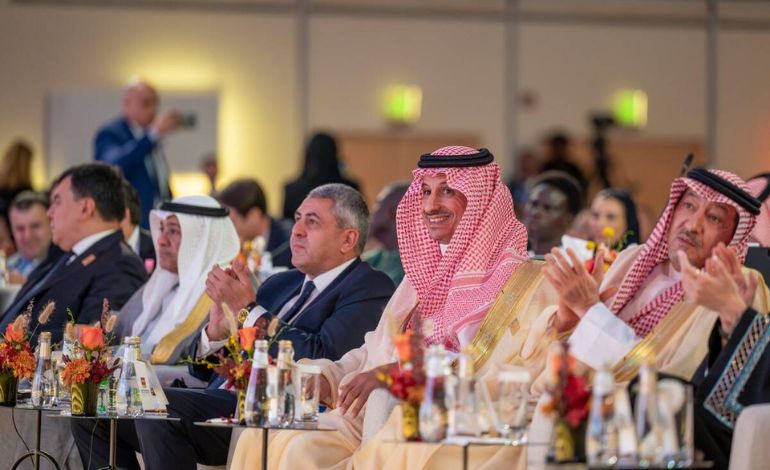
Speaking to Arab News on the sidelines of the LEAP 5 tech conference in Riyadh, Andrew Zaloumis, CEO of the Prince Mohammed bin Salman Royal Reserve (PMBSRR), explained why technology leaders should be investing in biodiversity.
According to Zaloumis, digital infrastructure represents a new frontier for conservation, offering an unprecedented way to scale projects. He pointed to recent breakthroughs in bioacoustic research — including studies using advanced audio modeling that revealed elephants call one another by individual names — as evidence of how technology is shifting human capability, moving conservation efforts away from trying to control nature and toward genuinely understanding animal communication and behavior.
Continuous data streams from satellite tags, drones, and oceanographic sensors have shifted conservation strategy away from reactive crisis response toward predictive, proactive management. “Historically conservation has been reactive,” Zaloumis said. “There’s an oil spill, there’s a problem, how do we sort it out. Increasingly using IT we are becoming proactive. So you’re actually beginning to do things and steer things before they actually happen. And that’s a game changer.”
By continuously monitoring metrics such as water temperature, turbidity, and diving depth, conservationists now gain immediate insight into ecosystem health across vast geographic areas. For migratory marine species, such as sea turtles in the Red Sea that travel through the waters of eight different nations, this ongoing tracking enables coordinated management across borders. This digital approach aligns closely with Saudi Arabia’s rapid environmental expansion under the Saudi Green Initiative, which recently earned UN recognition for its global restoration achievements within just six years of launch.
Spanning an area more than twice the size of Lebanon, PMBSRR functions as a living laboratory for large-scale rewilding. Having already reintroduced 14 native species, including the Persian onager, the reserve is now preparing for its next ecological phase.
Zaloumis emphasized that rewilding must be approached as a step-by-step process, with the reserve now turning its focus to the caracal. While these medium-sized wild cats face significant threats globally from poaching and habitat loss, improved local land management and stronger anti-poaching measures have made their return to the reserve possible. This recovery phase lays essential groundwork for eventually reintroducing top-tier apex predators to the region.
“We are now in a position in PMBSRR to bring back caracal, because poaching is being brought under control and the habitat environment has increased and improved fundamentally,” Zaloumis said. “And for us, it’s a big stepping stone because it’s a lesson learned for where we are ultimately going, which is Asiatic lion. It did occur in Saudi Arabia. There are about 300 left in the wild in other countries. And along with leopard and along with cheetah, they are charismatic apex predators that you introduce. So every time we introduce a new species, you’re moving up the food chain. We’re getting closer and closer to the dominant predators next to man.”
As Saudi Arabia works toward its goal of protecting 30 percent of its land and marine territory by 2030 — up sharply from just 8 percent a decade ago — advanced digital tools are automating tasks that previously required months of manual work. Zaloumis noted that image recognition models trained on camera trap data can now instantly identify concealed animals, such as ibex, across thousands of photos, giving reserve managers immediate operational insight.
Looking ahead, emerging innovations like smart collars and “invisible fences” will make it possible to manage wildlife across corridors spanning up to 70,000 square kilometers, opening substantial career opportunities for young Saudi talent in the process.
“There are many new streams coming on, and young minds is what it’s all about — people with imagination,” Zaloumis concluded. “Once you’ve imagined this, you can find solutions. And I think this technology is a major driver in that.”
Also Read:
Saudi Water Industry Gets Major Boost From Seven New Plants
UN Warns of Serious Violations Amid Gaza and West Bank Crisis






















4 Comments
[…] Saudi Arabia September 4, 2026 […]
[…] Saudi Arabia September 4, 2026 […]
[…] How Artificial Intelligence Is Transforming Nature Conservation in Saudi Arabia […]
[…] How Artificial Intelligence Is Transforming Nature Conservation in Saudi Arabia […]