


Ali Al-Taher Ridge at the Heart of Escalating Israel-Hezbollah Tensions
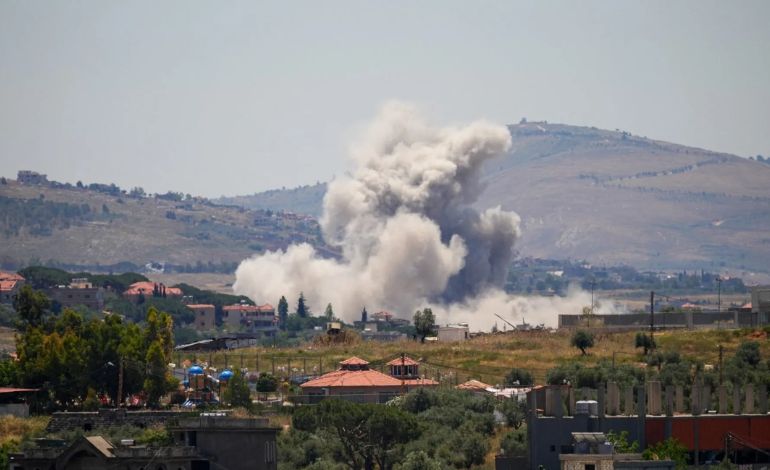

The Ali Al-Taher ridge in southern Lebanon, named after a Shi’ite Muslim scholar whose shrine sits at its summit, has become one of the most fiercely contested pieces of ground in the ongoing Israel-Hezbollah war. Though the cluster of hills isn’t particularly large, its strategic overlook of southern Lebanon — and what Hezbollah is believed to have built underneath it — has placed it at the center of the conflict between Israel and the Iran-backed militant group.
Located roughly 15 kilometers from the Israeli border, the Ali Al-Taher ridge offers a commanding view over a wide stretch of southeastern Lebanon. Israel controlled the area during its 22-year occupation of southern Lebanon, which ended in 2000. After the current war broke out on March 2, Israeli troops advanced deep into southern Lebanon, seizing key hilltops including the historic Beaufort Castle along the route to Ali Al-Taher. By June, Israel’s military had described the ridge as one of its primary operational focuses, incorporating it into a map of an expanded, self-declared buffer zone where its forces continue to operate. The ridge has effectively become a dividing line, separating Lebanese territory occupied by Israeli troops to the south from towns further north — including Nabatieh — that have faced heavy Israeli air strikes.
The ridge’s strategic value runs deeper than its elevation. Lebanese security sources told Reuters in July that Hezbollah is believed to have constructed an underground command center and weapons storage facilities within the ridge itself. Sitting 600 meters above sea level, the location gave Hezbollah a tactical advantage for launching short-range missiles and drones toward northern Israel, according to analysts. The ridge also connects border areas in southern Lebanon to the hilly Iqlim al-Tuffah region further north, which has long served as a key logistical and operational base for Hezbollah, the security sources said.
Israeli air forces have targeted the ridge extensively in recent months. In June, an Israeli military official speaking on condition of anonymity told Reuters that Hezbollah fighters had become trapped underground without food or water. The Times of Israel, citing a military investigation, reported on June 20 that one Israeli soldier was killed and 13 wounded during operations aimed at capturing a major underground Hezbollah facility beneath the ridge. Hezbollah has maintained that despite Israeli attempts to advance, its fighters retain full control over the area and remain fully prepared to confront any effort by Israeli forces to advance or infiltrate. In July, the Israeli military said it would not allow Hezbollah fighters to emerge from underground infrastructure to operate in the area or threaten Israeli soldiers.
The ridge also carries significant political weight. Ali Al-Taher lies near Zawtar Al Gharbiyeh, a town from which Israeli troops withdrew in July as part of a US-brokered roadmap intended to see Israeli forces gradually pull back from southern Lebanon as Lebanese troops work to disarm Hezbollah. That plan has since stalled, with Hezbollah refusing to relinquish its weapons and Israel insisting it won’t withdraw until disarmament occurs.
With Israeli elections scheduled for October drawing closer, capturing Ali Al-Taher could represent an appealing win for Prime Minister Benjamin Netanyahu’s government. “Before the elections, Israel needs a big win in an area that has always been seen as a Hezbollah stronghold,” said Andrea Tenenti, a strategic communications expert and former spokesperson for the UN peacekeeping force in Lebanon, UNIFIL. Still, Israel may prefer a slower, more cautious approach to avoid troop casualties, according to Hassan Jouni, a Lebanese analyst and retired army general. “Israel is hesitant to storm Ali Al-Taher for fear of casualties, especially at this sensitive moment before elections,” Jouni told Reuters.
The standoff in Lebanon reflects the broader deadlock across the Middle East, where negotiations between the United States and Iran remain stalled with no clear breakthrough in sight.
Also Read:
Saudi Water Industry Gets Major Boost From Seven New Plants
UN Warns of Serious Violations Amid Gaza and West Bank Crisis