
Libya Charts New Political Future With Two-Year Election Roadmap
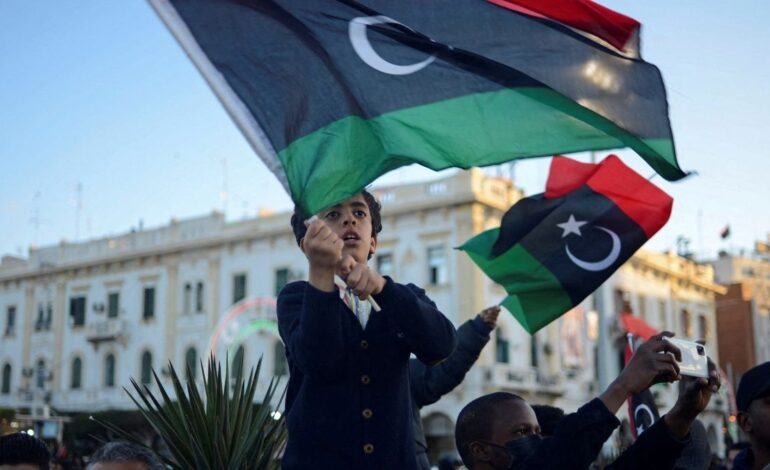

Libya has entered a potentially decisive new phase in its long-running political transition, after representatives from the country’s rival institutions signed an agreement outlining a road map for presidential and parliamentary elections within two years.
The agreement, signed in Tripoli on Sunday under the auspices of the UN Support Mission in Libya, aims to resolve disputes over electoral legislation, reform the national elections body, and establish the conditions needed to end more than a decade of competing governments and divided institutions. The signing ceremony was attended by Hanna Tetteh, the UN secretary-general’s special representative for Libya and head of UNSMIL.
The agreement followed months of negotiations under what became known as the “4+4” format, bringing together two representatives each from Libya’s four main power centers: the Government of National Unity, the High Council of State, the House of Representatives, and the Libyan National Army. Under its terms, legislative and presidential elections are to be held within no more than 24 months under a single executive authority and unified national institutions. If that timeline proves unworkable, the parties have agreed to work with UNSMIL on an alternative path toward holding elections.
The agreement represents an attempt to break the cycle of temporary political arrangements that has defined Libya since the fall of Muammar Qaddafi in 2011. Previous efforts to reach a lasting political settlement have repeatedly collapsed over disputes involving electoral laws, institutional legitimacy, control of state bodies, and the distribution of power.
Libyan Prime Minister Abdul Hamid Dbeibeh welcomed the agreement as an important step toward ending the country’s prolonged transitional period. “We have advocated from the beginning for ending the transitional phases and moving toward elections,” he said, adding that Libyans themselves must ultimately decide the country’s future through elections that end division and grant institutions genuine legitimacy rooted in the will of citizens.
Aguila Saleh, speaker of the House of Representatives, also welcomed efforts toward a comprehensive political settlement, saying the House supported initiatives aimed at ending political divisions and enabling simultaneous presidential and parliamentary elections. He said the House would formally review the agreement once presented and take steps necessary to protect the public interest and preserve state stability, while expressing readiness to support unifying Libya’s institutions ahead of elections.
Still, reaching an agreement is only part of the challenge. Libya has seen numerous political road maps announced and later abandoned over the past 15 years, with competing institutions repeatedly failing to follow through on negotiated commitments — a history that makes implementation the true test of this latest initiative.
Rakha Ahmed Hassan, a former Egyptian assistant foreign minister and ambassador to Kazakhstan, told Arab News the agreement marks a step in the right direction, while cautioning that earlier UN-led efforts, including those led by envoys Martin Kobler and Ghassan Salame, have repeatedly faltered. “The important issue is implementation,” he said, warning that success will depend on all Libyan parties honoring their commitments without delay.
Salah Halima, another former Egyptian assistant foreign minister and ambassador to Sudan, said the agreement could help unify Libya’s divided institutions after years of instability, noting that the UN had likely consulted neighboring countries and other interested states before the signing. He described the road map as a potential path toward restoring unified state institutions after more than 15 years of fragmentation.
Mohammed El-Shazly, a member of the Egyptian Council for Foreign Affairs and former ambassador, said political will would ultimately determine whether the initiative succeeds. He pointed to the significant toll years of conflict and rivalry have taken on Libya despite its substantial natural resources, noting that institutional disputes have repeatedly derailed past settlements. “The issue is not merely an agreement on paper,” he told Arab News. “What is required is a genuine desire on the part of the institutions to work seriously to implement it.”
Tetteh described the agreement as an important step toward overcoming the political and institutional deadlock that has long obstructed Libya’s electoral process, saying responsibility now rests with Libyan parties to translate the agreement into concrete action by adopting it nationally, implementing the agreed electoral framework, and creating the conditions needed for credible elections. She said the UN would continue supporting the process while stressing that Libya’s political future ultimately belongs to its people.
The agreement follows months of negotiation, beginning with the first meeting of the smaller dialogue format in Rome on April 29, followed by seven additional meetings in Tunis between May and August that culminated in the Tripoli signing and the commitment to hold elections within 24 months.
The renewed diplomatic push comes amid heightened regional and international attention on Libya. Last month, Arab League Secretary-General Nabil Fahmy met with Massad Boulos, senior adviser to US President Donald Trump on Arab and African affairs, to discuss developments in the country. Fahmy reaffirmed the Arab League’s support for a Libyan-led political process aimed at unifying state institutions and holding presidential and parliamentary elections as soon as possible.
The stakes for Libya remain high. The country continues to be divided between competing political and security institutions despite repeated international efforts to establish a unified government and organize national elections. This latest agreement offers another opportunity to move past that stalemate — but as diplomats and analysts note, its true significance will be determined not by the signing ceremony in Tripoli, but by whether Libya’s political factions are finally prepared to move from negotiation to implementation, allowing Libyans themselves to decide who governs them.
Also Read:
US Envoy Expresses Hope for Major Prisoner Release in Belarus
Syria Hails Diplomatic Breakthrough With Tripoli Embassy Reopening











3 Comments
[…] Middle East September 1, 2026 […]
[…] Libya Charts New Political Future With Two-Year Election Roadmap […]
[…] Libya Charts New Political Future With Two-Year Election Roadmap […]