


French-Saudi Partnership Gains Momentum Through AI, Science and Innovation
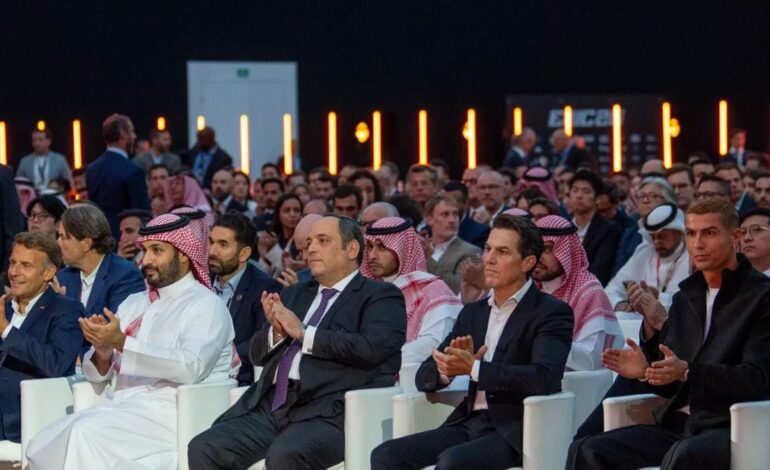

Philippe Aghion, a prominent French economist recognized for his work on economic growth and innovation, believes France and Saudi Arabia are well positioned to build a powerful economic partnership rooted in complementary strengths. A professor at the College de France and the London School of Economics, Aghion’s research has helped modernize Joseph Schumpeter’s theory of “creative destruction,” showing how innovation driven by competition and guided by government policy fuels economic growth — work that earned him the Nobel Prize in Economics. He spoke with Arab News en Francais in Paris about the potential for deeper cooperation between the two countries.
According to Aghion, France brings talent, technology, and expertise to the table, while Saudi Arabia offers capital, investment capacity, and industrial momentum. Bringing these strengths together, he argues, could help finance a new generation of innovation while also serving as a catalyst for economic and institutional reform in France.
Aghion believes Saudi Arabia and other Gulf nations are well positioned to leap ahead technologically, given their financial resources and industrial experience, while France contributes the scientific and technological know-how needed to accelerate that progress. He points to France’s strong talent pool in mathematics, computer science, and engineering, along with its recognized expertise in aerospace, defense, nuclear energy, rail, and luxury goods, as key assets. However, he notes that France’s fiscal situation and debt levels significantly limit its capacity to invest in disruptive innovation, a constraint made worse by rising interest rates.
He summarizes the partnership’s logic simply: Saudi Arabia has the funds, France has the know-how — though Riyadh also brings valuable industrial and energy-sector expertise to the relationship, making it a genuine joint effort rather than a one-way transaction.
Among the priority areas for cooperation, advanced computing technology stands out, given its enormous growth potential and its ability to automate the production of goods, services, and ideas. Aghion says developing this capability requires vast amounts of data and computing power, both of which are costly — an area where the two countries could pool resources effectively. He envisions France playing a central role in a European technology initiative comparable to the US Defense Advanced Research Projects Agency, potentially involving other European nations alongside Saudi funding. He argues that France’s main obstacle is a lack of financing, while Saudi Arabia could supply the necessary capital in exchange for France’s researchers, engineers, and technical expertise.
Aghion advocates for France to champion a more ethical, rights-respecting approach to this technology — one that prioritizes individual freedoms, property rights, and democratic values — and believes there is a global market for solutions built around these principles. He sees a joint Franco-Saudi effort as capable of building this kind of “trustworthy” technology, combining French expertise and values with Saudi funding and industrial capability, particularly for markets across the Global South.
Beyond economics, Aghion believes the two countries can cooperate on institutional, cultural, and geopolitical matters, arguing that despite cultural differences, France and Saudi Arabia share meaningful common interests and values.
Importantly, Aghion stresses that Saudi investment shouldn’t simply flow into France’s existing systems — it should help accelerate structural reforms in education, universities, government, industrial policy, venture capital, and governance. He frames the relationship as reciprocal rather than one-directional, with France contributing training, technology transfer, and expertise in fields like mathematics, engineering, and transportation, while Saudi Arabia offers funding, industrial experience, and digital dynamism in return.
He argues that investment without structural reform would be largely ineffective, pointing specifically to education and universities as areas where increased funding should come paired with greater institutional autonomy and stronger governance. Aghion also believes France needs to adopt a more business- and market-friendly economic approach, and suggests that a major joint project with Saudi Arabia could help make necessary reforms more politically and socially acceptable by offering the French public a compelling vision for the future.
On entrepreneurship, Aghion identifies several obstacles holding back innovation in France, including heavy bureaucracy, insufficient long-term financing, limited venture capital, and a cultural resistance to failure — all of which discourage the risk-taking necessary for disruptive innovation. He recommends expanding venture capital and long-term research funding while reducing excessive government bureaucracy, which he attributes partly to overstaffing in certain agencies.
Aghion sees potential for advanced technology to help address this bureaucratic burden directly, by automating administrative tasks and streamlining government operations. He also sees room for Saudi Arabia to strengthen its institutions in areas like property rights protection, anti-corruption measures, and overall governance quality — improvements he says are essential, since lasting prosperity depends on the combination of strong technology and sound institutions, not either one alone.
Aghion sees France’s technological, scientific, and educational expertise, along with its historical standing and soft power in the Middle East, as key assets in deepening ties with Saudi Arabia. On broader geopolitical matters, he expressed support for a two-state solution regarding Israel and the Palestinians, a position he believes both France and Saudi Arabia share, while voicing hope for political change within Israel.
Aghion closed the interview by expressing his desire to see this cooperation translate into concrete outcomes, noting he has already received an invitation to visit Saudi Arabia and hopes to arrange meetings aimed at turning these ideas into actionable projects.
Also Read:
AI Market Rotation Accelerates as Investors Shift from Chipmakers to Hyperscalers
Big Tech Q1 2026 Earnings Breakdown: Cloud Growth, AI Trends, and More











7 Comments
[…] Saudi Arabia August 27, 2026 […]
[…] Saudi Arabia August 27, 2026 […]
[…] French-Saudi Partnership Gains Momentum Through AI, Science and Innovation […]
[…] French-Saudi Partnership Gains Momentum Through AI, Science and Innovation […]
[…] French-Saudi Partnership Gains Momentum Through AI, Science and Innovation […]
[…] French-Saudi Partnership Gains Momentum Through AI, Science and Innovation […]
[…] French-Saudi Partnership Gains Momentum Through AI, Science and Innovation […]