
Iran Signals New Approach to Strait of Hormuz With Oman Deal
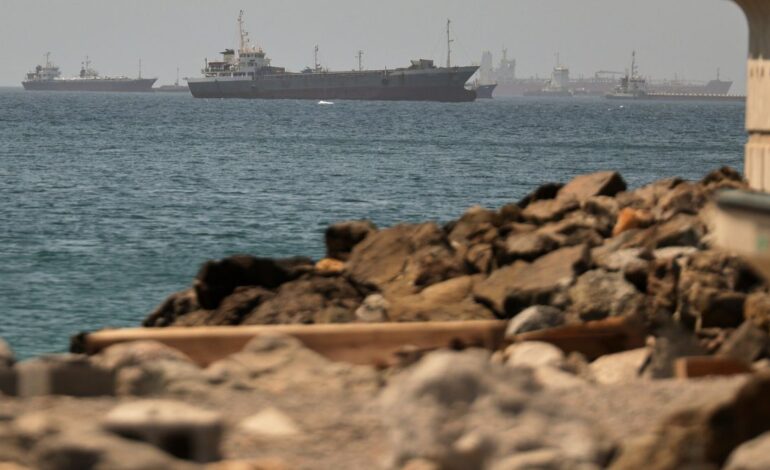

Iran’s Revolutionary Guards said Wednesday that Tehran and Oman have reached an agreement to share revenues generated from the Strait of Hormuz, as the two countries work toward a temporary framework aimed at restoring commercial shipping through the strategic waterway.
Guards spokesman Hossein Mohebi said negotiations with Oman had produced agreements regarding each country’s share of the waterway itself, as well as their respective portions of revenue collected from it. His comments came a day after the foreign ministers of Iran and Oman met in Tehran to discuss a proposed transit corridor through Hormuz along with a mine-clearing project in the strait.
Iranian Deputy Foreign Minister Kazem Gharibabadi said separately that any agreement with Oman would exclude military vessels from using the waterway. Speaking to state television Tuesday night, he outlined a proposed arrangement in which commercial vessels entering the Arabian Gulf would travel through Iranian waters, while outbound ships would follow a route passing partly through both Iranian and Omani waters. Gharibabadi said the arrangement would be temporary, with Tehran and Muscat given 30 to 60 days to negotiate a permanent maritime traffic plan.
Iran and Oman, the two nations bordering the strait, have spent weeks discussing the future of navigation through Hormuz, with Tehran saying the geographical coordinates of a proposed shared route have already been agreed upon. However, broader efforts to end the war between Iran and the United States remain stalled, with Tehran’s demand to charge tolls on vessels passing through Hormuz emerging as a major sticking point that Washington has firmly rejected.
Iran has blockaded the strategic waterway — which typically carries around a fifth of the world’s oil and liquefied natural gas exports — since the war with the US began on February 28. In response, Washington has imposed its own naval counter-blockade on Iranian ports and threatened additional sanctions to increase pressure on Tehran. Mohebi accused the US of obstructing progress on the Oman agreement, while President Donald Trump has separately warned Oman of possible military action if it interferes with US objectives in the region.
Iranian officials continue to insist that the strait will not fully reopen until the US meets a set of demands, including lifting the naval blockade, removing oil sanctions, and unfreezing Iranian assets held abroad. Mohebi said Iran would only fully open the strait once Washington agrees to these conditions.
The dispute unfolds alongside ongoing diplomatic efforts to ease regional tensions. Qatar’s Prime Minister Sheikh Mohammed bin Abdulrahman Al Thani is expected to visit Tehran on Thursday for talks aimed at de-escalating tensions and creating space for renewed dialogue. Those discussions are also expected to touch on freedom of navigation through Hormuz and the potential for restoring conditions that existed before the war began.
Also Read:
AI Market Rotation Accelerates as Investors Shift from Chipmakers to Hyperscalers
Big Tech Q1 2026 Earnings Breakdown: Cloud Growth, AI Trends, and More