

The Invisible Work Behind Hajj: How Split-Second Decisions Keep Millions Safe
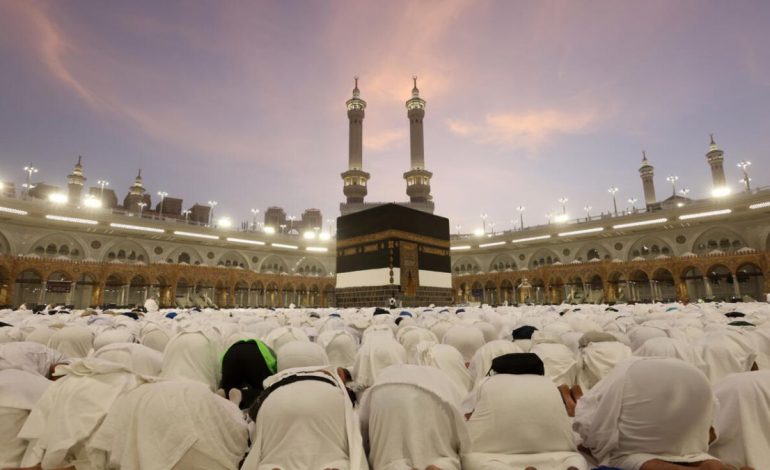

When millions of pilgrims move through Makkah’s sacred spaces within a narrow window of days, the operation appears seamless from the outside. But beneath that surface order lies constant, invisible decision-making by volunteers and field workers who manage the flow moment by moment, often preventing dangerous situations before pilgrims realize they existed.
For 27-year-old volunteer Abdullah Al-Mutairi, one critical moment came near Mina during a previous Hajj season. What started as normal crowd movement suddenly shifted. People were slowing on one side while others kept entering from another direction. No visible panic. No major incident yet. But workers understood the risk.
“You could feel the pressure building before you fully saw it,” Al-Mutairi said. “Within minutes, we redirected people through a side route. If we waited longer, the congestion would have become much harder to control.”
The Invisible Management System
Behind Hajj’s apparent order is a constant process of real-time adjustment. Field supervisors, volunteers, and crowd organizers monitor human behavior continuously, responding to subtle changes that could escalate dangerously if ignored. A group stopping for photographs. Pilgrims slowing near an entrance. Confusion from unclear directions. Each small disruption affects thousands.
“The challenge is that crowds behave differently under stress,” said Rayan Al-Shareef, who worked in pedestrian flow management during Hajj. “One person stopping might not matter normally. During Hajj, it can affect an entire stream of movement.”
Workers often make decisions based on instinct, observation, and quick communication while contending with heat, fatigue, and constant noise. They frequently make decisions first and explain them later, when there isn’t time for deliberation.
The Pilgrim Perspective
From inside the crowd, these decisions feel very different. Several pilgrims described experiences where movement suddenly stopped or directions changed without explanation. Noor Saeed, a pilgrim from Egypt on her second Hajj, recalled being redirected away from an expected route.
“People around me were confused because nobody understood why,” she said. “Later, I realized the decision may have prevented overcrowding further ahead. In the moment, you feel frustrated because you’re tired. But afterward you understand that there are things happening beyond what pilgrims can see.”
Others described how uncertainty itself becomes the hardest challenge. “When people don’t know what’s happening, anxiety spreads quickly,” said Mohammed Al-Zahrani, a pilgrim from Dammam. “Even a simple explanation can calm people down.”
Managing Unprecedented Complexity
Hajj crowd management differs fundamentally from overseeing other large gatherings. Pilgrims arrive from different countries, speak different languages, move with varying physical abilities, and carry diverse emotional expectations. Some are elderly. Some are exhausted after hours of walking. Others are experiencing the pilgrimage for the first time, unfamiliar with their surroundings.
Workers must adapt constantly to these variables. Volunteer Rahma Al-Amri recalled a moment when an elderly pilgrim became disoriented after losing sight of his family near a crowded pathway. He was moving against the crowd’s direction, clearly distressed.
“At that moment, our focus shifted from movement management to calming him first,” Al-Amri said. “The situation ended safely, but it revealed how much Hajj operations depend on human judgment rather than systems alone.”
The Emotional Weight
Many workers acknowledge the psychological toll of making constant high-stakes decisions. “You go home replaying situations in your head,” Al-Mutairi said. “You think about whether you reacted fast enough or communicated clearly enough.”
Yet despite this mental exhaustion and the pressure of responsibility, many workers return year after year. Some describe it as a sense of duty. Others say the experience fundamentally changes how they understand service itself.
“You realize very quickly that small actions matter here,” Al-Mutairi reflected. “A simple direction, opening a pathway, calming one person down. Tiny decisions can affect hundreds of people around you.”
Safety Built on Invisible Decisions
At Hajj, safety is rarely shaped by one dramatic action. More often, it depends on countless invisible decisions made quietly in the middle of movement, pressure, and uncertainty—long before most people realize they were needed.
These workers operate in an environment where plans, maps, and barriers provide structure, but human judgment remains irreplaceable. Their responsibility is not glamorous or visible, yet it’s fundamental to ensuring that millions of pilgrims can safely complete one of the world’s most significant spiritual journeys.
The next time a pilgrim navigates Hajj’s vast crowds seamlessly, they’re likely benefiting from decisions made seconds earlier by someone they’ll never see—someone who understood that at Hajj, the smallest action can protect thousands.
Also Read:
Tunisian Telecom App Breach Sends Anti-Authority Messages to Users