
Iran’s Proxy Network Under Pressure: Can It Save the Regime?
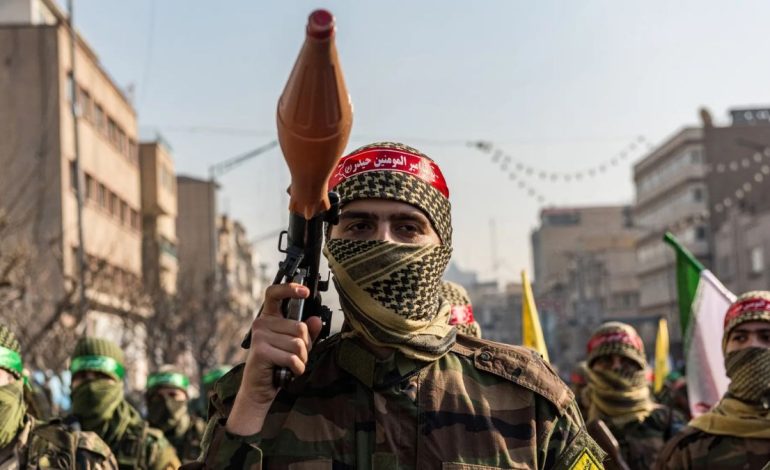

LONDON — For decades, Iran built a network. Not of pipelines or railways, but of fighters, factions, and faithful allies spread across the Middle East. Hezbollah in Lebanon. Militias in Iraq. The Houthis in Yemen. Together, they formed the “axis of resistance”—Tehran’s answer to its conventional military weakness, its tool for projecting power without inviting direct retaliation.
Now that network is being tested as never before.
The killing of Supreme Leader Ayatollah Ali Khamenei has plunged the Islamic Republic into crisis. US and Israeli strikes continue to pound Iranian targets. The regime faces an internal succession struggle and an external enemy pressing its advantage. In this moment of maximum vulnerability, the proxies are supposed to step up, to fight, to distract, to bleed the enemy on multiple fronts.
But five days into the war, the picture is mixed. Some proxies have acted. Others have held back. And the gaps between them reveal something important about the limits of Iranian power.
Hezbollah: The Crown Jewel Under Pressure
Hezbollah is Iran’s greatest creation. Trained, funded, and armed by Tehran over four decades, it has grown into the most powerful non-state military force in the world—tens of thousands of rockets, battle-hardened fighters, and political control over significant parts of Lebanon.
When Khamenei fell, all eyes turned to Hezbollah. Would it retaliate? When? How?
The answer came Monday, when the group launched its largest cross-border barrage since the 2024 ceasefire. Missiles and drones flew toward Israel. The Israeli military responded with waves of airstrikes across Lebanon. By Wednesday, more than 80,000 Lebanese had been displaced and at least 72 were dead.
Hezbollah leader Naim Qassem framed the attacks as revenge for Khamenei and part of an “existential defense.” But analysts see careful calibration. The group is hitting Israel but avoiding the kind of all-out rocket campaign that would devastate Lebanon and invite overwhelming retaliation.
Robert Geist Pinfold, a lecturer at King’s College London, argues that Hezbollah’s action may actually play into Israeli hands. “They were simply waiting for opportunities to take the matter into their own hands,” he said, suggesting Israel had been seeking an opening for a renewed campaign against Hezbollah.
The group also faces new pressure from within Lebanon. The government, desperate to avoid being dragged into a war it cannot afford, took the extraordinary step of banning Hezbollah’s military activities. Reports even emerged of the army arresting 12 group members after rocket fire.
For Hezbollah, this is uncharted territory. It has long operated above the Lebanese state. Now the state is pushing back—weakly, uncertainly, but pushing nonetheless.
Iraq: The Militias’ Moment
In Iraq, the picture is different. The umbrella Islamic Resistance in Iraq claims dozens of daily drone and missile attacks on US positions. Saraya Awliya Al-Dam, one constituent faction, says it has struck Irbil airport, Camp Victory near Baghdad, and other targets.
But the damage appears limited. No confirmed US casualties. No major strategic effects. The militias are active, but their activity seems designed more to signal solidarity than to change the military equation.
The militias insist they are not acting on direct Iranian orders—a narrative that gives Tehran plausible deniability. British-Lebanese journalist Mohamed Chebaro is skeptical. “Regardless of how much Iran is trying to play down its direct control,” he said, attacking strategically important targets “is no small game done by militia.” Tehran, he argues, cannot “hide behind a finger” to escape responsibility.
For the Iraqi government, each launch from its territory undermines claims of sovereignty and complicates relations with Gulf neighbors. But like Lebanon, Baghdad faces a painful choice: try to rein in the militias and risk confrontation, or stand aside and watch the country become a launchpad for a wider war.
The Houthis: Playing a Longer Game
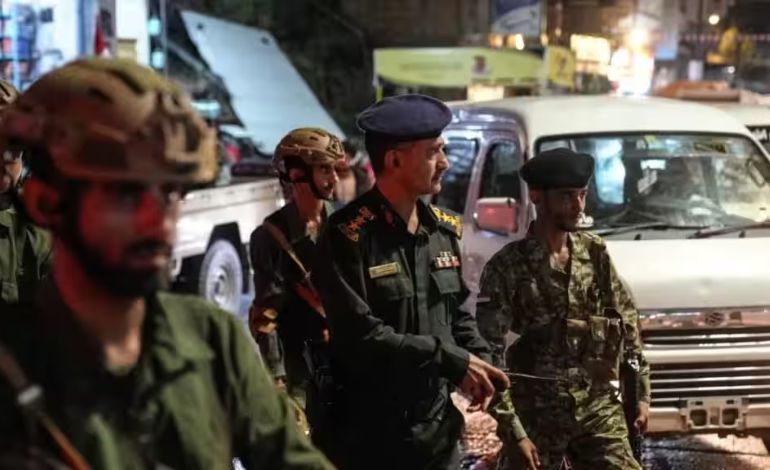
Perhaps the most surprising stance has come from Yemen. The Houthis, who spent 2024 and 2025 attacking commercial shipping in the Red Sea, have so far held back.
Their leader, Abdul-Malik Al-Houthi, has issued fiery speeches insisting the group remains ready to strike. But ready is not the same as acting. Shipping through the Red Sea, while still risky, is far safer today than during the peak of Houthi attacks.
Experts describe this as “controlled escalation”—preserving the threat without triggering retaliation that could endanger the group’s control of Yemen’s coastline.
Pinfold notes that the Houthis have “always been more independent minded” than Hezbollah, which is “very much a product of Iranian design.” Past clashes have taught them to limit direct confrontation with Saudi Arabia and the UAE. They have their own interests, their own survival to consider.
What the Network Reveals
Taken together, the proxy responses tell a story about Iran’s position in the world.
The network is real. It can cause damage. It can open fronts and impose costs. Hezbollah’s rockets force Israelis into shelters. Iraqi militias tie down US attention. The Houthi threat hangs over global shipping.
But the network is also limited. Each proxy has its own interests, its own calculations, its own red lines. Hezbollah will not destroy Lebanon for Iran’s sake. The Houthis will not sacrifice their coastal stronghold. Iraqi militias will not provoke a confrontation that could end their political influence.
And critically, the governments of Lebanon, Iraq, and Yemen—weak as they are—retain some ability to push back. The Lebanese army arresting Hezbollah members would have been unthinkable a year ago. That it happened now reflects the strain the current crisis is placing on Iran’s relationships.
Chebaro describes governments as being “held hostage” by the militias—increasing pressure where possible but avoiding direct confrontation “because that’s what they want.” The dynamic is delicate, and it could tip either way.
Can the Axis Save the Regime?
The question underlying all of this: if Iran itself comes under existential threat, will its proxies fight and die to save it?
The evidence so far suggests a qualified yes—but with qualifications that matter. They will fight, but on their own terms. They will cause damage, but not enough to defeat a US-Israeli coalition. They will demonstrate loyalty, but not to the point of self-destruction.
This is the paradox of proxy warfare. The very autonomy that makes proxies useful—their ability to operate without direct attribution, their local legitimacy, their freedom of action—also limits their utility in a crisis. They are tools, but tools with their own agency.
As Iran moves toward choosing a new supreme leader—with Mojtaba Khamenei, the late leader’s son, seen as the frontrunner—the regime must calculate whether its current approach of “strategic patience” remains viable. Deploying proxies to impose costs while avoiding all-out war has worked for decades. But it has not been tested against an enemy determined to end the Islamic Republic entirely.
For now, the axis holds. Hezbollah fights. Iraqi militias harass. The Houthis wait. But whether that is enough to save the regime—or whether the cracks visible in Lebanon and Iraq will widen—remains the great unknown of this war.
Also Read:
What the UK Shelter-in-Place Warning Means for Citizens in the Gulf
Iran Strikes Impact UAE: Defense Ministry Confirms Three Deaths and 58 Injuries