

Inside the Military Action: Israel Striking Key Targets Deep in Tehran
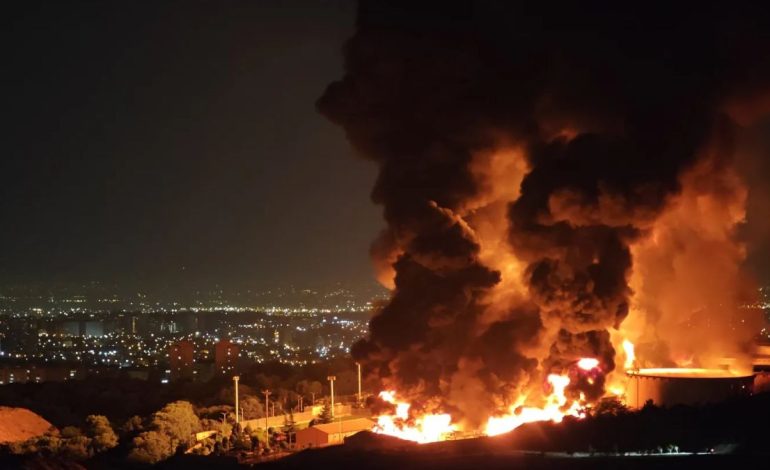

JERUSALEM — The explosions that echoed through Tehran on Sunday morning were not just another skirmish in the long shadow war between Israel and Iran. They marked a dramatic escalation: a direct assault on the “heart” of the capital following a seismic political earthquake—the death of Iranian Supreme Leader Ayatollah Ali Khamenei.
As the region enters its second day of this new, volatile phase, the fog of war is thick. But official statements and strategic analysis are beginning to paint a picture of an operation that was as much about the future as it was about the past.
Taking the Fight to the Capital
For decades, the conflict between Israel and Iran has been fought in the shadows—through cyber-attacks, covert operations, and proxy militias across Syria and Lebanon. That paradigm shifted over the weekend.
The Israeli Defense Forces (IDF) made no effort to hide the significance of their target. “The IDF is striking targets that belong to the Iranian terror regime in the heart of Tehran,” the military stated plainly. This language was deliberate. By naming Tehran specifically, Israel signaled that the “rules of the game” have changed. The message is that the regime’s command and control, even in its most secure locations, are no longer off-limits.
To facilitate these deep strikes, the Israeli Air Force first had to clear a path. The military described “large-scale strikes” conducted to establish “aerial superiority.” This suggests a multi-layered operation: first, neutralizing air defense systems along the route or around the capital, and then sending subsequent waves of aircraft to hit the primary targets.
Counting the Cost: Missiles and Manufacturing
Perhaps the most concrete detail to emerge from the Israeli side is the scale of the military damage inflicted. Brig. Gen. Effie Defrin stated that the operation destroyed roughly half of Iran’s missile stockpiles.
This is a staggering claim. Iran’s ballistic missile program has long been viewed as its crown jewel and its primary deterrent. These aren’t just tactical weapons; they are strategic assets capable of reaching Israel and other US assets in the region.
Even more telling is the focus on future capability. Gen. Defrin noted that the strikes also “prevented the production of at least 1,500 additional missiles.” By targeting manufacturing facilities, storage depots, and perhaps research centers, the operation appears designed to create a long-term capability gap, not just a temporary setback. The mention that Iran was ramping up production to “hundreds per month” underscores the urgency Israel felt in disrupting this supply chain.
Preparing for the Aftershock
Any military planner knows that an attack of this magnitude will invite a response. The Israeli Home Front Command is already acting on that assumption. The mobilization of roughly 20,000 reservists in the past 24 hours is a clear sign that the country is bracing for what comes next.
These reservists aren’t being called up to invade territory; they are being deployed to assist civilians. This points to a high state of alert for potential Iranian retaliation, which could come in the form of long-range missile fire toward Israeli cities. The Home Front Command is responsible for guiding civilians to shelters, distributing supplies, and maintaining order during such barrages. Their rapid deployment suggests the government believes the threat of a direct Iranian counter-strike is real and imminent.
A Region in Flux
The death of Ayatollah Khamenei has already thrown the Islamic Republic into a state of uncertainty. Now, with its military infrastructure degraded and its capital struck, the regime faces a dual challenge: an internal power struggle and an external enemy pressing its advantage.
For Israel, this is a high-stakes gamble. The goal appears to be to deal a blow so significant that it cripples Iran’s offensive capabilities and deters future aggression, all while the enemy is distracted by a leadership vacuum. But the risk is that a cornered and weakened regime, looking to project strength, may lash out unpredictably—either directly or through its proxies in Gaza, Lebanon, and Yemen.
As the sun rises on Monday, the world watches to see how the “heart” of Tehran responds. The military phase of this operation may be complete, but the strategic and diplomatic fallout is just beginning.
Also Read:
Netherlands gets world’s first openly gay PM Making history by taking oath at age 38