


Tunisia Confirms Prison Terms for Journalists in Controversial Court Decision
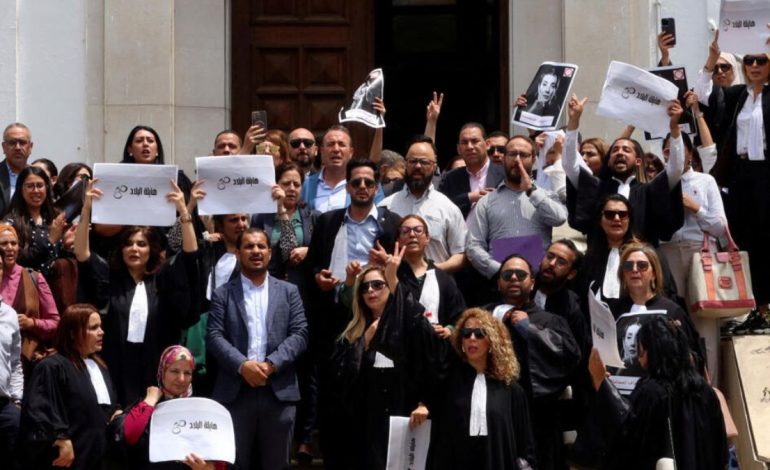

A Tunisian appeals court has upheld three-and-a-half-year prison sentences against two prominent journalists convicted of money laundering and tax evasion—charges they have consistently denied and which international media rights organizations characterize as judicial harassment aimed at silencing criticism.
Mourad Zeghidi and Borhen Bsaies had their original January convictions confirmed by the appeals court on Tuesday, a decision that prompted their defense lawyer to express deep disappointment while drawing international attention to Tunisia’s deteriorating press freedom record.
Weak Evidence, Political Context
The case against the two journalists has drawn sharp criticism from Reporters Without Borders and other international press freedom organizations, not because of disagreement about the law, but because of the apparent weakness of the evidence and the broader context of political repression.
The defense lawyer argued that prosecutors essentially presumed the journalists were wealthy and hiding assets based solely on the fact that their reported tax payments appeared low. No suspicious transactions were identified. No hidden assets were discovered. No credible proof of financial crimes emerged after 23 months of investigation.
“After 23 months of investigation, no serious evidence has been established: no suspicious transactions, no hidden assets, no credible proof,” Reporters Without Borders regional director Oussama Bouagila stated. “This judicial harassment must not obscure the essential point: it is their journalistic work that lies behind these prosecutions.”
A Pattern of Political Repression
The case cannot be separated from the broader context of Tunisia’s political trajectory since President Kais Saied consolidated power through what international observers characterized as a coup in 2021. Since then, rights groups have documented systematic regression in fundamental freedoms, with dozens of Saied’s critics currently imprisoned.
The prosecution of Zeghidi and Bsaies fits a recognizable pattern: critics of the government are prosecuted on seemingly technical charges—financial crimes, tax violations—rather than explicit charges related to their speech or political activities. This approach provides legal cover while achieving the practical effect of imprisoning dissenting voices.
Further Silencing of Dissent
The case against Zeghidi and Bsaies extends beyond the two journalists themselves. In a separate, related development, journalist Zied el-Heni was sentenced to one year in prison last week for “offending others”—a charge that emerged specifically from his public criticism of the prosecutions against Zeghidi and Bsaies.
This creates a chilling effect: journalists who speak out against the prosecution of their colleagues face their own prosecution. The message is clear: defend your colleagues and risk imprisonment yourself.
International Concern
Media freedom organizations have been unequivocal in their assessment. The charges lack credibility in the absence of substantive evidence. The prosecution timing and pattern strongly suggest political motivation. The broader context of press freedom regression under Saied’s rule provides undeniable backdrop to understanding these convictions.
Yet the appeals court has upheld the sentences, and the journalists now face prison time for crimes that appear to exist primarily in prosecutors’ unsupported presumptions about their wealth and financial dealings.
The Broader Implications
Tunisia’s path since 2021 represents a cautionary tale about how formal legal systems can be weaponized against political opponents and critics. By prosecuting journalists on ostensibly neutral grounds—financial crimes, tax violations—rather than explicit charges of sedition or insurrection, authoritarian governments maintain a veneer of legality while systematically dismantling the independent institutions necessary for democratic governance.
The appeals court decision represents another step in that process, one that will likely encourage further self-censorship among journalists fearful of similar prosecution. Whether international pressure or internal resistance can reverse this trajectory remains uncertain, but the convictions of Zeghidi and Bsaies mark a significant moment in Tunisia’s democratic decline.
Also Read:
B2B Buyers Are Making Decisions Before Vendor Engagement
The Psychology Behind Specsavers Ads: Why Humour Drives Customer Attention