


OpenAI Faces Growing Tensions With Mathematicians Over AI
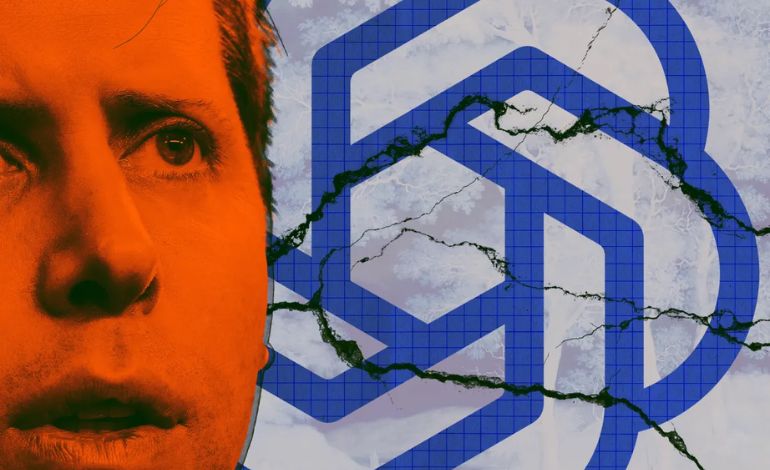

A group of 25 leading mathematicians, all recipients of the Fields Medal, the field’s most prestigious honor, has signed an open letter warning that research labs racing to solve famous math problems are putting the integrity of mathematical work at risk.
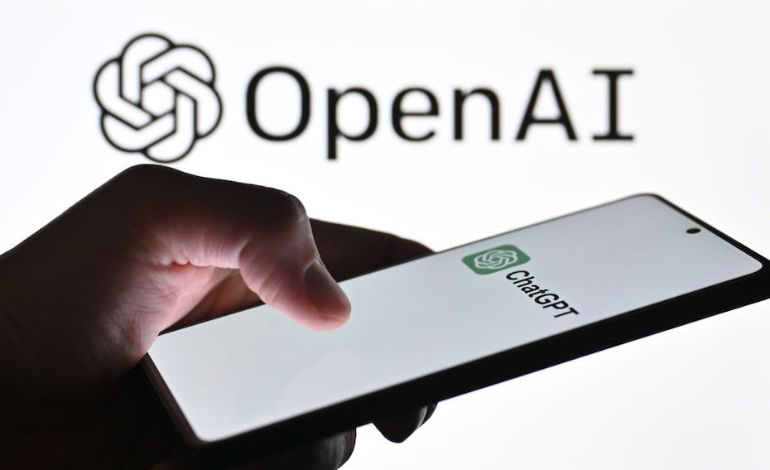
The letter comes amid a specific dispute involving OpenAI. This week, NYU professor Tristan Buckmaster accused the company of pressuring him not to credit a collaborator affiliated with a rival lab for work on a major math problem, and raised questions about whether OpenAI had drawn on that collaboration to help produce its own widely publicized proof involving the Navier-Stokes equations, reportedly generated over an intense weekend of computation. The proof has not yet been independently verified. Separately, OpenAI withdrew its sponsorship of a math event at Caltech on Thursday after facing criticism from researchers there.
At the center of the mathematicians’ concern is speed. Solutions to hard problems are increasingly being announced quickly, they argue, without the time normally needed to write up methods properly, isolate what’s genuinely new, or credit earlier work others contributed. As the letter put it, this raises severe attribution and plagiarism questions. The signatories warn that without mathematicians willing to carefully absorb and build on new results, any breakthrough risks staying isolated rather than becoming part of the field’s shared body of knowledge.
There’s also a quieter anxiety spreading through the community: mathematicians who used coding assistants for their own work now wonder whether that activity was later used to train the very systems now racing to beat them to proofs. If labs can spend enormous sums to get ahead of independent researchers, the incentive shifts toward secrecy rather than open collaboration, undermining a culture the field has relied on for generations.
This isn’t the first attempt to grapple with the issue. A separate document known as the Leiden Declaration, published in June by a working group of mathematicians, laid out early recommendations for researchers, universities and policymakers navigating the same shift.
Underlying all of this is a broader argument: that the value of mathematics was never only about who reaches a proof first. It’s the surrounding structure, teaching students, posing new questions, and weaving new ideas into the wider fabric of knowledge, that keeps the field alive. The signatories frame this as a preview of a challenge every profession may soon face, as new tools reshape how work gets done without necessarily preserving why that work mattered in the first place.
Also Read:
John Malkovich Withdraws From Israel Event Amid Fake Quotes Controversy
Saudi Arabia Targets Silicon Valley in Drive to Build AI Powerhouse



















3 Comments
[…] Technology September 12, 2026 […]
[…] Technology September 12, 2026 […]
[…] OpenAI Faces Growing Tensions With Mathematicians Over AI […]