



Are Robots the Future of Airports? Tokyo Leads the Way with Humanoid Tech
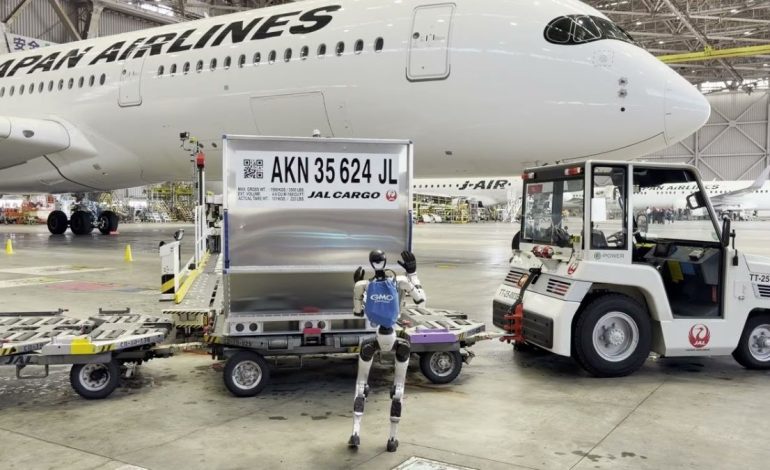

Japan Airlines is betting on robots to solve one of the aviation industry’s most pressing challenges: labor shortages. The airline has launched a two-year trial of humanoid robots at Haneda Airport, testing machines that can handle baggage loading, cargo movement, and cabin cleaning—tasks traditionally performed by airport workers.
The initiative begins in May and marks one of the most ambitious deployments of humanoid technology in airport operations. It’s a bold move by Japan Airlines to automate labor-intensive tasks while the country’s workforce continues to shrink.
Why Tokyo, Why Now
Japan’s aviation sector is caught between two conflicting forces. On one side, tourism is surging. International arrivals jumped 3.5 percent in March alone compared to the previous year, creating unprecedented demand on airport operations. On the other side, Japan’s aging population means fewer workers are available to handle ground operations.
Japan Airlines is partnering with GMO AI & Robotics to deploy and evaluate the technology. While demonstrations have shown humanoid robots successfully moving cargo, greeting passengers, and coordinating with staff, the airline is proceeding cautiously. Feasibility studies and risk assessments are still underway, indicating this is genuine exploration rather than a rushed rollout.
Testing the Limits of Automation
The robots being evaluated represent a significant technological investment. Demonstrations have shown machines capable of complex tasks—navigating airport spaces, interacting with people, and handling physical cargo. These aren’t simple machines following scripted paths; they need to adapt to unpredictable airport environments.
However, the airline’s measured approach is telling. Japan Airlines is taking two years to test and evaluate before making broader deployment decisions. This timeline allows the organization to assess reliability, safety, and actual labor displacement impacts.
A Demographic Solution
Japan’s demographic challenge is severe. The country’s working-age population continues declining while the percentage of elderly citizens grows. This structural shift affects every sector, but aviation is particularly labor-intensive. Airports require constant staffing for baggage handling, cleaning, cargo operations, and ground support.
Automation doesn’t solve the demographic problem entirely, but it can offset labor shortages by handling the most repetitive, physically demanding tasks. This allows the available workforce to focus on roles requiring human judgment and customer interaction.
The Bigger Picture
Haneda Airport’s robot trials are significant beyond Japan. As global tourism rebounds and labor shortages persist worldwide, other airports are watching. If the trials prove successful, humanoid technology could spread to major hubs in Europe, North America, and other regions.
The aviation industry has historically been cautious about automation—safety and operational continuity are paramount. But labor constraints are forcing reconsideration. When you can’t find enough workers, machines become not just an option but a necessity.
What Success Looks Like
Japan Airlines isn’t aiming to replace airport workers entirely. The goal is to deploy robots for specific, repetitive tasks where they can add consistent value without compromising safety or customer experience. Successful trials would demonstrate that humanoid machines can integrate into airport operations while human staff focuses on tasks requiring judgment, problem-solving, and customer service.
The robots being tested can move cargo, interact with people, and perform routine tasks. Whether they can reliably do these jobs day after day, in an airport environment with thousands of daily variables, remains the central question.
A Template for Global Aviation
Japan’s willingness to experiment with humanoid technology at one of the world’s busiest airports positions Tokyo as a testing ground for solutions other major airports will eventually face. If labor shortages continue globally and these robots perform reliably, we could see widespread adoption within a decade.
For now, Haneda Airport becomes a real-world laboratory where the future of airport operations is being tested—one baggage-loading robot at a time.
Also Read:
Iran Warns of “Painful Response” if US Resumes Military Attacks
Iran Activates Air Defenses as Trump Confronts Critical Congressional Deadline