


Legal Experts Push UK to Strengthen Israeli Settlement Trade Ban

More than 130 senior UK legal figures told Prime Minister Andy Burnham on Tuesday that Britain’s new ban on trade with Israeli settlements falls far short of what its obligations under international law actually require.
The UK announced last week that it would block all imports from Israeli settlements in the occupied West Bank and prohibit companies from providing services to them, a step also taken by France and Canada. But in a letter signed by dozens of British lawyers, barristers and legal scholars, including 18 King’s Counsel, the signatories argued the government needs to go significantly further, pointing to a 2024 International Court of Justice advisory opinion, backed by the UN General Assembly, that they say places special obligations on the UK to act against Israel’s violations in the occupied Palestinian territories. They called for a broader, Russia-style sanctions approach rather than measures narrowly focused on settlements alone.
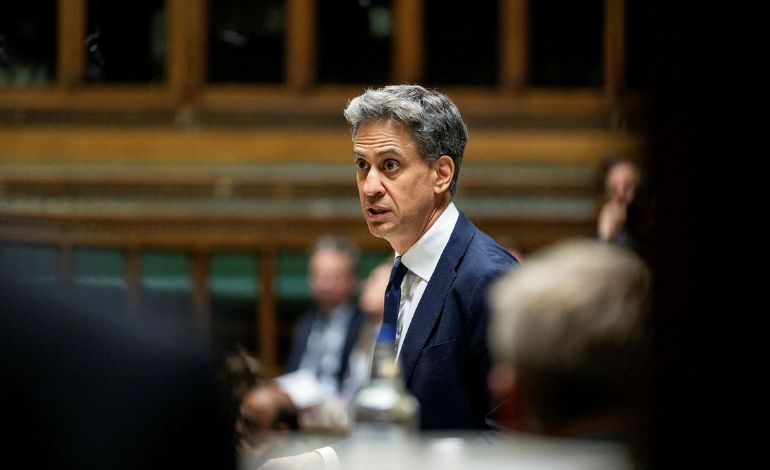
The letter urged the government to commit to tougher measures ensuring no part of Britain’s economic relationship with Israel continues to sustain either the settlements or what the signatories describe as the illegal occupation itself. It called for the current ban, which UK Foreign Secretary Ed Miliband said covers financing, construction, infrastructure, real estate and advertising tied to settlements, to be expanded to include insurance, legal and accounting services, logistics, digital infrastructure, and investment and financing. The experts also pushed for pension schemes and sovereign funds to be barred from investing in settlement-linked entities, a comprehensive sanctions regime, a full arms embargo, and tighter rules preventing UK-based charities from supporting settlement activity.
Ralph Wilde, a professor of international law at University College London who helped draft the letter, told The Guardian that the elephant in the room is the illegality of the occupation itself, arguing there’s a mismatch between calling Israel’s presence in the territory unlawful while focusing narrowly on the settlements, since a state that establishes unlawful settlements is itself the underlying problem.
A government spokesperson described the trade ban as marking the most significant shift in the UK’s approach to protecting the two-state solution in a generation. Announcing the measure, Miliband accused settler extremists of carrying out ethnic cleansing against Palestinians in the West Bank.
The move drew a sharp reaction from Israel, even as it was welcomed by Arab governments. Israeli Foreign Minister Gideon Saar called the measures despicable and accused Miliband of spreading outrageous lies. Israel subsequently ordered Britain to close its East Jerusalem consulate within 30 days and barred 12 British politicians from entering the country. The UK’s ban is expected to take effect within nine months.
Also Read:
Thailand Challenges Cambodia’s Claims in Appeal to Global Mediators
Gaza’s Premature Babies Struggle for Critical Care Amid Devastation