




Exploring How Saudi Arabia Is Reclaiming the Night Sky and Promoting Stargazing

JEDDAH — As light pollution obscures night skies worldwide, Saudi Arabia’s Red Sea destination is taking a different approach: preserving darkness as a luxury experience and conservation tool.
Red Sea Global has introduced a destination-wide dark-sky strategy spanning resorts, infrastructure, and public spaces. The developer is seeking international dark-sky certification not only for the entire destination but also for individual resorts — a move sustainability experts say would be a world first.
Lola Okunrinboye, sustainability director at Six Senses Southern Dunes, said no other destination has pursued certification at the resort level in this way. “That is what makes the initiative particularly innovative,” she said.
The approach includes shielded, downward-directed lighting, concealed fixtures, warmer color temperatures, and intelligent controls. Buildings at Desert Rock are embedded within mountains to minimize visual footprint, while lighting is carefully managed to reduce intrusion.
Ahmed Althaher, senior manager of Astrotourism at Red Sea Global, said dark-sky principles are applied through planning guidelines and design reviews. Rather than adding lighting and reducing it later, the resorts begin with darkness and introduce illumination only where essential.
The strategy also supports biodiversity. Artificial lighting can disrupt nocturnal species, affecting insects, mammals, and migratory birds that depend on darkness. Thomas Combescot-Lepere, general manager of Desert Rock, said red lighting is used because it is one of the least disruptive colors for wildlife.
The initiative includes practical environmental projects. The destination has grown 3 million mangroves and created 20 acres of wetlands that treat 8,000 cubic meters of effluent daily, now attracting wildlife including barn swallows and black-winged kites.
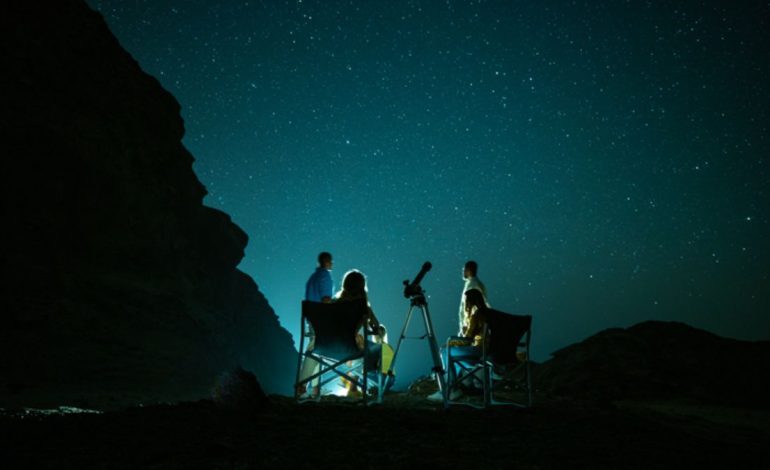
For guests, the experience offers something increasingly rare: a sky filled with stars. Astronomy guides explain celestial objects and their cultural significance, reviving the tradition of star navigation that once guided travelers across Arabia. The project aims to demonstrate that luxury tourism, environmental stewardship, and cultural heritage can coexist.
Also Read:
San Francisco Bay Boat Sinking: Search Ends for Three Missing Victims
Saudi Farmers Turn to AI for Smarter Water Management in Mango Orchards