

Inside SpaceX’s Decision to Scrub the Starship V3 Launch in Texas
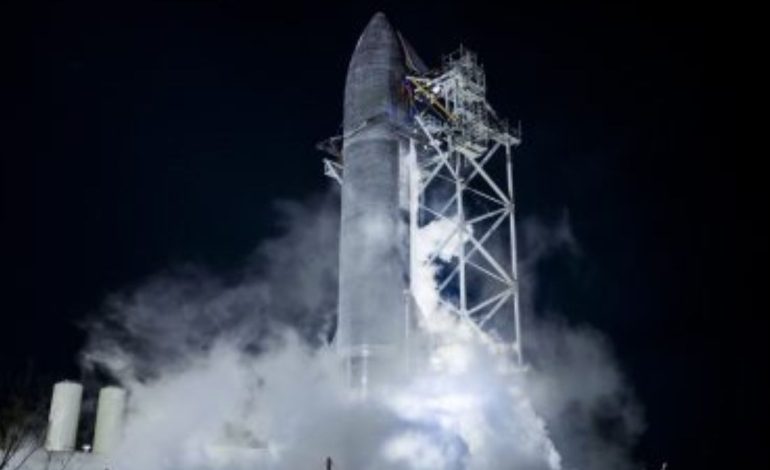

SpaceX aborted the launch of its 12th Starship test flight Thursday just seconds before liftoff from its Texas facility, citing a mechanical issue with one of the launch pad’s giant robotic arms. The company said it would attempt the launch again Friday at 5:30 a.m. Central Time if repairs could be completed overnight.
The uncrewed Starship V3 had been poised for a critical test following months of redesign and development delays. The spacecraft features dozens of upgrades tailored specifically for rapid Starlink satellite launches and NASA lunar missions—objectives that make this test flight significant not only for SpaceX’s engineering program but also for investor confidence ahead of the company’s planned initial public offering.
A Launch Tower Problem
Elon Musk explained on social media that the countdown was halted after multiple pauses triggered by fuel temperature and pressure readings. The underlying cause, however, proved more specific: a hydraulic pin on one of the launch tower’s mechanical arms failed to retract as designed.
“If that can be fixed tonight, there will be another launch attempt tomorrow at 5:30 CT,” Musk said, indicating the issue appeared manageable and unlikely to delay the test by more than one day.
Stakes Beyond the Launch
Starship V3’s test flight carries weight beyond the routine engineering validation SpaceX typically pursues. The company is preparing for an initial public offering that reportedly targets a $1.75 trillion valuation—potentially one of the largest public market debuts in history. A successful test would bolster investor confidence in the company’s technical progress and execution capability.
The fully reusable Starship represents more than $15 billion in development investment. The spacecraft is central to Musk’s ambitions across multiple domains: cutting launch costs through reusability, expanding the Starlink satellite internet business, enabling deep-space exploration, and even supporting orbital data center concepts. Each of these applications depends on Starship proving itself through repeated successful test flights.
Managing Expectations
Before Thursday’s launch attempt, Musk sought to temper expectations about the stakes of any individual flight. He noted SpaceX has “a large pipeline of V3 ships and boosters in the factory,” suggesting that even a complete failure would not meaningfully disrupt the company’s testing cadence.
“A failure would not affect the cadence of future Starship test launches by more than a month or so,” Musk said, reflecting SpaceX’s engineering philosophy that accepts significant risk in exchange for rapid iteration and learning.
A Testing Philosophy Built on Failure
SpaceX’s approach to spacecraft development differs markedly from the aerospace industry’s traditional practices. Rather than exhaustively ground-testing and validating designs before flight, SpaceX adopts a deliberately risk-tolerant engineering culture that emphasizes flight testing as the primary validation mechanism.
This strategy involves pushing newly developed spacecraft to the point of failure, analyzing what went wrong, implementing improvements, and launching again quickly. This cycle of failure, learning, and iteration has enabled SpaceX to achieve remarkable progress on projects competitors thought impossible—but it also means accepting that some tests will fail.
The Starship V3 test flight, should it succeed Friday, represents another step in this iterative process. The spacecraft’s dozens of upgrades emerged from months of post-failure analysis and redesign following previous setbacks. Should Friday’s launch also encounter problems, SpaceX’s pipeline of additional vehicles and the company’s engineering culture suggest rapid progression toward the next attempt.
Friday’s Attempt
Friday’s rescheduled launch attempt will reveal whether SpaceX can complete repairs to the launch tower’s mechanical arm overnight. If successful, Starship V3 will proceed with its test flight—and SpaceX will move one step closer to demonstrating the reusable spacecraft system that underpins its ambitious plans for the company’s future and its estimated valuation at the moment of going public.
Also Read:
Dubai Sees 30% Jump in Gold Jewellery Demand After India Raises Import Duty
Expo 2030 Riyadh Reveals Delivery Progress and Long-Term Legacy Plans