




New Aircraft Carrier Deploys to Middle East as USS Lincoln Faces Reported Issues
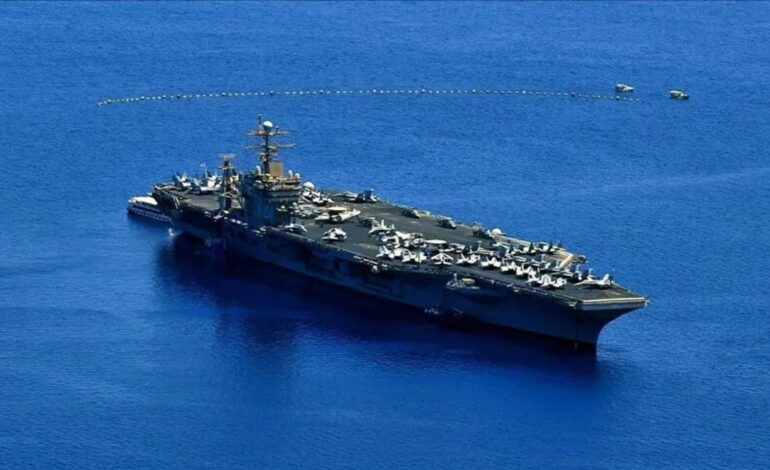

WASHINGTON — The Pacific-based aircraft carrier USS George Washington has begun heading toward the Middle East as reports emerge of mental health and supply issues aboard the long-deployed USS Abraham Lincoln.
The Lincoln has been supporting the US war against Iran, with its deployment including a record-setting uninterrupted time at sea of more than 260 days. Several Democratic lawmakers are pressing for accountability from the Pentagon over conditions aboard the carrier, which Defense Secretary Pete Hegseth on Thursday said were “completely misrepresented.”
The USS George Washington left port in Da Nang, Vietnam, last week, along with a cruiser and a destroyer, and has since been spotted crossing the Singapore Strait. A US Navy official confirmed the carrier was in the Strait of Malacca, putting it on course for the Indian Ocean. The Wall Street Journal reported the Washington would replace the Lincoln as one of the two aircraft carriers now stationed in the Middle East.
The move would leave the waters of the Pacific without a US carrier presence for an unknown period. The Trump administration views China as “a settled force” that only needs to be deterred, not the top global adversary it was under the previous administration. While renewed hostilities between the US and Iran have calmed in recent weeks, the Navy has reimposed a blockade on Iranian ports in the Strait of Hormuz, and Hegseth told reporters the US can maintain the blockade “indefinitely.”
The Lincoln originally deployed November 21 from San Diego and arrived in the Middle East in January, ahead of the launch of the Iran war on February 28. The Navy conceded the conflict created a “highly contested environment where traditional supply hubs in the Middle East were disrupted by combat actions,” leading to shortages and loss of mail aboard the carrier. The Navy said it prioritized mission-critical supplies: first food, then hygiene items, then mail, and assured that sailors now have access to clean water and healthy meal options.
Democratic lawmakers are calling for investigations and greater visibility into conditions aboard the ship. Connecticut Senator Richard Blumenthal wrote to Navy leadership asking for a response to several questions, while Arizona Senator Ruben Gallego said he is looking to take a bipartisan delegation on an official oversight visit to the ship, describing the treatment of sailors as “not just disgusting; it’s dangerous.”
Navy leaders, including acting Secretary Hung Cao, last week held a tense town hall for families of troops aboard the Lincoln, promising to do everything possible to relieve the carrier. Reports have since emerged that sailors on the Lincoln are struggling with mental health concerns, though the Navy said it has “not observed an increase in suicidal ideations or attempts aboard the ship.” Officials declined to provide data, citing operational security and patient privacy concerns. A sailor aboard the Lincoln went overboard in early August but was quickly recovered and transferred off ship for care.
Other carriers have also faced long runs that raised concerns about morale. The USS Gerald R. Ford returned home in mid-May after an 11-month deployment, during which it experienced a fire that forced repairs and left hundreds of sailors without places to sleep. Concerns about overextending ships and crews predate the Iran war, with a number of mishaps on ships battling Houthi rebels in Yemen in 2024 and 2025.
Editor’s Note — This story includes discussion of suicide. If you or someone you know needs help, the national suicide and crisis lifeline in the US is available by calling or texting 988. There is also an online chat at 988lifeline.org.
Also Read:
US Intelligence Doubts Iranian Threat to Trump in Türkiye, Washington Post Reports
Monthly Rent Payments in Dubai Could Become Interest-Free for Tenants