

New UPI Charges From October 15: What UAE NRIs Need to Know
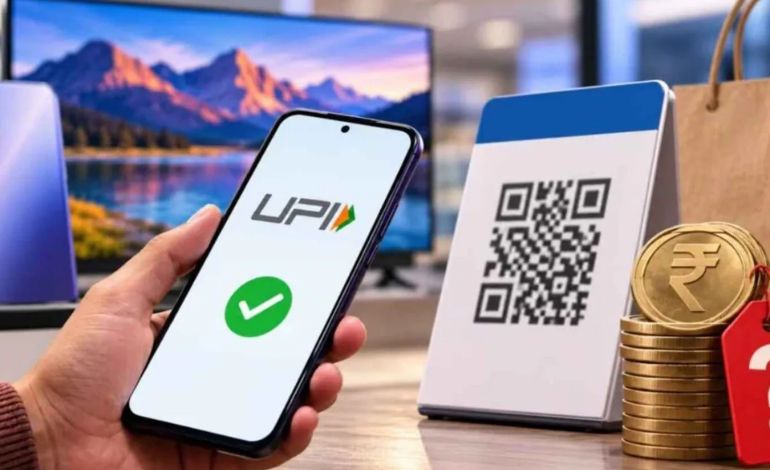

UAE-based Indians will continue using the Unified Payments Interface without paying any transaction fees when India’s new Merchant Discount Rate takes effect on October 15, 2026, since the charge applies only to merchants, not to the person making a payment.
Starting that date, India will introduce a 0.4 percent Merchant Discount Rate on select person-to-merchant UPI payments above 2,000 rupees. This is a standard payment-processing cost borne by the business accepting the transaction, shared among banks, payment apps and other providers in the chain, and it caps out at 300 rupees once a payment reaches 75,000 rupees. A transaction of exactly 2,000 rupees stays free, since the charge only kicks in above that threshold. For example, a 3,000 rupee purchase carries a 12 rupee cost to the merchant, a 10,000 rupee purchase costs the merchant 40 rupees, and anything at or above 75,000 rupees is capped at 300 rupees, but in every case, the buyer pays only the original purchase price.
India’s Finance Ministry has made clear that merchants cannot pass this cost on to customers, and UPI app providers are barred from adding any platform fee or extra charge for people making payments. Union Finance Minister Nirmala Sitharaman told ANI that the fee sits between payment-service operators and won’t be felt by consumers, stressing that it is neither a tax nor a cess and won’t be deposited into India’s Consolidated Fund. She said the charge exists to help providers improve the system and deliver better service, not to burden small transactions, and reiterated that it will not be passed on to the customer. In practice, that means someone buying an appliance for 50,000 rupees still pays exactly 50,000 rupees, with the merchant absorbing the applicable 200 rupee fee during settlement. Businesses may factor processing costs into their overall pricing, the same way they might account for rent or wages, but they aren’t permitted to tack on a separate line-item fee at checkout.
Personal transfers remain entirely unaffected. Sending money to parents, children or other relatives, splitting a bill with friends, moving funds between your own linked accounts, or receiving money through a personal UPI ID will all stay free for both sender and recipient, regardless of amount, since the 2,000 rupee threshold applies only to merchant payments. Banks and the National Payments Corporation of India can still enforce daily security limits, typically between 1 lakh and 5 lakh rupees depending on the transaction type, but these are risk controls rather than charges.
Not every shop will be affected either. Small vendors operating under the person-to-person-merchant category, generally those receiving up to 1 lakh rupees a month through UPI QR payments, retain zero-MDR status, and a single sale above 2,000 rupees won’t change that. A vendor only shifts into the commercial merchant category, where the new charge applies, if they receive more than 1 lakh rupees a month for three consecutive months. Small vendors don’t need GST registration to keep their exempt status, and existing QR codes and payment devices will keep working without any need for replacement or re-registration.
Also Read:
Saudi Fintech Startup Abwab.ai Secures $4 Million Seed Investment
Pipeline Valve Closure Raises Fresh Concerns Over Libya Oil Supply