




Saudi Basalt Secures International Recognition as a Heritage Stone
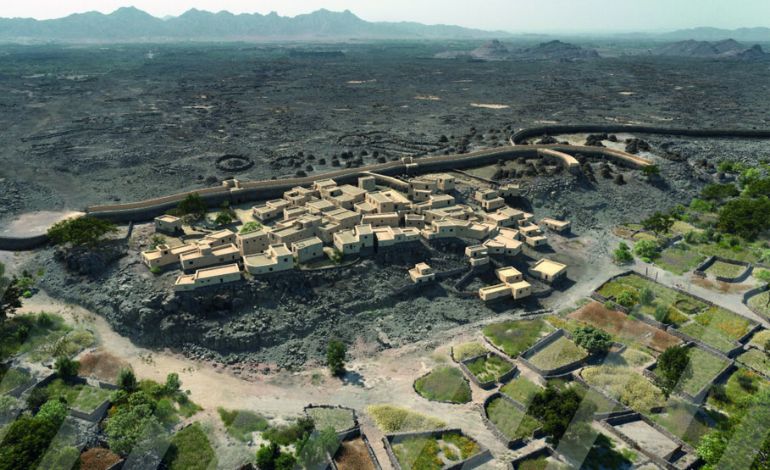

Volcanic basalt from Saudi Arabia’s harrats, its expansive lava fields, has been approved by the International Union of Geological Sciences as an internationally recognized heritage stone, marking the first such designation for the Kingdom, the Saudi Press Agency reported Sunday.
The Saudi Geological Survey said the decision caps years of scientific work documenting the geological, historical and cultural significance of basalt, a stone that has helped shape the landscape and cultural identity of western Saudi Arabia for thousands of years, including through its traditional use in construction, settlement patterns and local economic activity.
Saudi harrats formed when repeated basaltic eruptions sent thin, flowing lava spreading across the ground, which hardened over time into the dark, rugged basalt terrain now visible across parts of the western region. The survey noted that the stone’s wide distribution, durability and resistance to heat and erosion make it a valuable source for aggregates and infrastructure materials, while newer applications have expanded into fibers, composite materials and insulation. The economic value of some quarries is further boosted by their proximity to road and rail networks, which improves transport efficiency and helps lower construction and maintenance costs.
Officials described the recognition as an endorsement of the Kingdom’s geological heritage that supports broader national efforts to protect geological and natural heritage sites, encourage scientific research, and showcase national assets in line with Saudi Vision 2030. The designation is also expected to open the door to greater international scientific cooperation and deepen Saudi participation in global initiatives focused on preserving geological heritage, reinforcing the country’s role in documenting and presenting its geological wealth for future generations.
The International Union of Geological Sciences, established in 1961, is one of the world’s largest and most active non-governmental scientific organizations and a member of the International Council of Scientific Unions, working to advance research on geological issues of global significance and support cross-disciplinary cooperation across the earth sciences. The Global Heritage Stone Resource designation it oversees was created to strengthen geological knowledge, responsible use and conservation of historically significant natural stones worldwide, recognizing stones with a documented role in major architecture and monuments that reflect their cultural importance.
Also Read:
Mellat Bank Faces License Revocation in Türkiye Amid US Measures
Three New Veolia Agreements Target Water, Waste and Decarbonization in Saudi Arabia