



Myanmar on the Verge of Historic Genocide Ruling in UN Court for Rohingya Atrocities
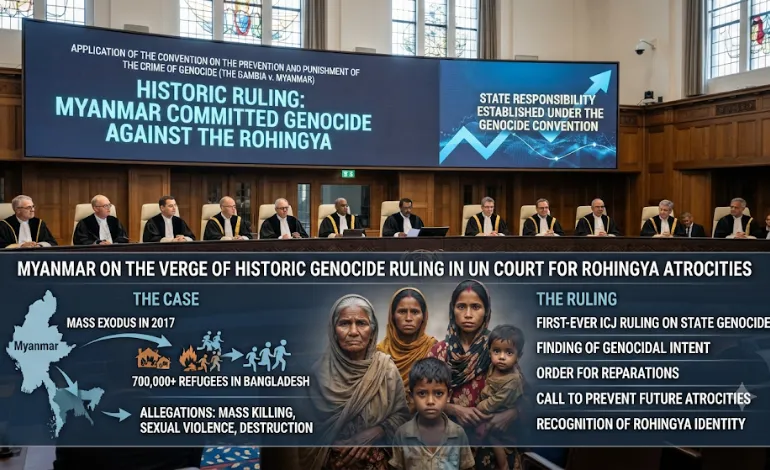

When the judges at the International Court of Justice pronounce their ruling on Thursday in the seven-year-old case of genocide brought by The Gambia against Myanmar, they may well be making history.
The crime of genocide has been successfully tried in dozens of cases since the signing of the Genocide Convention in 1948 after the Nazi Holocaust, including in the conflicts in Rwanda and the former Yugoslavia.
But no state has ever been convicted of genocide by an international tribunal. “If The Gambia wins this case, it would be a judgement of landmark importance,” says Arsalan Suleman, the lawyer spearheading the case against Myanmar before the court. It would give life to the 1948 Genocide Convention and to the idea of international legal responsibility for atrocities committed by a state.
The wholesale evacuation of the Rohingya people of Rakhine State in August and September 2017 was, without doubt, a military operation of extraordinary cruelty.
I was one of a handful of journalists to see the purposeful burning of Rohingya communities in Rakhine and the horrific human suffering of the hundreds of thousands who fled to adjacent Bangladesh.
Their allegations of killings, torture and mass rape by Burmese forces have been well recorded by human rights groups and a United Nations fact-finding mission.
I have interviewed several ethnic Rakhines about their hatred of the Muslim minority and recorded the methodical elimination of what remained of Rohingya communities by the Myanmar state.
Also Read:
Robert Pattinson Selected as New James Bond British Actor
Sheikh Hamdan goes to the New Corporate Headquarters of Amazon in Dubai