




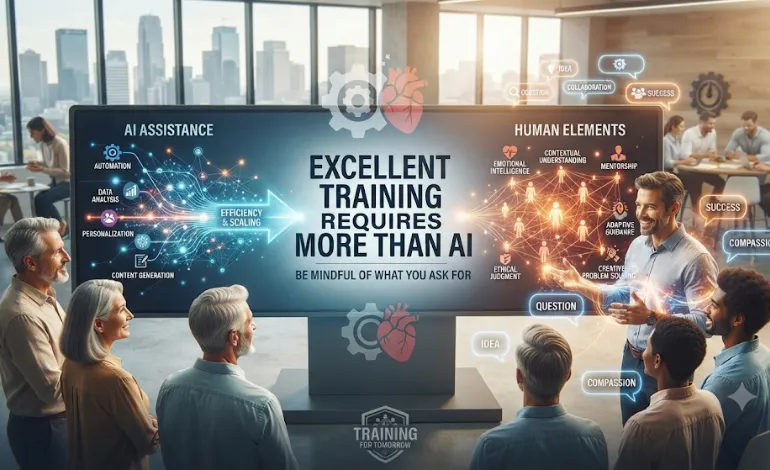
Be Mindful of What you Ask For: Excellent training Requires More than AI

I’m in the midst of our annual budgeting process, and for the first time in my career, I have purposely omitted anything. In the past, I have always included a contingency in our learning and development budget. A cash buffer for any potential training needs that may arise during the year, particularly in areas where we did not have the internal ability to generate the material, plan the program, or produce the trainer’s notes.
I haven’t this year. Not because I think we have suddenly become capable of everything in our organization, but because artificial intelligence has fundamentally transformed the economics of generating learning content.
Now, I can ask an AI platform to create a whole training program on nearly anything. It can develop learning goals, structured modules, facilitator guides, activities, case studies, evaluations, and thorough trainer’s notes in minutes. Things that used to require outside consultants, expert instructional designers, and significant spending can now be done at a fraction of the cost and time.
But it also poses an issue that I think we’re missing in our enthusiasm for AI-driven productivity: just because we can create the material, does that guarantee we can deliver the learning? And this is where I think the divide between artificial intelligence and human intelligence becomes extremely crucial.
Great training has never been about the delivery of information alone. If it were, we could have replaced trainers with texts decades ago. The difference between a good trainer and a great trainer is rarely the quality of the PowerPoint presentation. And that is what happens between the slides.
Also Read:
TBHF Presents 10th SIARA to Lebanon’s Alsama Project for Literacy