



CNPC Highlights Green Transition, AI Advancements at ADIPEC 2026

A scale model of green development in the Tarim Basin, at the centre of the CNPC pavilion, has drawn significant attention. The model includes a 1.2 million tonnes-per-year green ethylene demonstration project, concentrated solar power and photovoltaic plants, carbon capture, utilisation and storage (CCUS) facilities and a “zero-carbon” roadway over the Taklimakan Desert. Together, these elements represent an integrated development paradigm for oil, gas, geothermal, power, and hydrogen.
Along the road, diesel-powered water wells have been converted to solar-powered wells, and photovoltaic development is being combined with desertification control and ecological restoration.
So far, CNPC has built wind and solar power capacity of over 17 million kilowatts and geothermal heating coverage of over 73 million square meters. Its new energy projects have cumulatively reduced carbon emissions by more than 7.81 million tons of CO2, supporting its green transition from desert solar energy to green ethylene manufacturing.
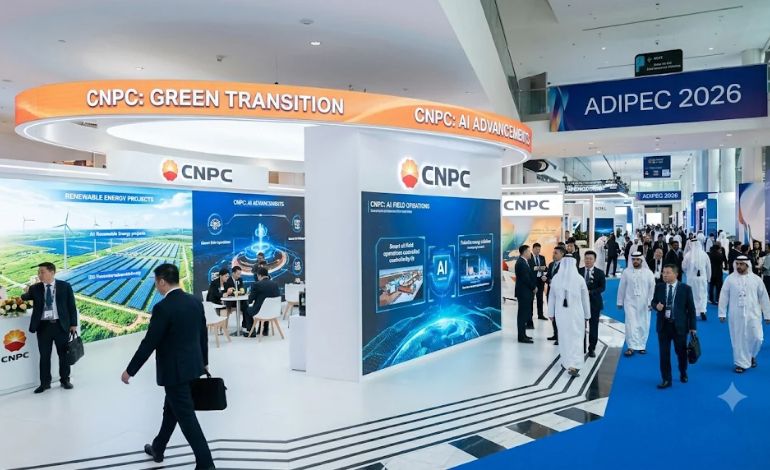
The pavilion’s digitalisation area showcases the Kunlun Large AI Model, with 300 billion parameters, demonstrating AI applications across the energy industry. The model was built independently on domestic computing infrastructure and is operating at scale in more than 150 application scenarios across the oil and gas value chain. Its deployment design, using private cloud and cloud edge devices, also helps protect data security and supports the industry’s transformation toward AI-driven, intelligent automation.
Also Read:
According to the Wall Street Journal, The US Bombs Iran’s Qeshm island Explosions are Heard
Investments at Gateway Gulf valued at $3.89 Billion awarded Golden Licenses by Bahrain