Vision 2030 Takes Center Stage as Saudi House Begins Davos Talks
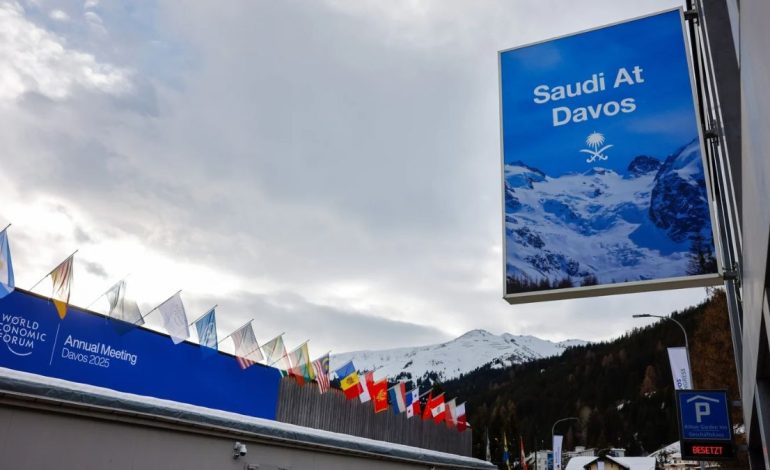

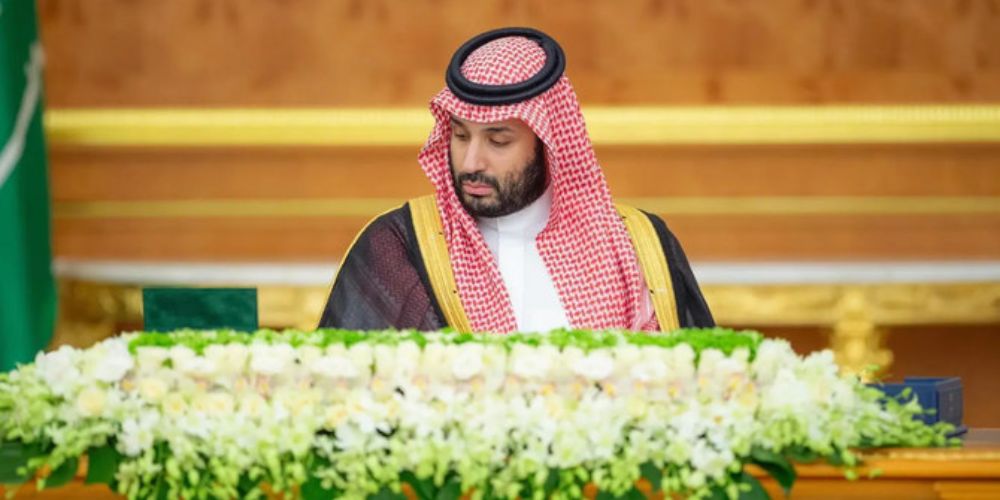
While the official opening of the World Economic Forum in Davos is still a day away, Saudi Arabia has already taken center stage. At the Saudi House, a dedicated pavilion on the Promenade, the Kingdom launched a packed schedule of dialogues on Monday, signaling its intent to shape the global conversation and showcase the next phase of its unprecedented national transformation.
Marking the tenth year of Vision 2030—a plan now roughly two-thirds complete—the venue, led by the Ministry of Economy and Planning, served as a dynamic platform for ministers and global executives to outline the Kingdom’s future trajectory.
Human Capital: The Engine of Transformation
Opening the discussions, Princess Reema bint Bandar, Saudi Arabia’s Ambassador to the US, identified the nation’s greatest achievement. “The biggest symbol of the success of Vision 2030,” she stated, is the emergence of a highly skilled generation of young Saudis who, with global opportunities at their feet, actively “choose to come home, choose to build at home and choose to deliver at home.” She framed this human capital as the indispensable driver of a modern, competitive economy.
Finance Minister Mohammed Aljadaan rooted this success in a fundamental “behavioral change,” building credibility through disciplined fiscal policy and a pragmatic refocusing of resources. His message to the international community was clear: “Markets will call your bluff if you’re not serious.”
The Saudi Proposition: Stability, Opportunity, and a Unique Mix
Investment Minister Khalid Al-Falih made a compelling case for the Kingdom as a premier global destination. He argued that while no country offers a perfect scorecard, Saudi Arabia provides an optimal mix of opportunity and managed risk. “The proof is in the pudding,” he noted, pointing to local investment levels that have doubled to rival those of economic giants like India and China.
The Next Frontier: Tech, Tourism, and Human-Centric Growth
The afternoon sessions pivoted to the strategic sectors powering the next decade: technology, tourism, sport, and culture.
A key announcement came with the unveiling of the SUSTAIN Platform, set to launch in 2026. This initiative aims to harness artificial intelligence to foster cross-sector collaboration, helping entities across government, business, and civil society form effective partnerships and accelerate sustainable development projects from plan to action.
Dina Powell McCormick, President and Vice Chairman of Meta, welcomed the Kingdom’s partnership-oriented approach to technology and innovation. Meanwhile, Tourism Minister Ahmed Al-Khateeb outlined a balanced vision for the sector: “We digitalize the unnecessary and humanize the necessary.” He emphasized that Saudi Arabia’s model prioritizes protecting and empowering its workforce rather than replacing people with technology.
A Week of Global Dialogue
With over 20 sessions planned throughout the week, the Saudi House has established itself as a crucial hub at Davos. Its themes—spanning bold vision, human capability, investment, and quality of life—reflect a comprehensive narrative: a nation confidently transitioning from an ambitious blueprint to a tangible, dynamic reality.
The message from the Alpine town is unmistakable. Saudi Arabia is not just attending the World Economic Forum; it is actively steering the discussion, inviting the world to witness and engage with the next chapter of its remarkable journey.
Also Read:
Water Crisis Deepens as Israeli Settlers Disrupt Wells Near Ramallah
Egypt–Ethiopia Nile Water Conflict: Trump Steps In as Mediator