
First-Ever Passport Services by U.S. Department of State in West Bank Settlement
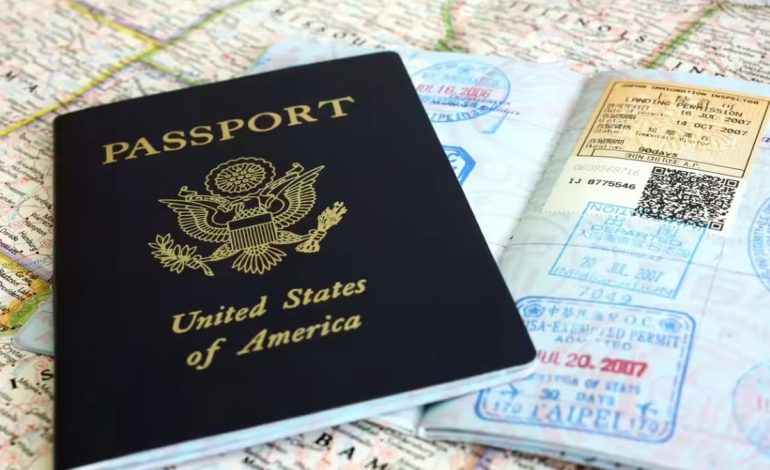

For the first time, American consular officials will provide on-site passport services this week in an Israeli settlement in the occupied West Bank—a move that breaks with long-standing practice and carries significant diplomatic implications.
The U.S. Embassy in Jerusalem announced Tuesday that consular officers will offer routine passport services in Efrat, a settlement south of the Palestinian city of Bethlehem, on Friday, February 27. The embassy framed the initiative as part of broader efforts to reach all Americans abroad, noting that similar services would be offered in the Palestinian West Bank city of Ramallah, the settlement of Beitar Illit near Bethlehem, and Israeli cities including Haifa.
Who This Affects
Tens of thousands of dual American-Israeli nationals live in West Bank settlements, though the U.S. Embassy said it does not have precise data on the number residing in Efrat specifically. The settlement is known as home to many American immigrants who maintain U.S. citizenship while living in territory most of the world considers illegally occupied.
An embassy spokesperson confirmed to Reuters: “This is the first time we have provided consular services to a settlement in the West Bank.” The spokesperson noted that similar services are being offered to American-Palestinian dual nationals in the West Bank, suggesting an effort to reach both populations.
The Legal and Diplomatic Context
Most of the world considers Israel’s West Bank settlements illegal under international law relating to military occupations. Israel disputes this, citing biblical and historical ties to the land, and many on the Israeli right advocate for annexation. Palestinians seek the West Bank, alongside Gaza and East Jerusalem, for a future independent state.
President Donald Trump, a staunch supporter of Israel, has stated he opposes Israeli annexation of the West Bank. However, his administration has taken no measures to halt settlement activity, which rights groups say has increased since he took office. This month, Prime Minister Benjamin Netanyahu’s right-wing cabinet approved measures making it easier for settlers to seize Palestinian land—steps Palestinians called “de facto annexation.”
What It Means
The decision to offer passport services in a settlement represents a quiet but significant shift in U.S. practice. While the U.S. Embassy in Jerusalem and its Tel Aviv branch office already provide consular services, extending those services to settlements within the occupied territories carries symbolic weight.
For settlers with American citizenship, the change means convenience—no longer needing to travel to Jerusalem or Tel Aviv for routine passport matters. For Palestinians and much of the international community, it signals a normalization of settlement presence that undermines the two-state solution.
The embassy’s framing—reaching all Americans abroad—emphasizes service provision over political statement. But in the charged context of the Israeli-Palestinian conflict, service provision is never just service provision. Every action carries meaning, and this one will be read accordingly.
Looking Ahead
Friday’s passport clinic in Efrat will proceed. Similar services are planned in Ramallah for Palestinian-Americans and in Beitar Illit for settlers. The practical impact on American citizens will be positive—easier access to consular services. The diplomatic impact, as with so much in this conflict, will be debated.
For now, the U.S. Embassy continues its work, serving Americans wherever they are. In the West Bank, that now includes settlements. For the first time.
Also Read:
World Bank Steps In with $50 Million for Syria’s Infrastructure Development
UAE Housing Market Trends: Will Home Sales Slow Down This Year?