

What Safran’s New Morocco Facility Means for the Aerospace Industry
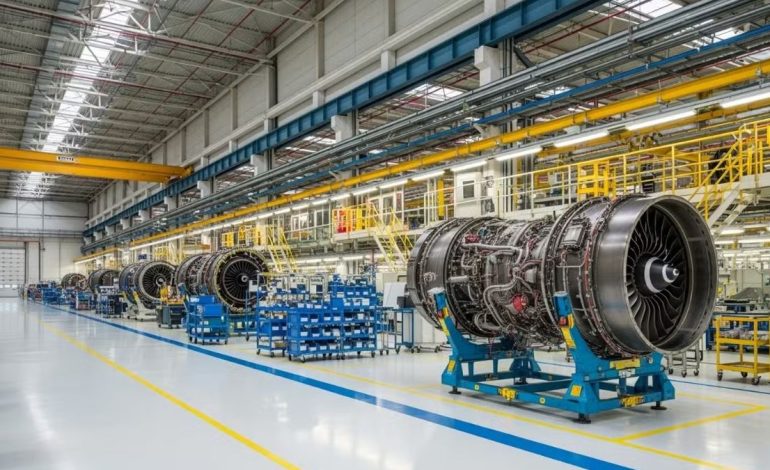

A major French aerospace player is deepening its roots in North Africa. Safran Landing Systems, a subsidiary of the French aerospace group Safran, signed an agreement Friday to establish a landing gear factory near Casablanca, Morocco—a €280 million investment that will supply components for the Airbus A320 family of aircraft.
The deal, signed at the Royal Palace in Casablanca in the presence of King Mohammed VI, represents a significant expansion of Safran’s industrial footprint in the region. It also underscores Morocco’s emergence as a competitive hub for high-value aerospace manufacturing.
Supporting Production, Preparing the Future
Safran Chair Ross McIness framed the investment in strategic terms. The new plant, he explained, will help the company support the production pace of the Airbus A320 family—one of the world’s most popular commercial aircraft—while also preparing for the next generation of short- and medium-haul planes.
Landing gear is among the most critical and complex components of any aircraft. Its manufacture requires precision engineering, rigorous testing, and integration into global supply chains. By locating this capability in Morocco, Safran signals confidence not only in the country’s workforce but in its ability to meet the exacting standards of international aviation.
Morocco’s Aerospace Ascent
The Safran announcement is the latest milestone in Morocco’s deliberate climb up the aerospace value chain. Over the past two decades, the Kingdom has attracted scores of international suppliers, building an ecosystem that now includes more than 140 companies and supports thousands of skilled jobs. The Casablanca region, where the new factory will be located, has emerged as a concentrated hub of aeronautical activity.
What draws companies like Safran is not simply low costs—though competitiveness matters—but consistency. Morocco has invested heavily in industrial infrastructure, vocational training, and trade agreements that facilitate integration with European markets. The result is a destination where global firms can operate with confidence.
A Ceremony of Significance
The presence of King Mohammed VI at the signing ceremony underscored the national importance attached to such investments. For Morocco, each new aerospace facility represents not only jobs and exports but validation of a long-term industrial strategy. Royal endorsement sends a signal to other potential investors: this sector matters, and the commitment is sustained.
Looking Ahead
For Safran, the new facility offers proximity to European markets, access to a growing talent pool, and capacity to meet Airbus’s production demands. For Morocco, it adds another layer to an industrial ecosystem still in ascent. And for the broader region, it demonstrates that North Africa can compete for sophisticated manufacturing investment—not only on cost, but on capability.
The landing gear that will touch down on runways around the world, supporting the weight of hundreds of passengers, may soon begin its journey in a factory outside Casablanca. That is the direction of aerospace today. And it runs through Morocco.
Also Read:
Trump to Reveal Gaza Funding Strategy at First Board of Peace Meeting
Algeria to Restore Diplomatic Ties with Niger After Sahel Dispute