

Radical Israeli Settlers Share Online List Detailing Attacks on West Bank Palestinians
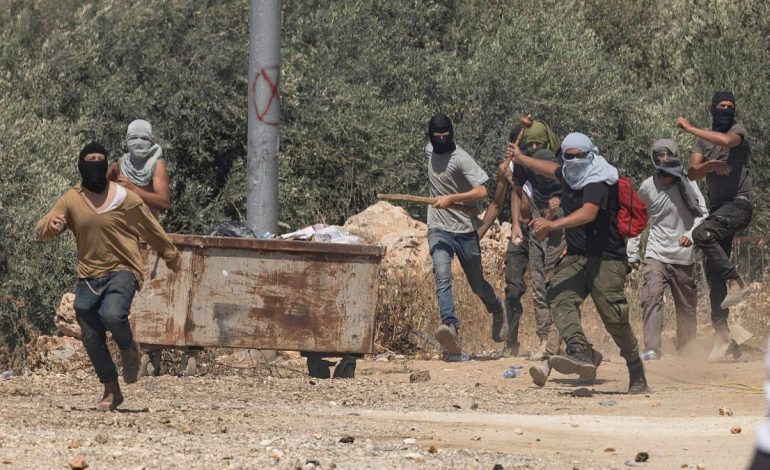

A radical Israeli settler group has published a public tally of attacks it says it carried out against Palestinians in the occupied West Bank over the past month—detailing torched vehicles, destroyed homes, and dozens of injuries as part of its “struggle against the Arab enemy.”
The Hilltop Youth, a loose network of hard-line settlers known for establishing unauthorized outposts and using intimidation to push Palestinians from land, posted the list on its Telegram channel Wednesday. The posting represents an unusually open acknowledgment of violence by a group that typically operates in the shadows.
The Numbers of Violence
The tally, titled “Monthly summary of the struggle against the Arab enemy in the Holy Land,” lists attacks across 33 towns and villages:
- 29 vehicles set ablaze
- 12 homes torched
- “40 Arabs injured”
- Hundreds of windows smashed
- Hundreds of olive trees cut down
Five of the targeted locations are in Mikhmas, a village near Ramallah. A nearby Bedouin community left the area this month, citing sustained harassment. On Wednesday, the Ramallah-based Palestinian health ministry announced that a 19-year-old had died of wounds sustained after being shot by settlers in Mikhmas.
A Surge in Violence
The Hilltop Youth’s figures reflect a broader pattern documented by international observers. The United Nations reported that nearly 700 Palestinians were displaced by settler violence and intimidation in January alone—the highest monthly figure since the Gaza war began in October 2023.
The violence occurs in a territory where more than 500,000 Israelis live in settlements and outposts, which are considered illegal under international law. Around three million Palestinians live in the West Bank, which Israel has occupied since 1967.
Who Are the Hilltop Youth?
The Hilltop Youth is not a formal organization but a diffuse network of hard-line activists, often comprising small groups of teenagers sometimes overseen by adults. They establish unauthorized outposts on West Bank hilltops and are widely accused of using intimidation and violence to push Palestinians out of surrounding areas.
While most Israeli settlers do not engage in violence, this militant fringe has been linked to numerous attacks on Palestinian communities and individuals.
Official Context
The current Israeli government, considered one of the most right-wing in the country’s history, has fast-tracked settlement expansion and recognized some outposts previously considered unauthorized. According to Israeli NGO Peace Now, the government approved a record 54 settlements in 2025.
On Tuesday, a group of influential rabbis from settlements in the northern West Bank issued a public letter celebrating settlement expansion while insisting that violence was forbidden—a statement that implicitly acknowledges the tensions within settler society over the use of force.
International Law and Reaction
The publication of the Hilltop Youth’s tally has drawn renewed attention to the legal status of settlements and the violence associated with them. Under international law, the transfer of civilian populations into occupied territory constitutes a violation of the Fourth Geneva Convention.
The Palestinian Authority and human rights organizations have long called for international action to address settler violence. The United Nations has repeatedly documented attacks and displacements, with January’s figures representing a new peak in an ongoing crisis.
For Palestinians in villages like Mikhmas, the numbers on the Hilltop Youth’s list are not statistics but lived reality: vehicles burned, homes destroyed, olive trees cut, a 19-year-old dead. The group’s decision to publish its tally publicly suggests not only a lack of fear of consequences but a desire to claim credit for violence that, in other contexts, might be concealed.
The list is online. The attacks continue. And the international community, once again, is left to respond to violence that its own legal frameworks prohibit but cannot prevent.
Also Read:
First Cabinet Meeting Led by Yemen PM in Aden Signals Political Progress
IMF Says Lebanon Needs Major Reforms to Restore Economic Growth