
Dr. Sergei Dvorianov – The Middle East in Transformation: Historical Mission of Donald Trump


The editor-in-chief of “The Times of Russia”, the famous religious philosopher Sergei Dvorianov, in this article, suggests new approaches and paradigms in solving the problem of the conflict of civilizations using the key messages of Vedic texts.
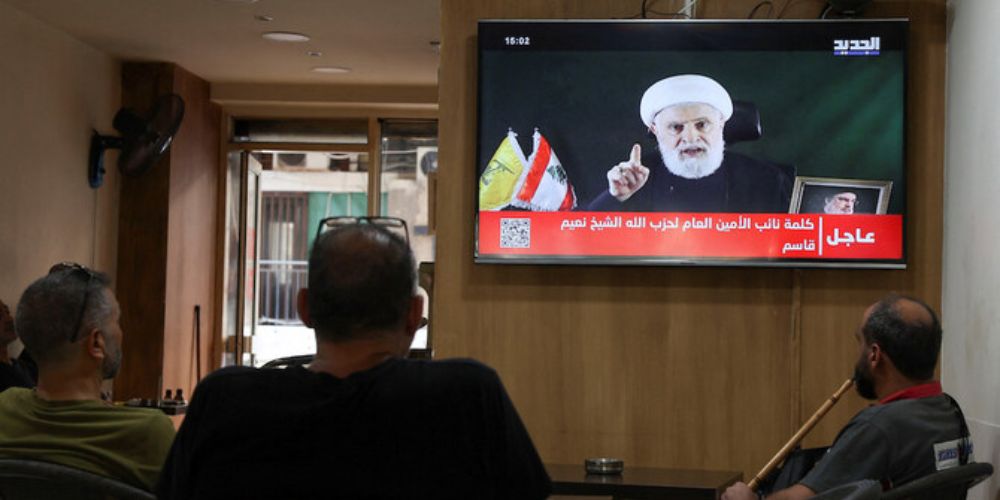
Today, before our eyes, a terrible human tragedy is unfolding in the Middle East, a global catastrophe that has become a natural consequence of the conflict of civilizations. Samuel Huntington’s concept of conflict, or “Clash of Civilizations,” asserts that in the modern world after the Cold War, culture and religion, rather than ideology or economics, will become the main source of conflict. The current situation in the Middle East confirms the validity of this statement.
It should be noted that the Middle East is the cradle of the birth of the three world Abrahamic religions – Judaism, Christianity and Islam. Having originated in this region, the Abrahamic religions later spread throughout the world, sharing a common tradition of monotheism and reverence for the prophet Abraham as the patriarch. The life story of the prophet Abraham is an example of fervent faith, unconditional devotion to God and willingness to sacrifice – if God requires it – even the most precious, including his own son. The Danish Philosopher In her book Fear and Trembling, Seren Kierkegaard calls the prophet Abraham a “knight of faith” who made a paradoxical “leap of faith” by trusting God in defiance of ethics and reason. Kierkegaard describes Abraham’s faith as absolute devotion capable of the great “absurdity” of waiting for Isaac’s son to return, even after he is sacrificed.
For many centuries, the Middle East has served as a place of constant intercultural interaction and peaceful coexistence, and this was especially evident in the 21st century in the UAE, where, until recently, we witnessed a flourishing economy and culture, manifested in an atmosphere of tolerance and mutual respect. The dynamically developing Dubai has become, in fact, the economic and cultural capital of the world. Until recently, America actively played the role of mediator in the dialogue of the Abrahamic religions.
The famous “Abraham Accords”, a series of agreements on the normalization of relations between Israel and the Arab states, was signed on September 15, 2020 in Washington.
This monumental memorandum of Goodwill has become a unique agreement normalizing relations between Israel, the UAE and Bahrain, mediated by the United States. The preparation of the agreement included the active participation of other Persian Gulf countries. It seemed to everyone that prosperity had come to the Middle East forever after the signing of these agreements.
On the other hand, paying tribute to historical objectivity, it should be recognized that the bloody crusades that united many monarchical Christian houses in Europe and the fierce battle with the Arab world for the holy city of Jerusalem clearly demonstrated that in the Middle East, the conflict of civilizations from a dormant mode can at any moment switch to an active phase, irreconcilable hostility, that We are currently observing it.
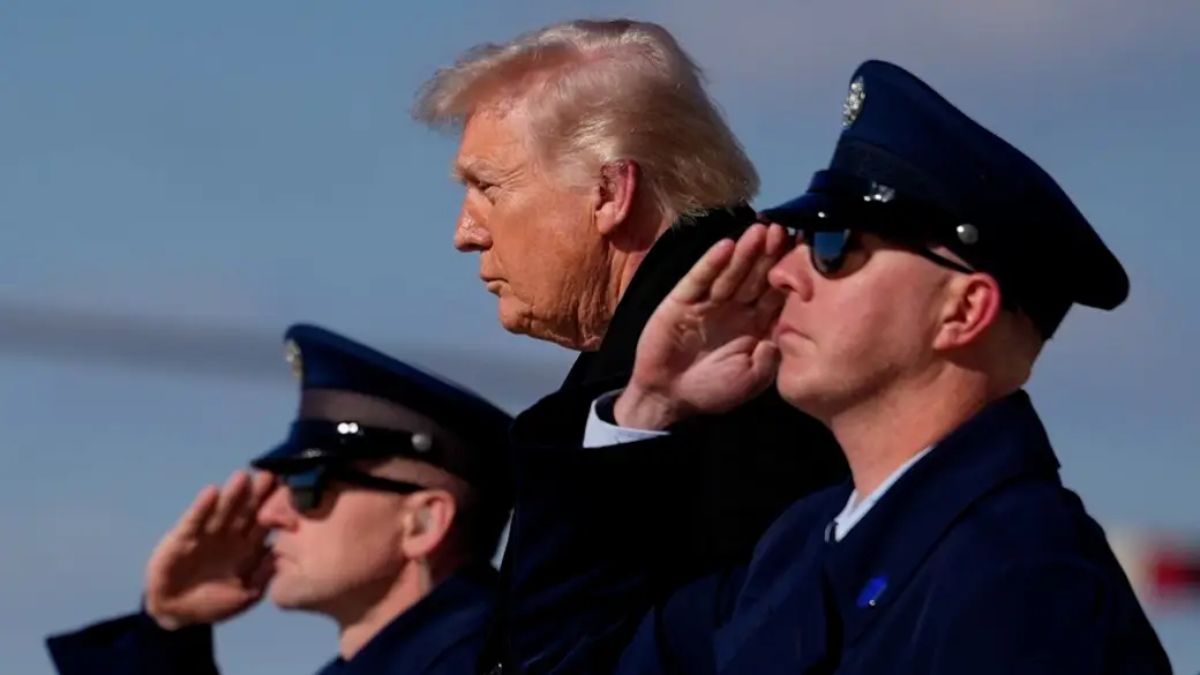
I would like to remind you that during his first term as president, on December 6, 2017, Donald Trump officially recognized Jerusalem as the capital of Israel and ordered the relocation of the US Embassy from Tel Aviv to this city. This unprecedented step violated long-standing U.S. policy and international consensus, provoking harsh criticism from the international community, primarily from the Palestinian side. However, for Trump it was quite a successful “deal”, carried out in the typical manner of a gambling entrepreneur – without excessive reflection and civil dialogue. Thus, we can conclude that in his political career, Donald Trump initially positioned himself as an active messianic reformer and thus decided to reserve a place for himself in world History. Long before Trump became president of the United States, in his earliest interviews he openly discussed the possibility and necessity of American expansion into Iran – from an economic and strategic point of view.
It should be noted that Iran, as an ancient civilization, has always stood apart in the entire range of other Middle Eastern countries. Since ancient times, Iran has opposed the West, the European civilization, the original matrix of which is Hellas, Ancient Greece, with the established democratic system in the city-polis. Ancient Iran has always been a monarchy. Let me remind you that the Persian king Xerxes the First, the son of Darius the Great of the Achaemenid dynasty, continuing his father’s mission, dreamed of conquering Hellas. In order to realize this dream, he made a “logistical breakthrough” in the literal sense of the word: he ordered the construction of two pontoon bridges across the Hellespont Strait (modern Dardanelles). The engineering structure connected Asia and Europe, which allowed the Persian army to cross from Asia Minor to the Balkan Peninsula.
Xerxes was the first to defeat the army of the Spartan king Leonidas, and then, finding his corpse on the battlefield, ordered his head to be cut off. However, by a whim of History, or perhaps as a result of “divine intervention,” the fleet of Xerxes the First was defeated by the maneuverable fleet of the city of Athens. When the Persian king returned from a military campaign in Persia, he died as a result of a conspiracy – his own son was killed, and as a result, the Achaemenid dynasty lost its former influence. Subsequently, Alexander the Great, the unifier of Hellas, defeated the hordes of the Persian king Darius the Third, which led to the collapse of the Achaemenid Empire and the rise of a new Empire. At the same time, Alexander the Great managed to attract representatives of the Persian aristocracy to his army, integrate them into his own expansionist policy, and this was a brilliant move by the Hellenic strategist and commander.
Persia was originally formed as a Zoroastrian civilization. After the Arab countries adopted Islam
Iran also adopted Islam in the 7th century (around 637-651) as a result of the Arab conquests, replacing Zoroastrianism with a new religion. As we know, Sunni Islam initially spread in Iran, but in 1501, Shah Ismail I carried out religious reforms and legislated Shiite Islam (Jafari madhhab) as the state religion in the country. So, we can conclude that Iran eventually adopted the Avramic religion, but in its own reformed version. After the Islamic Revolution, on April 1, 1979, Iran became an Islamic Republic, where Shiite Islam of the Jafari madhhab was proclaimed the state religion.
The whole course of world History tells us that Iran, as an ancient civilization, has always stood apart, professed its own civilizational foundations and adapted religious customs in its own way. We are fully aware that in any conflict of civilizations, religious identity is the main factor of separation and the main motivating factor for fighting – nothing inspires warriors on the battlefield more than the idea of afterlife retribution and the opportunity to die “for a just cause and find paradise.”
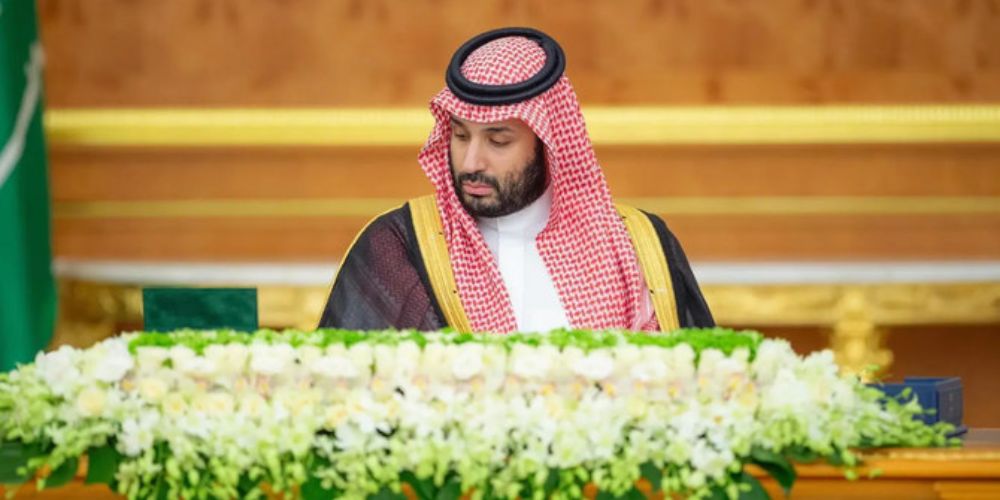
The Middle East requires careful, reverent treatment. The international community today is quite reasonably concerned that Donald Trump consistently and uncompromisingly pursues his own policy in the Middle East and does not particularly think about the consequences. The narratives broadcast by Donald Trump at his numerous conferences are a mixture of “hype” and populist political stand-up. Trump uses everyday, street language, which he uses frivolously, often resorting to vulgar formats. This behavioral model clearly tells us that the President of the United States feels sinless and unpunished in a certain sense. He feels like a kind of “messiah.” His recent escapades towards the Crown Prince of Saudi Arabia are in fact an open insult to the national dignity of the leader of a great country, on whose territory the greatest holy cities of Mecca and Medina are located. At the same time, for a person who lives in the spiritual paradigm of perception of the world, it is quite obvious that Donald Trump is really carrying out a certain mission in the Middle East today – the mission of destroying stereotypes, radically breaking the old system and the moral reboot of humanity. There is a saying in the East: “In order to pull out a thorn, you need to use another thorn.” This is precisely Trump’s mission. Sometimes the average man in the street must be horrified before he begins to think deeply and ask existential questions.
The conflict of civilizations in the Middle East requires not just “new approaches”, it requires the activation of a balanced philosophical and spiritual strategy of true dialogue and Transformation.
As a philosopher and as a citizen, I am convinced that humanity is capable of bringing peace to the Middle East. To do this, we must convince political and religious leaders of one simple principle of being. This principle is obvious and universal: we live in an interdependent world, in a world where any act of aggression will inevitably lead to a whole chain of events that will primarily affect our own karma. We depend on each other, on nature, on the environment, and first of all we depend on God, who is the original Creator. Today, it is philosophers, and primarily religious philosophers, who are able to initiate a global peacemaking dialogue. In my opinion, as a religious philosopher, one of such practical arguments for dialogue is the philosophical concept of Theodicy, or Justification of God. According to Russian religious philosopher Nikolai Lossky, the key meaning of the concept of Theodicy is the idea of reincarnation, which puts all the external “injustices” of the world in place, affirming God as the main authority of justice and mercy at the same time.
Note that the Abrahamic religions do not recognize the idea of reincarnation, the reincarnation of the soul. Just Judaism partially recognizes reincarnation, known as Gilgul Neshamot (the cycle of souls), but this concept belongs to the sphere of mysticism and Kabbalah, and not to the central tenets of faith. In the Jewish tradition, the soul can return to correct the mistakes of past lives or complete its mission, according to the teachings of sages such as Arizal. The philosophical and spiritual potential of the sacred Vedic scriptures, and above all the legacy of the Bhagavad Gita, provide us with a unique example of understanding how the mechanism of reincarnation works. Three main factors determine our future birth: the state of mind at the time of death, accumulated karma (good and sinful actions) and attachments (desires, passions, unrealized dreams). It is amazing that our attachments can have both a positive form – the form of emotional enthusiasm, and a negative form – the form of fear, anger, criticism, grief and accusations. Negative attachments are the “vicious circle”, the syndrome of permanent hostility, which is turning the Middle East into a “territory of death” before our eyes.
Humanity has every chance to break out of this cycle of hatred and mutual accusations. Classical political ideology is based on the image of the “enemy.” Spiritual ideology moves the enemy from the outer space to the inner space – and then our own selfishness, greed and envy are revealed to us, which in fact are the main enemies of the Soul.
At the end of this research article, I would like to give an instructive story from the ancient Vedic text Srimad-Bhagavatam. This is a famous story about King Chitraketu and his deceased son. A heartbroken father learns that his son has been poisoned by the envious girlfriends of the tsarina, his beloved wife. The great sage Narada Muni came to the suffering King Chitraketu and decided to comfort him. With the help of mystical power, sage Narada returned the child’s soul to the dead body for a few moments so that he could answer the questions of his parents.
The father’s conversation with the resurrected child is a key moment that reveals the deepest Vedic philosophy about the nature of the soul and the transience of earthly connections.
To the king’s surprise, the soul responded not as a child, but as a self-realized being. She asked: “In the role of whose son should I return to this world? I, a soul lost to God, have been wandering for a long time in an endless cycle of rebirth. I’ve changed millions of fathers and millions of mothers. I’ve been in different bodies-humans, animals, and gods. And I realized that all current family ties are just a temporary episode of an illusory existence. No one is the true owner or relative of the other. Earthly relationships arise and disappear like grains of sand that converge and then diverge in a stream of water. And only the soul is incorruptible, has no beginning and no end, and does not belong to any family or caste. The soul longs for only one thing – to find God in unconditional Love!” Upon hearing these words, King Chitraketu realized that his grief was based on a false identification of himself and his son, on identification with temporary physical bodies. The king got rid of the illusion, accepted the sage’s instruction, chose the path of spiritual realization, and eventually became a great devotee of the Lord.
Thus, we can conclude that today humanity is experiencing the greatest crisis in the entire modern history, and this is primarily a spiritual crisis. The current situation in the Middle East is capable of pushing us towards deep spiritual exploration, dialogue, and Transformation. And then we will experience endless gratitude and endless trust in the Father, without which it is impossible to find Love.
Also Read:
Ravi Singh: Scaling a Culture-Led Hospitality Empire Without Losing the Soul