

Iranian Envoy Denies Tehran Ordered Attack on US Embassy in Riyadh

RIYADH — Iran’s ambassador to Saudi Arabia addressed key accusations Thursday, denying Tehran’s involvement in recent strikes while expressing gratitude for the Kingdom’s position of non-interference in the ongoing conflict.
Alireza Enayati told AFP that Iran remains appreciative of Saudi Arabia’s pledge to not allow its airspace or territory to be used during the war with the United States and Israel.
“We appreciate what we have repeatedly heard from Saudi Arabia — that it does not allow its airspace, waters, or territory to be used against the Islamic Republic of Iran,” he said.
Before the outbreak of hostilities, Riyadh had backed diplomatic efforts to ease tensions between Tehran and Washington and vowed its airspace would not be used for attacks against Iran.
Denial of Embassy Attack
Enayati categorically denied that his country struck the US embassy in Riyadh this week, after Saudi officials said Iran targeted the compound with drones.
“We confirmed that Iran has no role in the attack on the US embassy in Riyadh,” the ambassador told AFP. “If the operations command in Tehran attacks somewhere, it takes responsibility for it.”
The denial follows similar statements regarding other targets. Iran had earlier rejected accusations it attacked the Ras Tanura refinery — one of the largest in the Middle East — which Riyadh said Tehran targeted twice with drones.
Regional Conflict Expands
Saudi Arabia has repeatedly accused Tehran of launching missile and drone attacks at its territory and warned the Kingdom reserves the right to defend itself, including through retaliation.
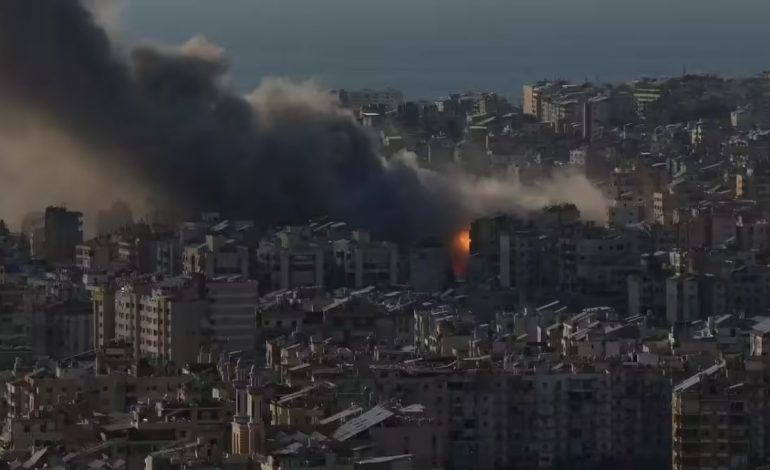
The war in the Middle East has drawn in the Gulf region as Iran responds to US and Israeli strikes that killed its supreme leader. Tehran has launched attacks at Israel, the wider region, and beyond.
At least 13 people have been killed in the Gulf since Saturday, including seven civilians, according to reports.
Ambassador’s Position on Broader Conflict
Enayati pushed back against the characterization of Iran’s actions as a regional war of retaliation.
“This is not a regional war and it is not our war. It was imposed on the region,” he told AFP.
His comments come as tensions continue to mount across the Gulf, with multiple nations reporting attacks and the maritime sector facing severe disruption near the Strait of Hormuz.
Also Read:
Iran’s Proxy Network Under Pressure: Can It Save the Regime?
Hezbollah’s Strong Message: No Surrender in the Face of Israel-US ‘Aggression’