




Gold Price Forecast Raised to $4,450 by 2026: What’s Driving the Bullish Trend?
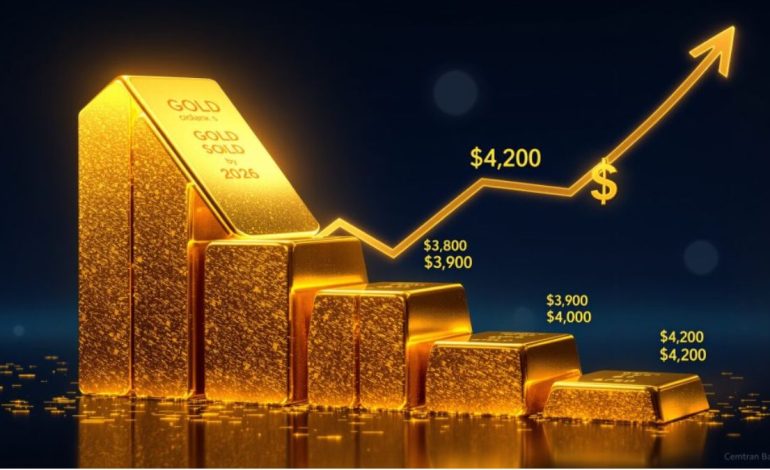

Financial analysts at Deutsche Bank have significantly raised their gold price forecast, projecting the precious metal could reach $4,450 per ounce by 2026—a notable increase from their previous estimate of $4,000. The bank suggests gold could trade between $3,950 and $4,950 next year, with the upper range representing a 14% premium over current futures prices.
This optimistic outlook stems from several converging factors that continue to reshape the global gold market.
Strong Investor and Central Bank Demand
A key driver behind the revised forecast is sustained demand from both institutional investors and central banks. Financial institutions worldwide have been steadily increasing their gold reserves, viewing the metal as a stable store of value amid ongoing geopolitical tensions and economic uncertainty. This trend shows no signs of slowing, with central bank purchases remaining largely unaffected by price fluctuations—a pattern Deutsche Bank describes as “inelastic demand.”
Simultaneously, exchange-traded funds (ETFs) continue to absorb substantial quantities of gold, creating a solid price floor around $3,900 per ounce. This consistent financial inflow provides a buffer against market volatility and reinforces gold’s traditional role as a safe-haven asset.
Supply Constraints and Market Tightness
While demand grows, supply remains constrained. Mine production has been slow to respond to higher prices, and scrap recycling has not significantly increased. This limited supply response has tightened the physical market, diverting gold away from traditional sectors like jewelry and contributing to higher lease rates—a clear indicator of market tightness.
The supply-demand imbalance isn’t limited to gold. Other precious metals, including silver, platinum, and palladium, are also experiencing prolonged supply deficits, creating supportive conditions across the entire sector.
Potential Risks to Consider
Despite the positive outlook, Deutsche Bank acknowledges several factors that could temper gold’s performance. The metal’s correlation with risk assets means strong equity market performance could reduce its appeal as a defensive holding. Additionally, if the U.S. Federal Reserve maintains higher interest rates for longer than anticipated, the opportunity cost of holding non-yielding gold could increase, potentially dampening investor enthusiasm.
The forecast also assumes continued strong purchasing by central banks. Any reduction in their buying activity could weaken one of the key pillars supporting current price levels.
Long-Term Outlook Remains Strong
Looking further ahead, Deutsche Bank maintains a 2027 gold price forecast of $5,150 per ounce, signaling confidence in the metal’s enduring value. While short-term fluctuations are inevitable, the structural factors driving gold’s appeal—geopolitical uncertainty, institutional demand, and physical market tightness—appear likely to sustain its upward trajectory through the coming years.
Also Read:
May Saw a Two-Year High for Saudi Arabia’s Non-Oil Exports of $7.70 Billion, According to GASTAT.