

Gaza Health System Under Pressure After MSF Suspends Most Services at Nasser Hospital
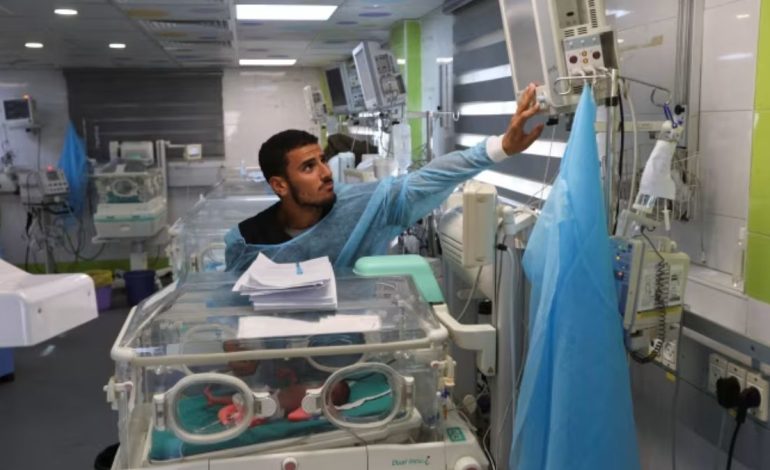

One of Gaza’s last remaining large hospitals is at the center of a deepening controversy after an international medical organization suspended most of its operations there, citing security concerns. The move comes as at least 10 Palestinians were killed in separate incidents across the territory on Sunday.
Doctors Without Borders, known internationally as MSF, announced Saturday that it had suspended all noncritical medical operations at Nasser Hospital in Khan Younis. The organization cited “serious” security threats to its teams and patients, reporting an increase in armed men within parts of the medical compound since the US-brokered ceasefire took effect in October.
A Facility Under Pressure
Nasser Hospital has been a lifeline throughout the conflict, treating hundreds of patients and war-wounded daily. It also served as a gathering point for Palestinian prisoners released by Israel in exchange for Israeli hostages as part of the ceasefire agreement.
MSF described “a pattern of unacceptable acts including the presence of armed men, intimidation, arbitrary arrests of patients and a recent situation of suspicion of movement of weapons.” The suspension occurred in January but was only publicly disclosed this weekend.
Hospital administrators pushed back strongly against the allegations. In a statement Sunday, Nasser Hospital said the increased presence of armed individuals reflected a civilian police force deployed to protect patients and staff. It characterized MSF’s claims as “factually incorrect, irresponsible, and pose a serious risk to a protected civilian medical facility.”
The Security Dilemma
The dispute highlights the impossible position facing medical facilities in conflict zones. Hospital staff acknowledge that in recent months, the facility has been repeatedly targeted by masked, armed men and militias—precisely the reason they argue a civilian police presence is essential.
Hamas remains the dominant force in areas not under Israeli control, including the region around Nasser Hospital. But the war has enabled the proliferation of other armed groups across Gaza, including some backed by Israel in the Israeli-controlled parts of the strip.
Throughout the conflict, which began with the Hamas-led attack on Israel on October 7, 2023, Israeli forces have repeatedly struck hospitals, including Nasser, accusing militants of operating in or near them. Some hostages released from Gaza have reported being held in medical facilities, including Nasser Hospital.
Renewed Violence
The tensions surrounding the hospital unfolded against a backdrop of continuing violence. At least 10 Palestinians were killed Sunday by Israeli fire across Gaza, according to hospital authorities.
In Khan Younis, an Israeli strike killed five men in their 20s near the Yellow Line, which separates Israeli-controlled areas from the rest of Gaza. Rami Shaqra identified his son Al-Baraa among the dead, describing the group as militants securing the area against potential attacks. Associated Press footage from the morgue showed at least two of the men wearing headbands of the Qassam Brigades, Hamas’s military wing.
In northern Gaza, a drone strike killed five people in the Falluja area of Jabaliya refugee camp, according to Shifa Hospital.
The Israeli military said it was responding to ceasefire violations near the Yellow Line, including militants attempting to hide in debris and others crossing the line while armed.
A Fragile Ceasefire
The October 10 ceasefire, brokered by the United States, was intended to halt more than two years of war. While major combat operations have subsided, the agreement has proven fragile. Israeli forces have conducted repeated airstrikes and frequently fire on Palestinians near military-held zones.
According to Gaza health officials, 601 Palestinians have been killed since the ceasefire took effect. The ministry, part of the Hamas-led government, maintains detailed casualty records that UN agencies and independent experts generally consider reliable, though it does not distinguish between civilians and militants.
Militants have carried out shooting attacks on troops, and Israel maintains its strikes respond to those actions and other violations. Four Israeli soldiers have been killed during the same period.
What Comes Next
For Nasser Hospital, the immediate challenge is filling the gap left by MSF’s partial withdrawal. For Gaza’s broader health system, already devastated by more than two years of war, the loss of any international partner represents another strain on fragile infrastructure.
The dispute over armed presence in the hospital reflects a deeper reality: in Gaza, the lines between civilian protection, militant activity, and medical neutrality have blurred beyond easy resolution. Patients continue to arrive. Staff continue to treat them. And international organizations continue to weigh the risks of staying against the consequences of leaving.
Also Read:
What Safran’s New Morocco Facility Means for the Aerospace Industry
Green Initiative: 10,000 Arta Trees Planted in King Abdulaziz Royal Reserve