

Exit Polls Show Centrist Victory in Dutch Elections, Far Right Defeated
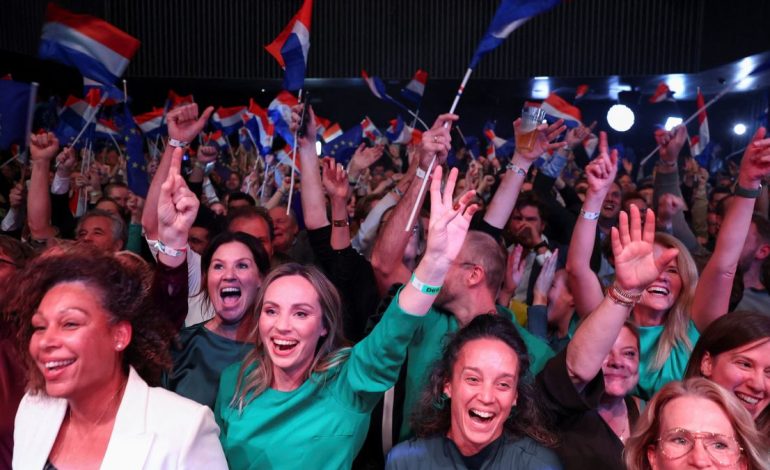

The recent Dutch elections have delivered a clear message: centrism has prevailed over the rising tide of far-right populism sweeping much of Europe. According to exit polls, the centrist D66 party led by Rob Jetten emerged as the leading force in the Dutch parliament, securing 27 of the 150 seats, edging out Geert Wilders and his far-right PVV Freedom Party, which took 25 seats.
Jetten’s projected victory is historic on multiple fronts. At 38, he is poised to become the youngest prime minister in Dutch history and the first openly gay leader of the country—symbols of a new era for the Netherlands. His jubilant declaration after the results, “We’ve done it,” echoed the hopes of many Dutch voters eager to push back against extremist politics.
This election was closely watched across Europe, where far-right parties have made significant gains in recent years in countries like Britain, France, and Germany. The Netherlands, often seen as a political bellwether, appears to be carving out a different path, emphasizing moderation and European cooperation amid rising polarization.
Wilders, often compared to former U.S. President Donald Trump for his fiery rhetoric and anti-immigration stance, suffered a substantial loss, slipping 12 seats from his 2023 high. His push for the strictest asylum policies helped topple the previous government, yet he remains isolated politically, as no other party is willing to join a coalition with him.
The fragmented political landscape will now pose challenges in forming a stable government. No single party commands a majority, meaning lengthy coalition talks will be necessary. The ideological diversity among parties could make compromise difficult, raising questions about how quickly the Netherlands can find unity.
Voters addressed critical issues like immigration and the housing crisis, particularly acute for younger generations in the densely populated country. Jetten’s optimistic campaign message and strong media presence helped him surge ahead in the final days, offering a vision of the Netherlands firmly committed to the European project.
Incidents of violence and disinformation marked the campaign, reflecting the fractious atmosphere in this key European economy. Protesters clashed over asylum policies, and tensions ran high, underscoring the challenges facing Dutch society beyond just the ballot box.
For now, the election result suggests that many Dutch citizens want a return to more positive, less divisive politics. As a baker named Bart Paalman said while voting, “I’m voting for a party who’s not that aggressive.” This sentiment appears to have fueled the centrist victory and may shape the country’s future direction.
As the Netherlands moves toward coalition talks and government formation, the world will watch closely to see if this centrist momentum can translate into lasting political stability and renewed leadership at the heart of Europe.