Al-Aqsa Mosque Welcomes 50,000 Faithful for Special Ramadan Prayers
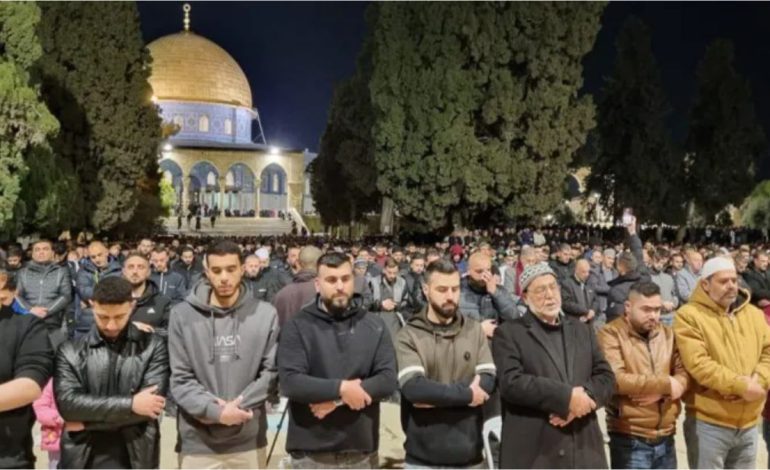

Despite checkpoints and restrictions, approximately 50,000 Palestinian worshippers gathered at Al-Aqsa Mosque in occupied East Jerusalem on Sunday evening to perform Isha and Ramadan Taraweeh prayers. The scene of devotion unfolding within Islam’s third holiest site offered a powerful contrast to the obstacles many faced to be there.
The Jerusalem Governorate confirmed the crowds, noting that worshippers passed through Israeli military checkpoints and strict identity checks at the mosque’s gates. For many, the journey to prayer was itself an act of faith.
Ramadan Under Restrictions
Ramadan began Wednesday for Palestinians, and with it came familiar but deeply felt restrictions. Israeli authorities have increased their military presence in Jerusalem and limited access to Al-Aqsa—barring children under 12, men over 55, and women over 50 from entering.
More than 300 Jerusalemites have received Israeli orders specifically prohibiting their entry to the mosque during the holy month, according to Wafa news agency. The orders add personal exclusion to the broader restrictions affecting thousands.
Since Wednesday, long lines have formed at military checkpoints including Qalandiya and Bethlehem, as Palestinians from the West Bank seek permits or hope to pass through to reach Jerusalem for prayers. The wait, the uncertainty, the possibility of being turned back—all part of the experience of trying to worship at a site that, for Muslims worldwide, should be freely accessible.
A Gathering of Faith
The 50,000 who made it inside Sunday evening joined in prayers that carry special weight during Ramadan. Taraweeh, the nightly prayers performed only during the holy month, draws worshippers in large numbers across the Islamic world. At Al-Aqsa, the gatherings carry added significance—a connection to the mosque’s history, a demonstration of enduring presence.
Broader Tensions
The restrictions at Al-Aqsa unfold against a backdrop of heightened tensions across the occupied West Bank. Settler attacks on Palestinian communities continue. Israeli army raids and arrests are frequent. The violence that has marked the territory for decades shows no sign of abating.
For worshippers entering Al-Aqsa, the checkpoints are daily reminders of the occupation that governs their movement. The identity checks, the waiting, the uncertainty—these are the ordinary texture of extraordinary devotion.
The Meaning of Presence
That 50,000 gathered despite the obstacles speaks to the mosque’s enduring pull. Al-Aqsa is not merely a place of worship; it is a symbol of Palestinian identity and connection to Jerusalem. Praying there during Ramadan is both religious obligation and national expression.
As the holy month continues, thousands more will attempt the journey. Some will pass through checkpoints. Others will be turned back. Those who enter will join worshippers in prayers that echo through the ancient stones—a sound that has been heard every Ramadan for centuries, and that restrictions and occupations have never been able to silence.
Also Read:
Citizens Welcome Mohammed bin Salman in Madinah
Kigali Welcomes Muslim World League Chief for Friday Prayer Sermon