




How AlUla’s Farmers Kept Old Water Skins

JEDDAH: Long before refrigeration and other food-preservation methods, residents in AlUla used a simple technique to preserve one of the oasis’ most valued crops.
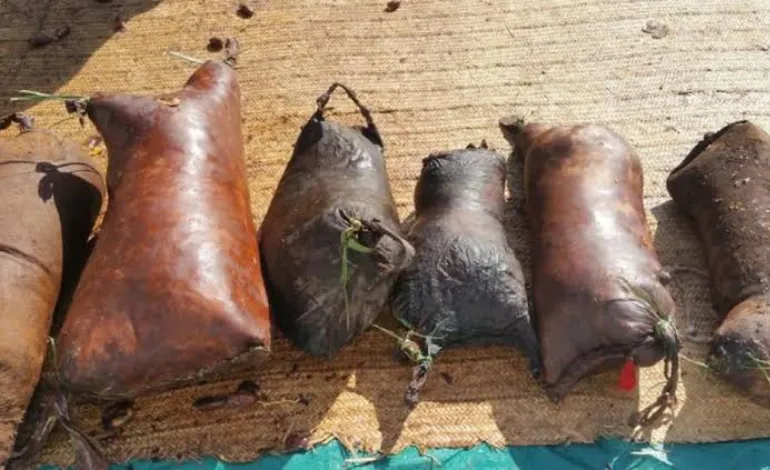
When a waterskin wore out and could no longer carry water, it got a second life. The container, called a shannah, was filled with dates, firmly packed and sewn together, to assist families in preserving their harvests for years and make sure they always had dates available for family and unexpected guests.
This custom was highlighted on November 21 at Shannah Day, the closing of this year’s AlUla Dates Season at Al-Manshiyah Farmers’ Market.
The event was launched by the Royal Commission for AlUla on Sept. 18 as part of the Khairat AlUla agricultural season, with date auctions held throughout the harvest time, ending in a celebration of one of the region’s oldest preservation methods.
The timing of Shannah Day coincides with the harvest of AlUla’s signature red Helwa dates,” said Hamed Ahmed Al-Shuwaikan, chairman of the board of AlUla’s Abaq Al-Madi Association.
Known locally as Al-Helwa Al-Hamra, it is among the last varieties to ripen each year. The dates are stretched out in the sun after harvesting and sprinkled lightly with water, before being packed into the hide container in preparation.
For farmer Saleh bin Abdulrahman Al-Zuair, the custom is linked to recollections of parents and grandparents who used the approach for their daily lives.
The first step in preparing a shannah is to gently remove the animal hide from the animal so that it is whole. Then they pull off the hair and tan the hide. Traditionally, it was used as a container to store and chill water.
Also Read:
Rights Organisations Warn of Systemic Abuse of Palestinian Children in Detention
Scientists Uncover More About Unusual Ebola Virus in Congo Epidemics