

Saudi Arabia Foils Drone Strike on Aramco’s Shayba Field Amid Rising Missile Threats

The alarm bells sound before dawn in the Saudi desert. Once again, drones are inbound. Once again, air defense systems spring to life. Once again, Saudi Arabia faces a barrage of missiles and unmanned aircraft aimed at the heart of its economic lifeblood. This is the new reality of conflict in the Gulf—a reality where oil fields become battlegrounds and energy security becomes a question of military survival.
On Saturday morning, Saudi Arabia’s air defenses intercepted yet another assault. Sixteen drones in four successive waves headed toward Aramco’s Shaybah field in the Empty Quarter were destroyed. A ballistic missile and cruise missile bound for Prince Sultan Air Base near Al-Kharj were shot down. Another drone approaching Riyadh itself was eliminated. The Kingdom’s defense systems performed their grim choreography once more, and once more, critical infrastructure was spared—by the narrowest of margins.
The Prize: Shaybah and Strategic Vulnerability
Understanding why these attacks matter requires understanding what lies beneath the sands of the Rub’ al-Khali, also known as the Empty Quarter—one of the world’s largest deserts and one of its harshest environments.
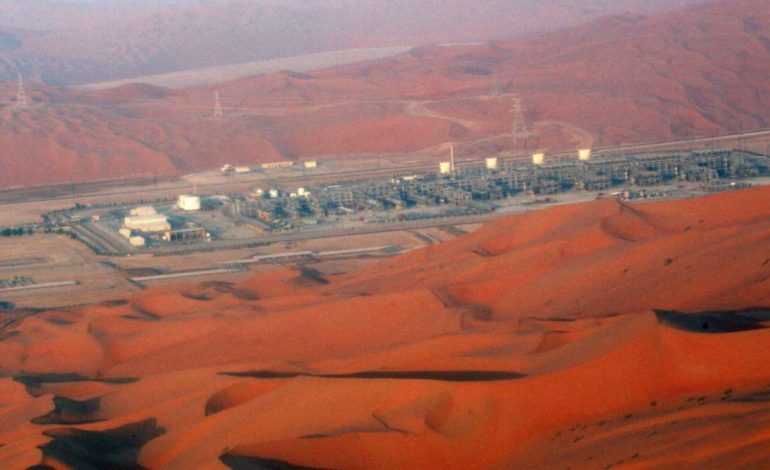
Shaybah is not just any oil field. It is a “super-giant” facility, one of Saudi Arabia’s crown jewels. Its massive reserves alone would make it crucial to the Kingdom’s future. But Shaybah is more than a repository of crude oil. It hosts a high-tech natural gas liquids recovery plant that supplies critical petrochemical products to industries throughout the region. It is infrastructure upon which the modern economy depends.
For an attacker, Shaybah represents something even more valuable: it is deep in the desert, relatively isolated, and—until recent years—largely invulnerable. The very remoteness that protected it is now a vulnerability. Drones can reach it. Missiles can strike it. And if it falls, the consequences would ripple through global markets with devastating speed.
This is why the attack matters. This is why the interception matters even more.
A Pattern of Escalation
What makes Saturday’s attack significant is not that it happened—it is that it happened as part of an established pattern of aggression.
Since February 28, when the United States and Israel launched their military campaign against Iran, the Kingdom has faced wave after wave of attacks. On Friday alone, Saudi air defenses destroyed five missiles and five drones across multiple locations. On Thursday, three cruise missiles and a drone were stopped. And now, Saturday’s assault—the first direct attempt on Shaybah since the escalation began, but far from the first attack of the week.
The repetition reveals something crucial: this is not a singular incident. It is a sustained campaign. It is Iran testing Saudi Arabia’s defenses, probing for weaknesses, searching for gaps in the air defense network. And each time, the Kingdom responds. Each time, it holds. But how long can this continue? How many waves can be stopped before one slips through?
In the last 24 hours alone, the entire region faced an onslaught that defies comprehension. The United Arab Emirates intercepted over 125 drones and 6 ballistic missiles. Saudi Arabia faced assault after assault. The volume is staggering. The coordination appears deliberate. The message appears clear: the Gulf is no longer a zone of relative stability. It has become an active theater of operations.
The Infrastructure Beneath Everything
For those who live outside the region or focus primarily on political headlines, it is easy to miss the significance of what is being targeted. Shaybah. Prince Sultan Air Base. Ras Tanura refinery. Al-Kharj industrial zone. These are not random targets. They are the infrastructure upon which modern civilization depends.
Crude oil must be pumped, refined, transported. Natural gas must be processed into usable products. Military bases must function. Industrial zones must operate. When these targets come under attack, the consequences extend far beyond Saudi Arabia.
The Strait of Hormuz, through which roughly one-third of the world’s seaborne oil passes, remains under Iranian threat. Energy markets watch every attack with anxiety. Insurance costs for shipping spike. Oil prices fluctuate. Governments and corporations worldwide recalculate their energy strategies. A successful strike on Shaybah would not merely damage Saudi Arabia—it would wound the global economy.
This is why the interceptions matter. This is why Saturday’s successful defense of the field is significant news. It is not just about national security. It is about global stability.
A Regional Conflagration
What is happening in Saudi Arabia is part of a much larger escalation across the entire Gulf. The attacks are not isolated incidents. They are coordinated strikes across multiple nations, suggesting a deliberate campaign of regional destabilization.
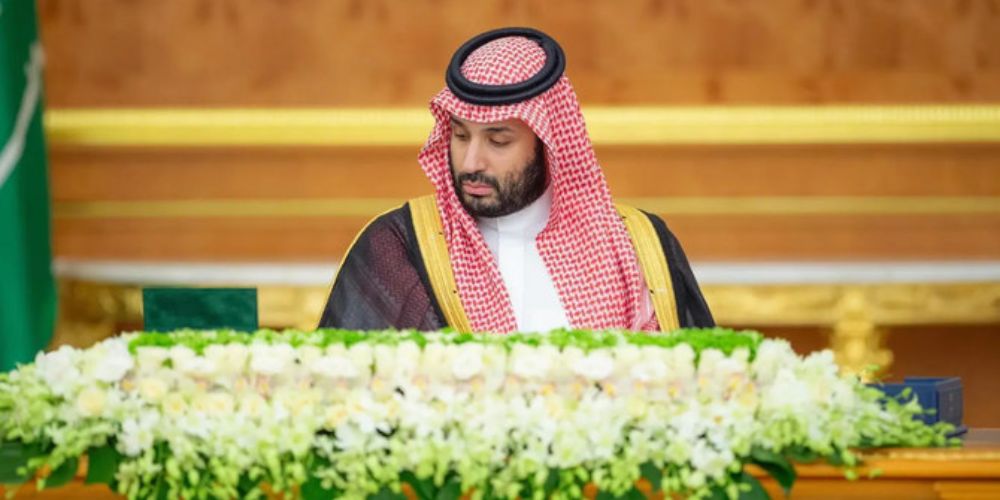
The Kingdom has responded with both defensive action and diplomatic statements. Following a Cabinet session chaired by Crown Prince Mohammed bin Salman on March 3, Saudi Arabia declared it reserves the “full right” to respond to the attacks. The language was measured but firm: the Kingdom will take all necessary measures to safeguard its territory, citizens, and residents.
This is not a threat of recklessness. It is a formal notice that patience has limits. It is a signal that if the attacks continue, the response may escalate beyond air defense interceptions into active retaliation.
International Response and Isolation
Despite the clear aggression, Iran’s attacks have continued despite protests and condemnations from the Gulf Cooperation Council, the Arab League, and the Organization of Islamic Cooperation. These international voices carry weight, but they have not changed Iranian calculations.
In an extraordinary ministerial meeting held in Riyadh on March 1, the GCC affirmed the collective right of member states to defend their territories against what they termed “treacherous Iranian aggression.” The language reflects the severity with which regional leaders view the situation. This is not a regional dispute. This is an existential threat to the stability and prosperity of the entire Gulf.
Yet even as international bodies voice support for the Kingdom, the attacks continue. Drones still launch. Missiles still fly. Air defenses still respond. The international community has spoken, but words have not stopped the weapons.
The Question of Sustainability
As Saturday’s interceptions unfolded—16 drones destroyed, two missiles eliminated—a sobering question emerged: How long can this continue? Saudi Arabia’s air defense systems are among the most advanced in the world. They have performed with remarkable effectiveness. But they are not infinite. Drones can be produced faster than they can be destroyed. Missiles can be manufactured more quickly than they can be intercepted.
At some point, the mathematics of attrition become a serious concern. If Iran can maintain this pace of attacks, if the volume of incoming threats continues to exceed capacity, eventually something will get through. A missile will find its mark. A drone will strike its target. The consequences would be swift and severe.
This is the strategic dilemma facing the Kingdom. It can continue to shoot down incoming threats, but only for so long. At some point, defense must transform into offense. At some point, the source of the attacks must be addressed, not merely the missiles and drones themselves.
A Region at the Precipice
Saudi Arabia stands at a crossroads. Its air defenses have proven effective. Its diplomatic efforts have earned international support. Its military capabilities are formidable. Yet the fundamental question remains unanswered: Can this situation be stabilized before the calculus of escalation overwhelms the capacity for restraint?
The attacks on Shaybah and other critical infrastructure are not mere military strikes. They are tests. They are probes of Saudi resolve. They are attempts to determine at what point the Kingdom will break or lash back.
For now, the answer is clear: Saudi Arabia will defend. It will intercept. It will endure. But the sustainability of that posture, the wisdom of continuing to absorb blows without returning them more forcefully, and the long-term consequences of a region locked in escalating cycles of attack and defense—these remain open questions as the Kingdom faces what may be only the beginning of a much longer struggle.
Also Read:
Iranian Envoy Denies Tehran Ordered Attack on US Embassy in Riyadh
Saudi Arabia Intercepts 3 Ballistic Missiles Aimed at Prince Sultan Air Base