



The Rising Tensions in East Jerusalem: A Closer Look at Palestinian Displacement
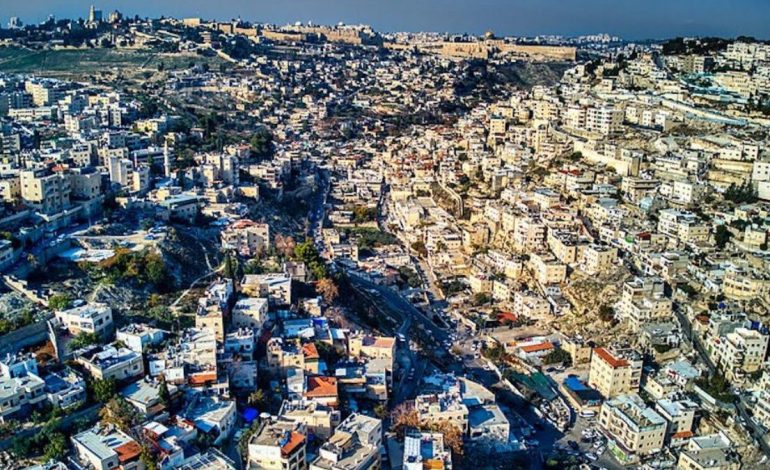

A new Israeli government decision to complete land registration across East Jerusalem by 2029 is raising alarm among rights groups and legal experts, who warn it could accelerate the loss of Palestinian property on an unprecedented scale.
Government Resolution No. 3792, announced in early February, expands resources for Settlement of Land Title procedures and formally integrates the Custodian of Absentee Property as an implementing authority with a dedicated budget. Critics say the move could reshape land ownership in the city for decades to come.
The measure marks the first Israeli government decision devoted specifically to advancing land title settlement in East Jerusalem and the first to designate the Custodian of Absentee Property as an implementing authority—a development rights organizations view with deep concern.
What the Data Shows
Data compiled by Israeli rights group Bimkom illustrates the scale and pattern of the process since 2018. At the time of writing, procedures had been completed for 49 blocks totaling 2,286 dunams (228.6 hectares), while 186 blocks covering 6,149 dunams (614.9 hectares) remained in progress.
The distribution of registered land tells a stark story: about 85 percent of the land settled between 2018 and 2024 was registered in favor of the Israeli state or settlers, while roughly 1 percent was registered to private Palestinian landowners.
Architect and urban planner Sari Kronish, who directs Bimkom’s East Jerusalem department, explained the pattern: “If we look at the blocks that have been completed versus those in process—and those that could be completed—we see that until now they have mostly been registering open land for use as new settlements.”
She warned that the next phase could have a broader impact on Palestinian communities. “As if that is not bad enough, the next phase seems to include many more blocks that include Palestinian homes—in Beit Hanina and Shuafat, Wadi Hilwe, Sur Baher and more.”
Settlement Expansion
Israeli rights group Ir Amim notes that the process has advanced in areas where new Jewish settlements are planned or under construction, including Atarot, Givat Hamatos, Nof Zahav, Nofei Rachel, and Umm Lison, where plans call for roughly 20,500 housing units.
The integration of the Custodian of Absentee Property into the process is particularly concerning to Palestinians. The custodian administers property belonging to Palestinians who fled or were displaced during the 1948 and 1967 wars, often transferring it to Israeli control.
Legal and Diplomatic Context
Most of the international community considers Israeli settlements in East Jerusalem and the West Bank illegal under international law. The United Nations and numerous human rights organizations have repeatedly called for a halt to settlement expansion and land confiscation.
The Palestinian Authority has condemned the measure, viewing it as part of a broader strategy to cement Israeli control over East Jerusalem and undermine the viability of a future Palestinian state with the city as its capital.
What It Means
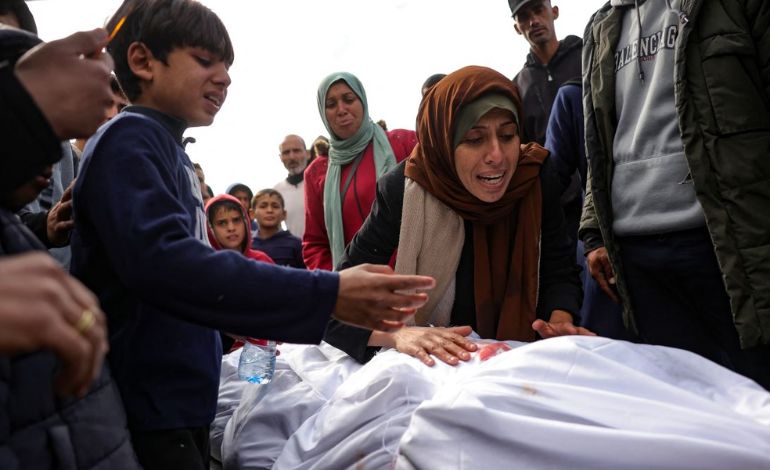
For Palestinian families in neighborhoods like Beit Hanina, Shuafat, and Sur Baher, the land registration process is not an abstract bureaucratic exercise. It determines whether the homes they have lived in for generations will remain theirs—or be registered to the state or settlers.
For the international community, Resolution 3792 represents another step in the gradual erosion of the two-state solution. As land is registered to Israeli authorities and settlements expand, the physical possibility of a contiguous Palestinian state diminishes.
For East Jerusalem, a city holy to three faiths and claimed by two peoples, the coming years will be decisive. The government aims to complete registration by 2029. By then, the map of ownership—and the prospects for peace—may look very different.
Also Read:
Saudi Ambassador Officially Presents Credentials to Nepal’s President
Can the Third Round of Talks Prevent a Wider Conflict in the Middle East?