

UAE Housing Market Trends: Will Home Sales Slow Down This Year?
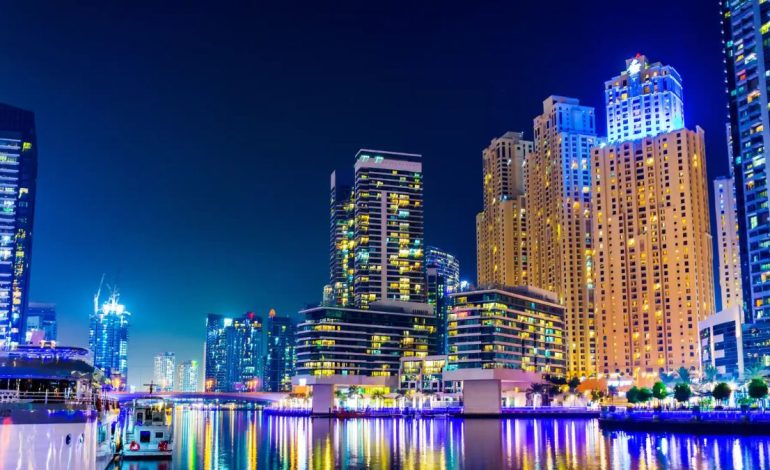

After five years of extraordinary growth, the UAE’s residential real estate market is entering a new phase. Moody’s expects developer sales to decline modestly and prices to soften slightly over the next 12 to 18 months as a wave of new completions adds supply. Between 2026 and 2028, approximately 180,000 new units will be completed in Dubai alone—a significant increase from prior years.
But before sounding alarms, it’s worth understanding what this actually means for buyers, sellers, and investors.
A Market Maturing, Not Crashing
The Moody’s outlook is not a prediction of collapse but of normalization. After an extraordinary run, some cooling is natural. The agency notes that fundamentals remain supportive, underpinned by continued population growth and an influx of high-net-worth individuals. Rated developers’ credit quality will remain resilient, supported by strong revenue backlogs, front-loaded payment plans, and solid financial positions.
Munir Al-Daraawi, founder and CEO of Dubai-based Orla Properties, interprets the report as reflecting “a market that is successfully transitioning from a period of extraordinary growth to one of sustainable stability.” He views the projected 180,000 new units not as a cause for concern but as “a reflection of the UAE’s long-term appeal to high-net-worth individuals and a growing population.”
Why This Cycle Is Different
Riad Gohar, co-founder and CEO of BlackOak Real Estate, offers a crucial distinction: this is not a debt-fueled market. Around 83 percent of Dubai residential transactions in 2024 and 2025 were non-mortgaged. “That means the market is equity-driven, not credit-driven,” Gohar explains. “When cycles are not built on leverage, corrections are typically shallow and segmented, not systemic.”
The macroeconomic backdrop is also stronger than in past cycles. Sustained non-oil GDP growth, structural reforms, population increases, and capital inflows aligned with long-term national plans provide foundations that previous booms lacked.
Prime vs. Non-Prime
A critical nuance: any pressure from increased completions is likely to affect marginal locations, not established prime areas supported by global high-net-worth inflows. Gohar notes that historically, prime assets in Dubai have shown resilience even during broader market pauses.
For smaller developers, some may feel margin compression if sales moderate, but this becomes a consolidation phase, not a systemic risk. Banks’ real estate exposure has already declined to around 12 percent of total loans—down from 19 percent in 2021—and non-performing loans are low at 2.9 percent. Regulatory escrow structures and stricter oversight further reduce spillover risk.
“We are in a capital-rich, cash-driven cycle, regulated market with strong GDP and population growth,” Gohar concludes. “If anything, weaker fringe players exiting would strengthen the core not destabilize it.”
How Developers Are Adapting
With substantial excess cash expected over the next two to three years, developers are considering how to deploy liquidity. Some are diversifying beyond their core business models.
Binghatti, known for single-plot high-rise developments, has launched its first master-planned villa community, responding to demand for villas that continues to outperform apartments. Others are looking beyond Dubai and the UAE entirely:
- Damac’s owner Hussain Sajwani has announced significant planned investments in data center development across the US and Europe.
- Emaar continues active development in Egypt and India and is evaluating potential entry into China and the US.
- Aldar has started development projects in the UK and Egypt.
- Arada is building in Australia and the UK.
- Sobha is expanding into the US.
The Broader Picture
The UAE’s real estate market recorded strong performance during the first three quarters of 2025. In Dubai, transaction values increased 28.3 percent year on year to 554.1 billion Emirati dirhams ($150.88 billion). Abu Dhabi recorded total sales of 58 billion dirhams, up 75.8 percent, with transactions rising 42.3 percent to 15,800.
These numbers reflect a market that has been running hot. A modest cooling is not failure but function—the natural adjustment of any maturing market.
What It Means for You
For buyers, the coming months may offer more choice and potentially better negotiating positions as supply increases. For sellers, particularly in non-prime locations, realistic pricing will matter more than during the boom. For investors, the fundamentals that made the UAE attractive—population growth, economic diversification, regulatory stability—remain intact.
As Al-Daraawi puts it: “The current environment emphasizes the importance of quality, execution, and strategic capital allocation—factors that will continue to define the UAE’s real estate success story.”
Also Read:
Citizens Welcome Mohammed bin Salman in Madinah
Kigali Welcomes Muslim World League Chief for Friday Prayer Sermon