
Red Cross Plays Key Role in Returning Palestinian Victims to Gaza
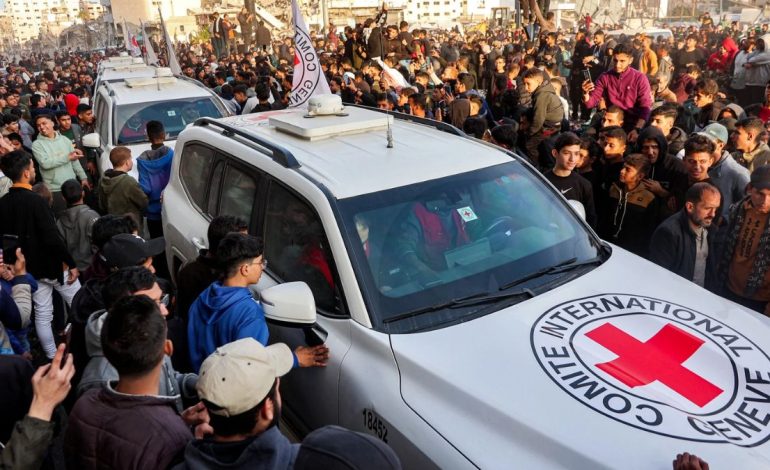

In the grim arithmetic of war, even the dead hold a profound value for the living. This week, a quiet but crucial operation reached its conclusion, marked not by fanfare but by the somber duty of return. The International Committee of the Red Cross (ICRC) announced it had facilitated the transfer of 15 deceased Palestinians to the Gaza Strip, finalizing a months-long process born from a fragile ceasefire.
This transfer was the final piece of a US-sponsored agreement that began in October. Its terms were starkly proportional: for every deceased Israeli returned, Israel would turn over the bodies of 15 Palestinians. The operation became possible after Israeli forces recovered the remains of Ran Gvili, the last known hostage held in Gaza, whose burial on Wednesday closed a painful, two-year chapter for his nation and family.
The arrival of the 15 bodies at Gaza City’s Al-Shifa Hospital, confirmed by director Mohammed Abu Salmiya, brought the total number of Palestinian remains returned under these arrangements to 360. For grieving families in Gaza, this represents a sliver of solace—the ability to perform burial rites and find a measure of closure.
A Sustained Role Amidst Crisis
The ICRC’s statement provided a sobering overview of its immense role as a neutral intermediary since the war’s outbreak in October 2023. Their work has been a relentless bridge across a deep chasm of conflict:
- Phase One: The release and transfer of 20 living hostages and 1,808 detainees.
- Subsequent Phases: The return of the deceased, including 27 out of 28 hostages and, now, 360 Palestinians.
In total, the organization has supported the return of 195 hostages—both living and deceased—and 3,472 detainees. These numbers translate to thousands of families given a definitive answer, a chance to mourn, and a body to lay to rest.
Beyond the Exchange: A Path for Aid
The completion of this exchange carries a further, immediate consequence for the living. It paves the way for a limited reopening of the Rafah crossing between Gaza and Egypt. This border is a lifeline, a critical entry point for humanitarian aid into a territory devastated by war, where the population faces severe shortages of food, medicine, and basic supplies.
The Red Cross, in this instance, performed a dual function. It acted as a crucial facilitator for implementing a diplomatic agreement, upholding the principle that the dead must be respected and returned. Simultaneously, its neutral, persistent presence helped unlock a logistical step that may ease the profound suffering in Gaza.
This final transfer underscores a somber truth: in the aftermath of conflict, the work of humanity continues long after the guns fall silent. It is the work of returning names to the nameless, dignity to the departed, and, in doing so, providing the living with a necessary foundation upon which to begin rebuilding.
Also Read:
Saudi Arabia Praises Strong Ties With UAE Leadership
Somalia’s Parliament in Turmoil as Lawmakers Clash Over Constitution Changes