


Survival in Gaza on the Edge as UN Warns of Brutal Living Conditions
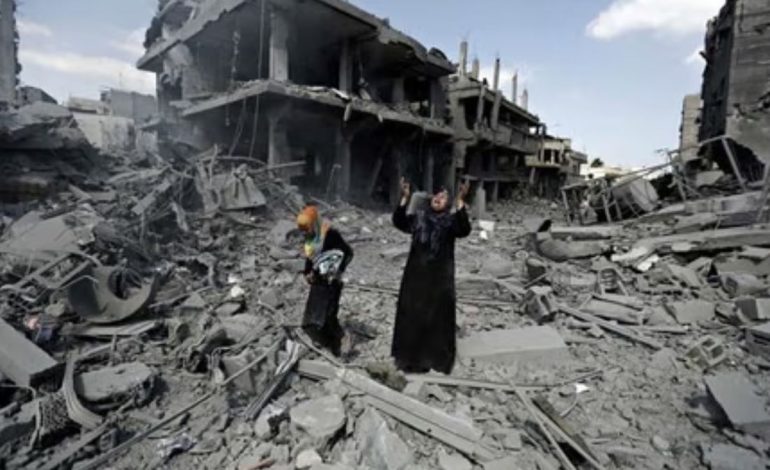

Even under a fragile ceasefire, life for the people of Gaza remains a daily struggle for survival “on the edge.” That is the stark assessment delivered by senior United Nations officials on Monday, who warned that an “extremely brutal” reality persists for the entire population of the battered enclave.
Following a recent visit, UNICEF’s Ted Chaiban and the World Food Programme’s Carl Skau described a scene of profound hardship. “Having an entire population living on the brink is just not acceptable,” Chaiban told reporters.
A “Brutal” Existence Amidst the Rubble
While acknowledging some easing compared to the brink of famine a year ago, the officials stressed that gains are dangerously fragile. “The ceasefire has allowed us to rein in famine,” said Skau. “Most people I spoke to were eating at least once a day. But there is still a very long way to go.”
The most immediate crisis is the lack of shelter during a harsh winter. “Hundreds of thousands of people are shivering in fabric tents that don’t keep the heat in or the rain out,” Skau reported. He recounted meeting a woman who had given birth just ten days earlier, “sitting on a wet mattress in a cold tent on the beach. It was absolutely brutal.”
Chaiban echoed the dire conditions: “It really is miserable in those tents.” He noted that at least ten children have reportedly died of hypothermia this winter, with roughly 1.3 million people still lacking proper shelter.
Children Bear the Deepest Scars
The humanitarian crisis remains particularly deadly for children. Chaiban revealed that more than 100 children have been reported killed since the ceasefire began, and about 100,000 youngsters are still acutely malnourished, requiring long-term care. These young lives, already scarred by conflict, now face the compounded threats of disease, cold, and hunger.
A Narrow Window for Change
Both officials highlighted moments of heartbreaking resilience—children trying to learn, families clinging to fragments of normal life. But these glimmers cannot obscure the overwhelming scale of suffering.
The officials issued a clear warning: progress is reversible. “The gains we’ve made can easily be reversed,” Skau emphasized. Sustained improvement hinges on two critical factors: the continuation of the ceasefire and predictable, unfettered humanitarian access through multiple open crossings.
The immediate priority, they stated, is to “flood the strip with shelter” and ensure the flow of essential supplies to restore basic services.
Chaiban framed the coming weeks as a critical test: “We have a window to change the trajectory for children in Gaza. We can’t waste it.”
The message from the UN is unambiguous. While the most extreme emergency may have been temporarily dialed back, Gaza’s people are not living—they are enduring. Their survival remains balanced on a knife’s edge, dependent on sustained peace and a global commitment to act before this fragile hope is lost.
Also Read:
Global Leaders Gather in Riyadh to Discuss the Future of Work
How Jazan Celebrates Coffee Culture While Keeping Stories Alive