




What Modern Technology Is Revealing About the Hidden Silk Road
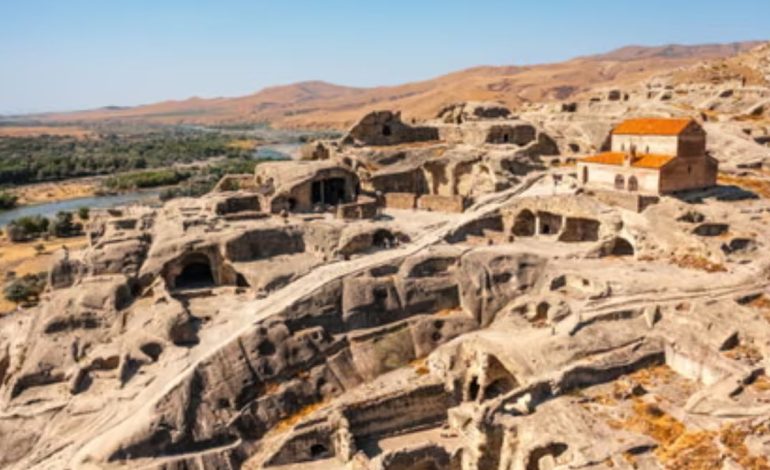

For centuries, the history of the Silk Road—that ancient web of trade routes linking continents—lay buried beneath deserts and mountains, its full story whispered only by scattered ruins and fragments. Today, a quiet revolution is unfolding across the arid landscapes of Arabia and Central Asia. Archaeologists are trading their hand trowels for drone controllers, using cutting-edge technology to peel back the sand and reveal a lost world with stunning clarity.
In the vast expanses of northern Saudi Arabia, particularly in the archaeologically rich regions of AlUla and Khaybar, the change is profound. Drones now soar over terrain where ground teams would take months to survey, mapping entire ancient settlements in minutes. These aerial eyes capture faint outlines invisible from the ground: the ghostly footprints of walls, pathways, and structures hidden just beneath the surface. This data is then transformed into intricate 3D models, creating permanent digital records of a fragile heritage.
Seeing the Unseeable: From Mustatils to Medieval Cities
The impact is more than just efficiency; it’s transformative discovery. Dr. Hugh Thomas of the University of Sydney notes that drone imagery has solved longstanding mysteries. For example, surveys near Khaybar revealed that 7,000-year-old Neolithic monuments called mustatils were strategically built in areas where rainwater naturally collected, directly linking these enigmatic structures to ancient water management.
The scale of revelation is staggering. In Saudi Arabia, remote sensing has uncovered vast “funerary avenues”—Bronze Age pathways lined with thousands of tombs, stretching for hundreds of kilometers to connect major oases. This has allowed researchers to accurately classify tombs and target excavations, leading to groundbreaking studies that finally date these monuments and understand their evolution.
The technological leap is echoing along the entire Silk Road. In the highlands of Uzbekistan, a team led by Dr. Michael Frachetti used drone-mounted LiDAR (a laser-scanning technology) to penetrate rugged terrain, uncovering two lost medieval cities, Tugunbulak and Tashbulak. Their plazas and fortifications, completely invisible from the ground, now rewrite maps of medieval Central Asian trade.
A Collaborative, Digital Future for the Past
This is not a solitary pursuit. The work fosters deep international collaboration, with Saudi Arabia’s Royal Commission for AlUla partnering with global universities. It also builds vital local capacity, training Saudi researchers and students—even local community members—in digital documentation.
Perhaps most importantly, this technology democratizes history. Projects like the International Dunhuang Project have created open-access digital libraries of Silk Road manuscripts and art. In AlUla, virtual reconstructions bring ancient civilizations to life for students and the public, fostering a shared connection to this cross-continental heritage.
The Bigger Picture
Every drone flight and every laser scan is stitching together a grander narrative. We are no longer just finding isolated sites; we are mapping the very arteries of ancient human connection—the trade routes, pilgrim paths, and migration corridors that moved goods, ideas, and people between Asia, the Middle East, and Europe.
The story of the Silk Road is being recovered not through guesswork, but through gigabytes of precise data. It reveals a history that is vaster, more connected, and more ingeniously adapted to its environment than we ever imagined. As the technology continues to evolve, one thing is certain: the sands still have countless secrets to give up, and we are only beginning to read this long-buried chapter of our shared human journey.
Also Read:
Middle East Space Conference 2026 to Be Held in Oman
UN Official Warns: Gaza Left in Ruins After Ongoing Conflict