


More Than 100 Children Killed in Gaza Despite Ceasefire, Says UN
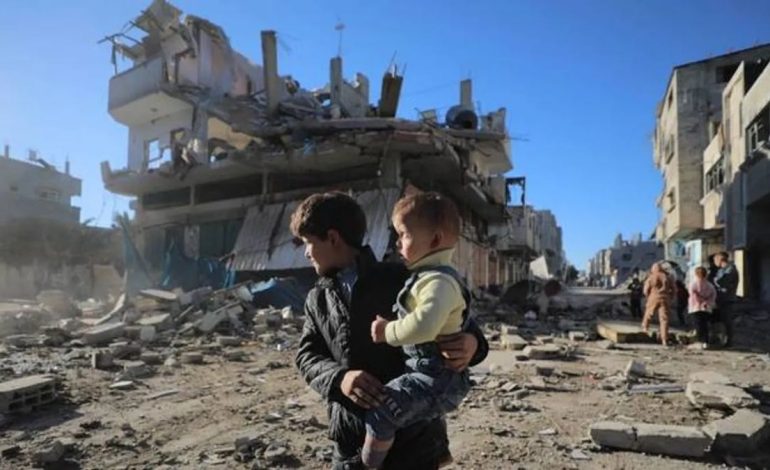

A haunting number hangs in the air, a stark indictment of a conflict that refuses to end. This week, the United Nations stated that at least 100 children have been killed in Gaza in the three months since a tenuous ceasefire began. One hundred lives extinguished not in a moment of declared war, but in a period nominally meant for peace.
The voice delivering this grim tally was James Elder, a UNICEF spokesman, speaking from Gaza City. His words were precise and devastating: “That’s roughly a girl or a boy killed here every day during a ceasefire.” The methods are a catalog of modern warfare: airstrikes, drone strikes, tank shelling, live ammunition. “We are at 100 — no doubt,” he said, acknowledging the true figure is likely higher. Gaza’s own health ministry reports an even more staggering number: 165 children.
Elder named the painful paradox: “A ceasefire that slows the bombs is progress but one that still buries children is not enough.”
This death toll exists within a deeper, almost unimaginable context. It follows over two years of a war that has left, in Elder’s words, life for Gaza’s children “unimaginably hard.” They live amid the ruins of nearly 80% of Gaza’s buildings, their psychological wounds deepening, untreated, with each passing day. Now, even the cold is a killer, with seven children reported to have died from exposure since the start of this year.
Compounding this catastrophe is a severe restriction of the lifeline these children depend on. Since January 1st, Israel has suspended 37 international aid agencies from operating in Gaza. This move, labeled “outrageous” by the UN, directly blocks life-saving assistance. While UNICEF has worked to increase aid, the need is oceanic. “It’s impossible to overstate just how much still is required to be done here,” Elder stressed.
He raised a critical, unsettling question: When key aid groups are banned from delivering help and bearing witness, and when foreign journalists are barred, what is the purpose? Is it, he implicitly asked, to restrict the world’s scrutiny of the suffering of children?
The killing of more than 100 children under a ceasefire is not a statistical footnote; it is the central, screaming failure of this moment. It reveals a reality where a reduction in violence is not safety, where the absence of full-scale war does not mean peace. Each number is a childhood erased, a future stolen, and a profound challenge to the conscience of the world. The ceasefire may have slowed the bombs, but for the children of Gaza, it has not stopped the dying. And that, as UNICEF reminds us, is nowhere near enough.
Also Read:
Qatar Partners with US Alliance to Secure Semiconductor and Critical Minerals
Senegal and Kuwait Strengthen Ties Ahead of Abu Dhabi Sustainability Week